


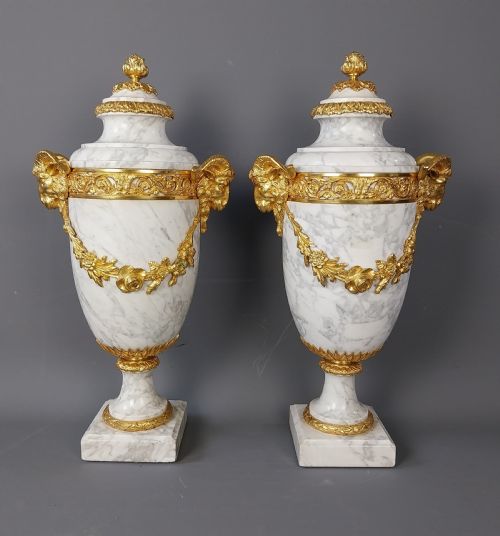

Bronze Covered Urn
These bronze covered urn pieces bring classical gravity and decorative finesse to an interior through substantial metalwork and lids.
Bronze Covered Urn
A bronze covered urn combines heavy cast metal with a matching lid, often taking the form of a lidded vase, censer, or decorative vessel. When you search for bronze covered urn, you encounter works spanning the nineteenth century, Regency period, and nineteenth-century adaptations of earlier aesthetics.
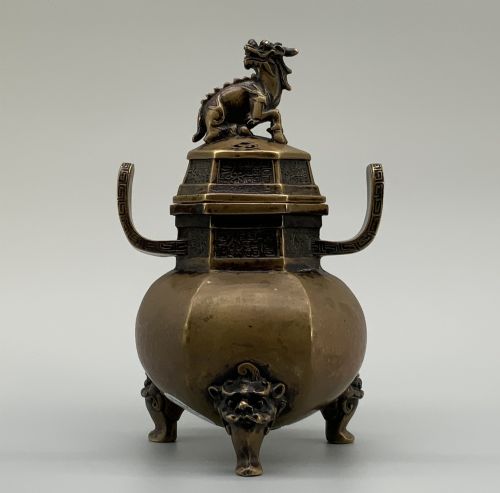
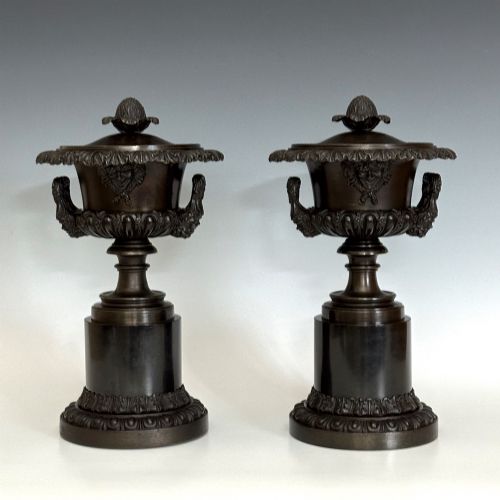
The objects on this page bridge European and Asian traditions, ranging from French Rococo Revival and Neoclassical designs to Qing Dynasty and Japanese Meiji works. You will frequently find pieces paired as matching sets or mounted with gilt bronze and ormolu.
Materials and construction techniques
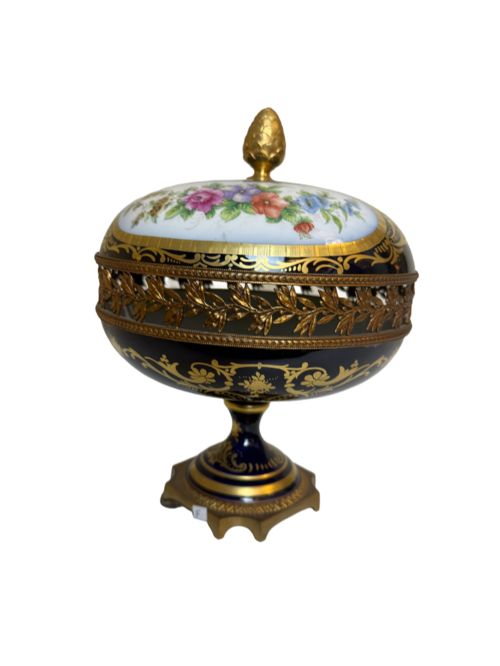
Maker workshops utilised cast bronze, patinated bronze, and gilt bronze, frequently combining these metals with porcelain, enamel, marble, and gold leaf. Many nineteenth-century French and English pieces incorporate ormolu mounts to highlight handles, rims, and bases.
Asian examples demonstrate specialised techniques such as cloisonné enamel work and intricate porcelain potting, sometimes paired later with European metal mounts. Surface finishing relies on careful patination, gilding, and hand-painting to achieve depth and contrast.
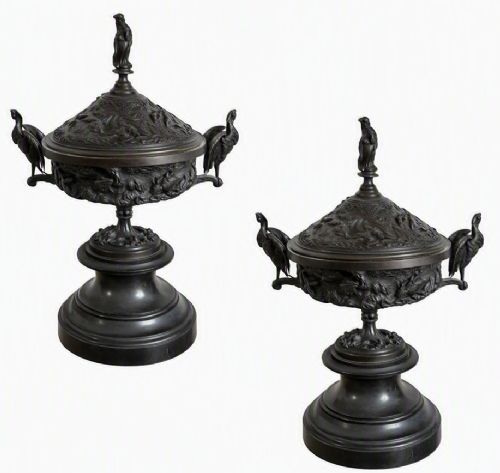
Storks find themselves cast in metal alongside traditional classical foliage.
Factors of distinction
Quality rests in the crispness of the metal casting and the precision of the chased details on the bronze surface. Superior examples display sharply defined foliage, figures, or architectural motifs rather than soft, blurred edges.
The integration of components also dictates merit, such as the snug fit of a lid and the harmony between bronze mounts and porcelain, marble, or cloisonné bodies. Maker signatures and historical association further elevate individual pieces.
Jules Moigniez·Auguste Cain·Kizan
The Bronze Covered Urn Glossary
- Ormolu
- Gilt bronze applied to furniture, clocks, and decorative vessels. This technique involves coating a bronze object with a mercury-gold amalgam and heating it to leave a rich golden layer.
- Cassolette
- A decorative vase or urn designed with a reversible lid that functions as a burner or a solid cover. They frequently appear in marble paired with gilt bronze mounts.
- Grand Tour
- A cultural journey undertaken by nineteenth-century Europeans to study classical antiquities. Souvenirs from these travels included miniature bronzes and architectural models.
- Cloisonné
- An enamelling technique where metal wire creates small compartments on a metal base, which are then filled with paste and fired. Japanese ginger jars frequently display this method.
- Garniture
- A set of matching decorative vases or urns designed to sit symmetrically on a mantelpiece or sideboard. They typically comprise three or five pieces.
Bronze Covered Urn: Frequently Asked Questions
What is a bronze covered urn used for?
These vessels historically served as mantel ornaments, garniture sets, or functional incense burners and potpourri holders in wealthy homes.
Today, they function primarily as decorative focal points that add historical weight and texture to interior spaces.
How do I identify a nineteenth-century piece?
Nineteenth-century pieces often reveal themselves through characteristic revival styles like French Rococo, Neoclassical, or Grand Tour classical interpretations.
Examination of casting methods, patination types, and associated porcelain bodies helps confirm the manufacturing era.
What is the difference between ormolu and gilt bronze?
Ormolu specifically describes the historical French mercury-gilding process applied to bronze mounts during the eighteenth and nineteenth centuries.
In modern descriptive terminology, gilt bronze is often used interchangeably to denote any bronze object covered in a layer of gold leaf or gilding.
How should I clean my bronze urn?
Bronze requires gentle dusting with a soft, dry cloth to prevent accumulation without disturbing the historic patina.
Avoid chemical polishes and abrasive cleaners, as these strip away original patination and damage delicate gilt or enameled surfaces.