


Bronze Cherub Candelabra
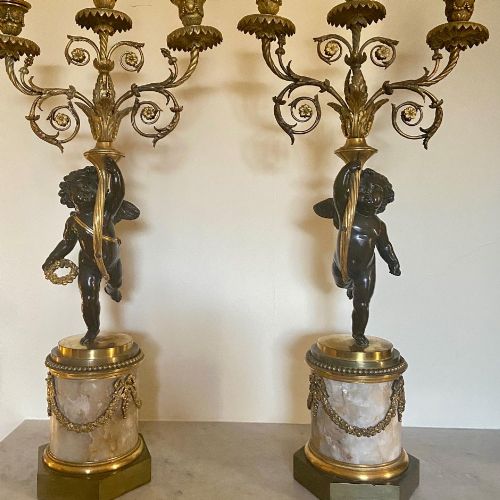
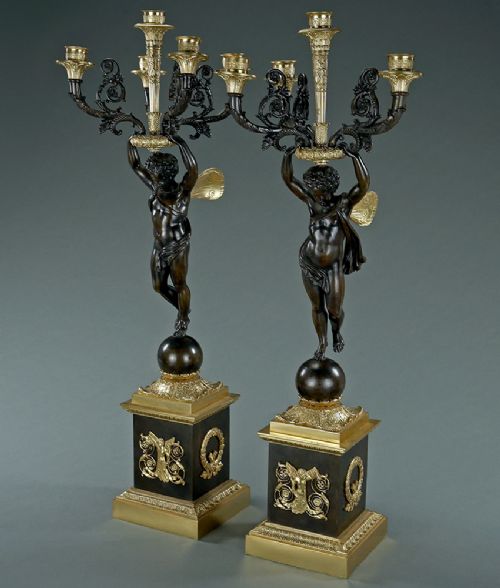
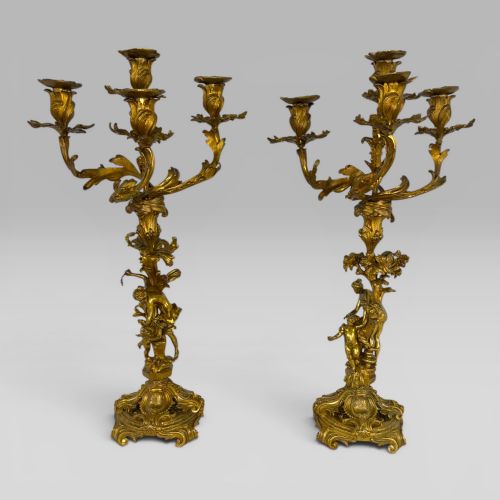
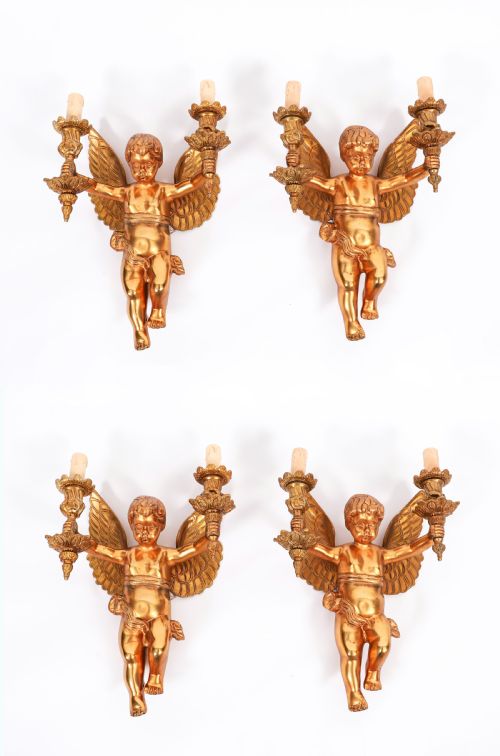
Bronze cherub candelabra bring figurative French lighting into a room, combining cast metal figures with multi-arm candle holders.
What these pieces are
Bronze cherub candelabra are lighting pieces featuring winged putti figures holding or supporting candle branches, predominantly originating from French workshops during the eighteenth and nineteenth centuries. You are most likely to encounter nineteenth-century pairs produced in the French Empire, Louis XVI, or Rococo Revival styles.
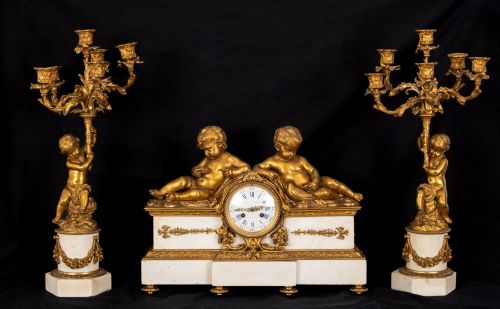
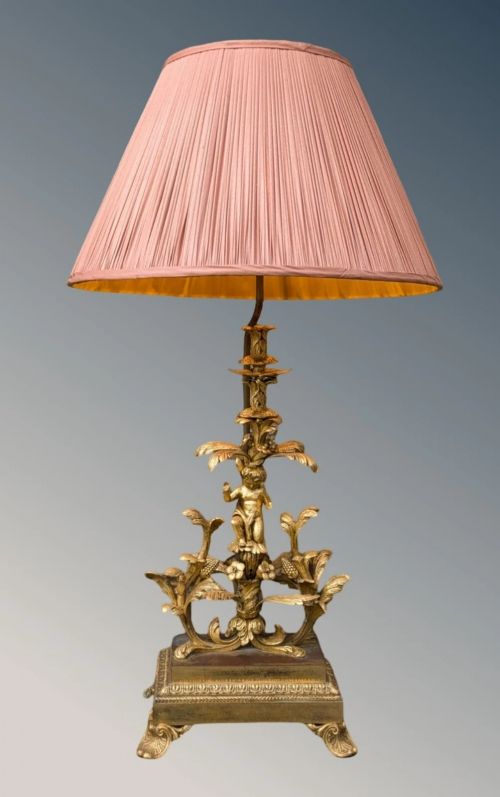
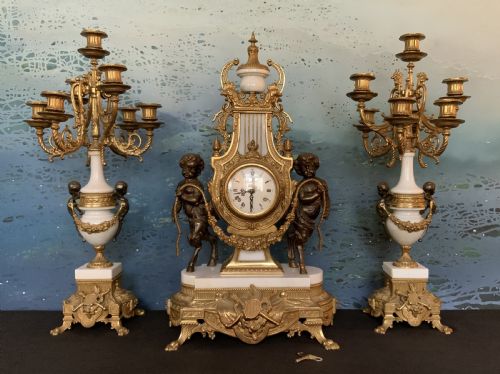
Many examples incorporate mixed media alongside the cast metal, appearing as clock garniture sets, torchère lamps, or standalone three-arm and six-arm candelabra. The figural subjects draw on classical models associated with sculptors such as Clodion and François Rémond.
The domestic function of these items evolved from practical illumination into decorative mantel and table display, often forming part of balanced garniture sets flanked by matching clocks. Their enduring appeal lies in the theatrical, sculptural quality of the infant figures integrated into functional metalwork.
How they were made
The construction relies on metal casting, utilising patinated bronze, gilt bronze, and ormolu to create contrasting surface textures on the figural cherubs and foliage. Artisans frequently combined these metallic elements with carved marble bases, fluorspar, enamel, and glass components.
Candelabra bodies were assembled from multiple cast sections joined mechanically, allowing for complex branches, drip pans, and sconces to extend from the central figure. Gilt surfaces were achieved through mercury gilding or fire-gilding, creating the bright golden finish characteristic of ormolu alongside dark patinated bronze.
Retail Price Guide 2026
Typical UK retail prices for bronze cherub candelabra, calculated from the Sellingantiques database of over a million retail prices indexed since 2003. This retail price guide relies exclusively on Sellingantiques data; no external sources or auction records are used, so the figures do not describe the wider market.
These chubby bronze infants spend centuries heroously holding up heavy candle branches without ever needing a stretch.
What varies in quality
Quality rests in the crispness of the chasing and the nuance of the bronze patination, distinguishing sharp, hand-finished sculptural detail from softer, commercially cast reproductions. Superior examples display subtle anatomical modeling in the cherubs and secure, balanced assembly across the candle arms.
The integration of secondary materials such as white marble or fluorspar defines the tier of a piece, with select items utilising finely turned stone bases and rich mercury gilding. Harmony within a matched pair and the proportional relationship between the figural putti and the branching sconces further separate standard production from high-end workshop output.
The Bronze Cherub Candelabra Glossary
- Ormolu
- Gilt bronze produced by applying a mercury and gold amalgam to a bronze base and heating it. This technique creates a durable, golden surface finish found on eighteenth and nineteenth-century French decorative objects.
- Putti
- Depictions of plump, winged infant boys used widely in classical and revival art. They form the central figurative element in these candelabra designs.
- Garniture
- A set of matching decorative objects designed to be displayed together on a mantelpiece or sideboard, typically comprising a central clock flanked by candelabra or vases.
- Patinated Bronze
- Metal treated with chemical solutions to produce a dark, protective, or decorative surface coloration. This finish contrasts directly with bright gilt or ormolu elements in French metalwork.
- Torchere
- A tall stand or lamp designed to hold a light source aloft. In this context, it describes figural standards adapted for illumination.
Frequently Asked Questions
What periods do bronze cherub candelabra come from?
The available evidence records examples spanning the eighteenth and nineteenth centuries, including specific dates such as eighteen-eighty and nineteen-ten. Most surviving pairs belong to the nineteenth century, reflecting revival interest in earlier French designs.
These later nineteenth-century pieces frequently imitate the aesthetics of the Louis XVI period and the workshop models of classical sculptors. Stylistic markers help distinguish eighteenth-century originals from later nineteenth-century interpretations.
How were these candelabra used?
These items served primarily as domestic lighting and decorative ornaments for grand interiors, positioned on mantelpieces, sideboards, or tables. They were often arranged as part of larger matching garniture sets alongside clocks.
Over time, many surviving examples have been adapted to run on electricity for modern table lamps while retaining their original bronze and marble structures. Their primary role remains decorative, providing sculptural presence and ambient light.
What materials are used in these candelabra?
Makers utilised cast bronze as the primary structural and figural medium, applying patination or gilding to create contrasting surface finishes. Ormolu and gilt bronze provide bright metallic highlights against darker patinated bronze cherubs.
Additional materials appearing in the construction include white marble bases, fluorspar, enamel, and glass details. These mixed media elements enhance the decorative richness of the finished pieces.
How can I tell French styles apart?
French Empire pieces often feature rigorous symmetry and classical military or imperial motifs, whereas Louis XVI items favor neoclassical restraint, straight lines, and refined floral garlands. Rococo Revival designs break from this formality with asymmetrical curves, swirling foliage, and dynamic movement.
Comparing the handling of the cherub figures and the complexity of the scrollwork helps assign pieces to specific nineteenth-century revival movements or earlier periods.