


Bronze Brass Candle Stands
These bronze brass candle stands bring weight and warm metallic gleam to a room, spanning periods from the eighteenth century through to Art Deco.
Bronze Brass Candle Stands
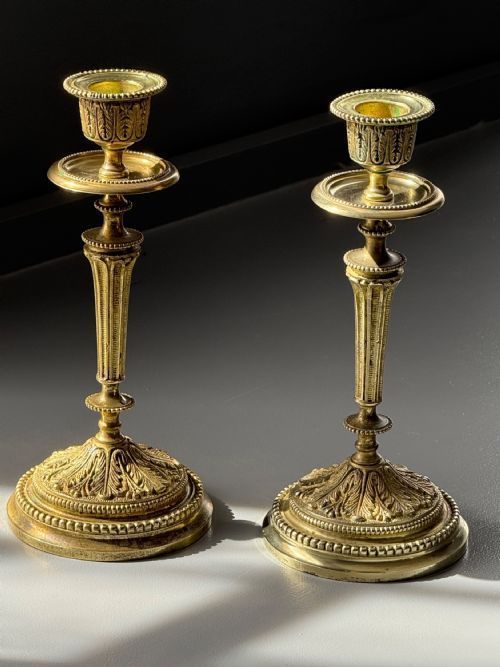
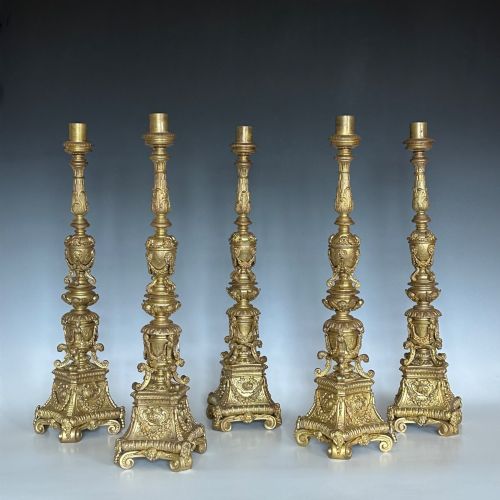
When you search for bronze brass candle stands, you encounter lighting fixtures designed to hold taper candles, church prickets, or multi-armed lights. The selection on this page centres on pairs of heavy metal holders originating from French, English, and Italian workshops.
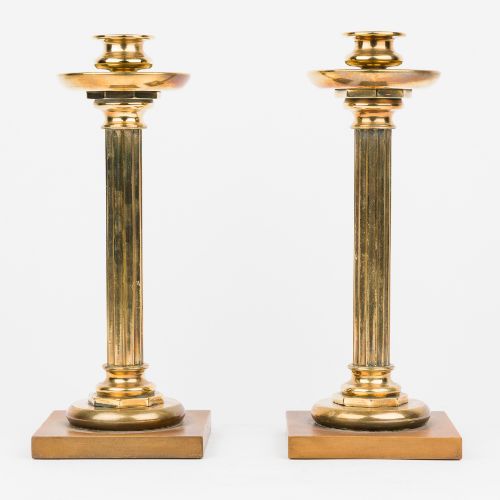
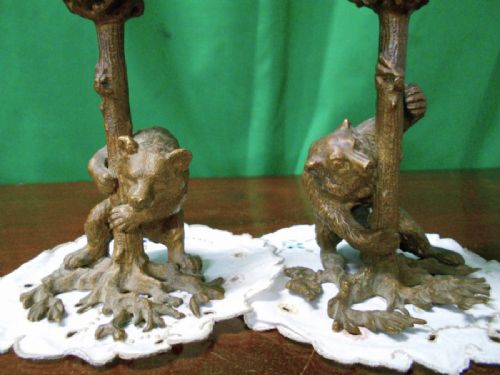
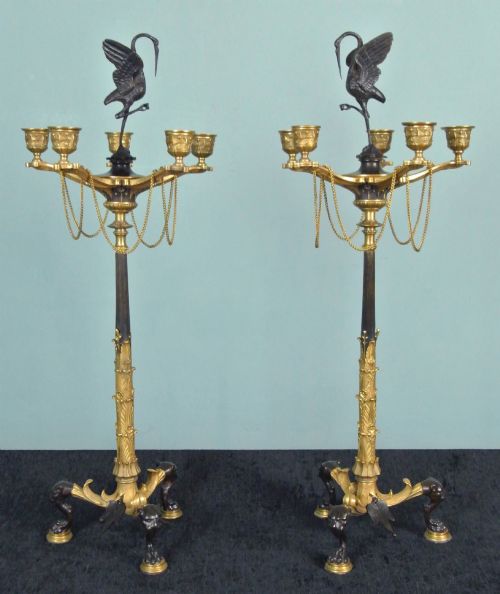
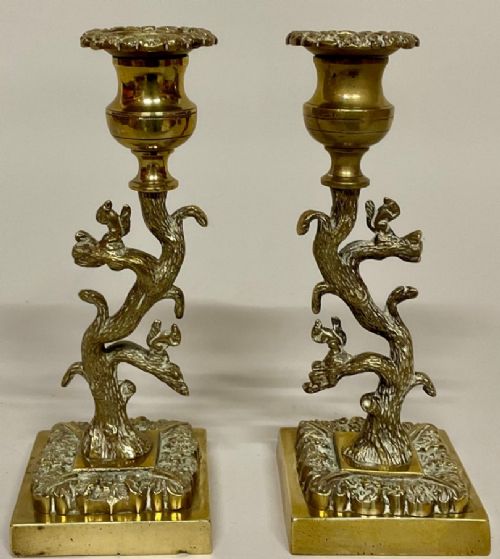
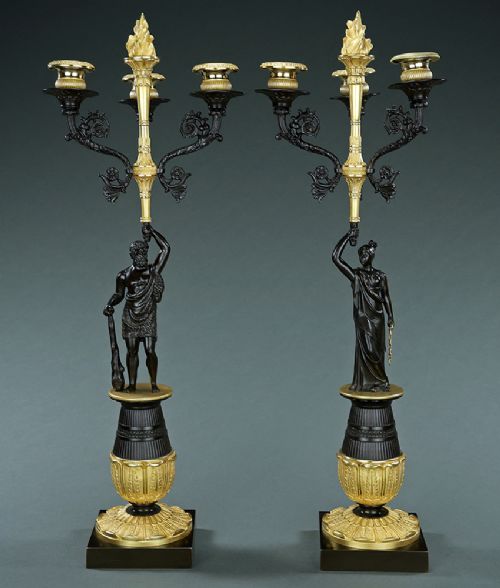
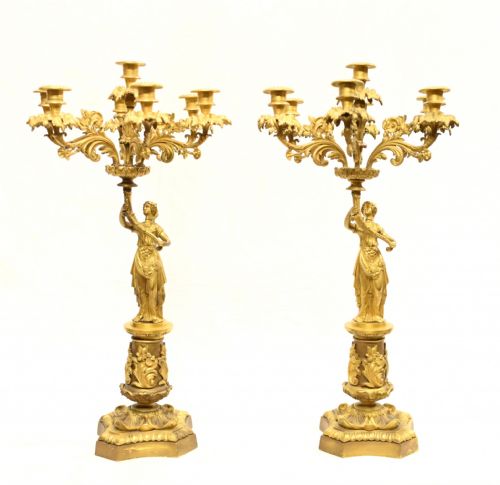
The objects take many forms, from simple table candlesticks to grand candelabra with multiple arms. You find items configured as sculptural figures, animals, or architectural columns rather than plain utilitarian tubes.
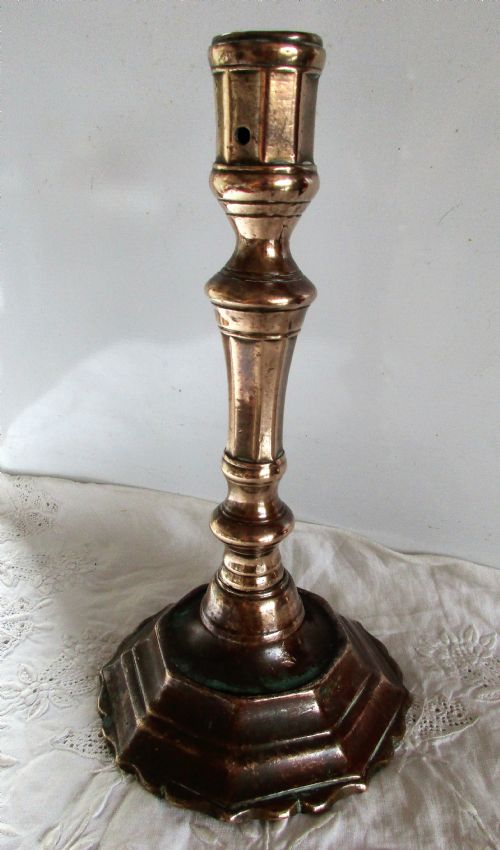
Most pieces date from the nineteenth century, encompassing Victorian, Regency, and French revival styles alongside earlier eighteenth-century examples and twentieth-century Art Deco works.
How they were made
Foundry workers utilised lost-wax casting and sand-casting methods to shape heavy bronze and brass components. These raw metal casts then underwent extensive hand-chiselling, filing, and turning on lathes to sharpen surface details.
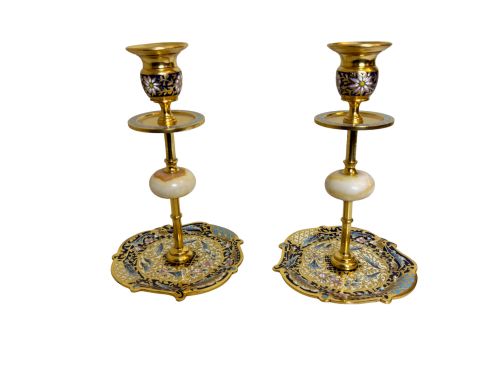
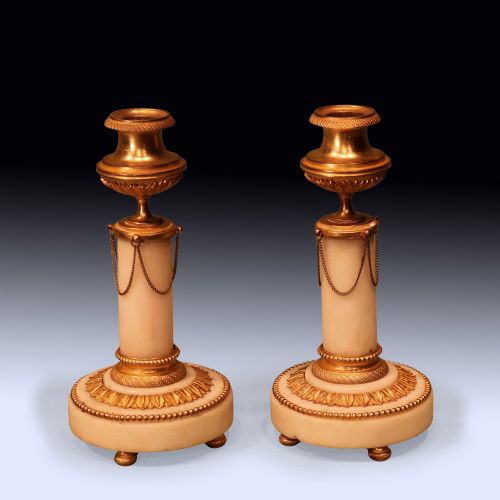
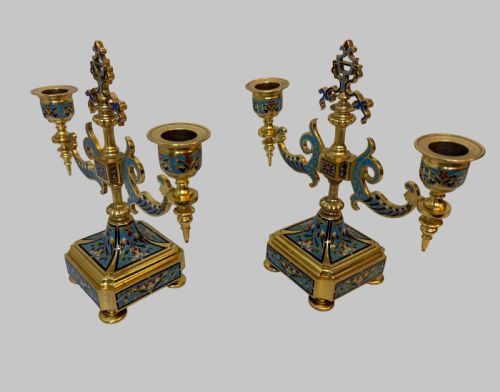
Surface decoration frequently involved mercury gilding to produce ormolu, or the application of chemical patination to darken the bronze. Workshops also incorporated contrasting materials such as white marble bases, onyx plinths, and coloured champlevé enamel into the metal framework.
Listings feature materials spanning gilt bronze, brass, ormolu, marble, champlevé enamel, and carved wood.
What varies in quality
The distinction between standard production and top-tier pieces lies in the crispness of the initial casting and the depth of the subsequent hand-chasing. Superior examples retain sharp facial expressions on figurative elements and cleanly defined acanthus leaves rather than soft, smoothed contours.
Materials and assembly also dictate the standard of an item. Heavy gauge bronze, thick layers of fire gilding, and tightly fitted structural joins separate fine decorative works from simpler utility items.
Barbedienne·Abel Landry
The Bronze Brass Candle Stands Glossary
- Ormolu
- Gilded bronze, produced by applying a mercury and gold amalgam to a bronze base and heating it. The technique creates a rich, matte yellow gold finish characteristic of French decorative arts.
- Pricket
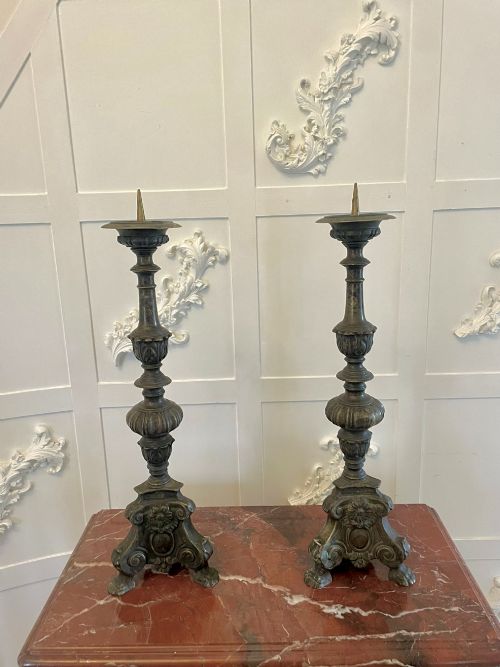
- A sharp metal spike set in the centre of a drip pan to secure a large candle. This form is common on church and altar candle holders.
- Champlevé enamel
- A technique where troughs or cells are hollowed out of the metal surface and filled with vitreous enamel powder before firing. The resulting coloured patterns contrast sharply with the surrounding bronze.
- Campana
- A candle socket shaped in the inverted form of a classical bell. This profile appears frequently on Regency and neoclassical lighting.
- Patinated bronze
- Bronze that has been treated with chemical solutions to alter its surface colour to dark brown, black, or green. This finish highlights the underlying metallic highlights through selective polishing.
Bronze Brass Candle Stands: Frequently Asked Questions
How do I clean antique bronze stands?
Dust gently with a soft dry brush to remove surface particles. Avoid aggressive metal polishes that strip historical patination or damage the underlying ormolu.
Keep pieces away from moisture and direct heat sources to preserve the finish.
Are these stands suitable for daily use?
Many sturdy nineteenth-century and Victorian examples remain entirely functional for holding standard taper candles. Ensure any burning candle is monitored and extinguished before it reaches the metal sconce.
Fragile items featuring delicate enamel or marble components are best reserved for display.
How do I identify a Regency period stand?
Regency pieces often display strong neoclassical motifs such as campana sconces, sphinxes, or architectural bronze mounts. They frequently combine patinated dark bronze with bright ormolu highlights.
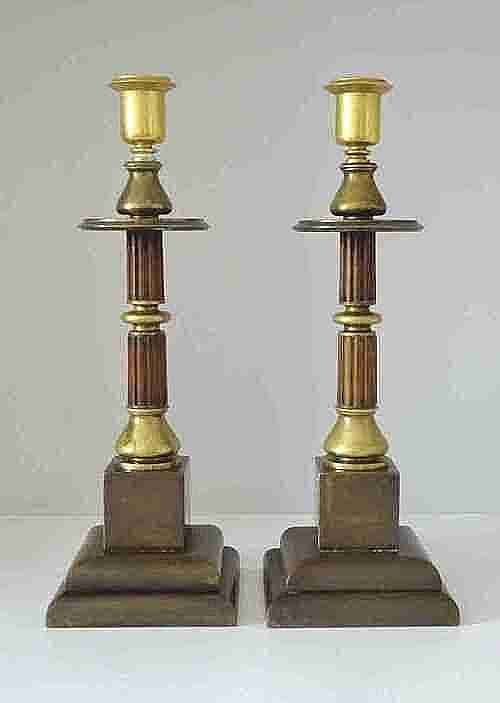
Proportions tend to follow strict classical geometry with square or stepped plinth bases.