






Bronze Baluster Urns
These bronze baluster urns bring substantial presence to a room, offering the weighty form and patinated surface that collectors seek for display.
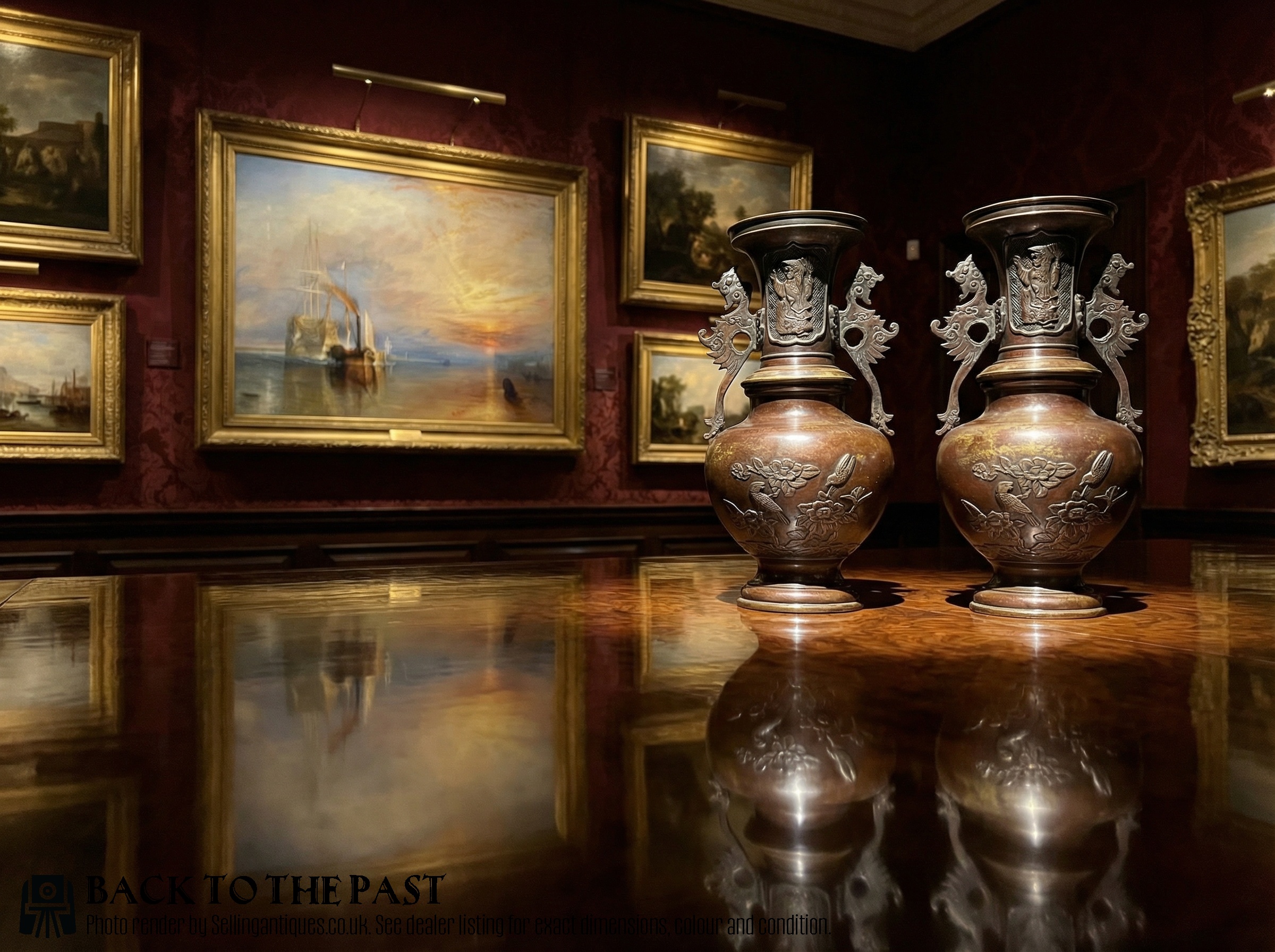
Bronze Baluster Urns
When you search for bronze baluster urns, you encounter vessels defined by a wide body that tapers toward a narrow neck, often adapted as table lamps or retained as decorative display pieces. Most examples on this page originate from Japanese workshops of the Meiji era or Chinese dynasties, spanning the nineteenth century up to nineteen-twenty.
The inventory leans heavily towards Japanese and Chinese manufacture, taking forms such as stem vases, lidded containers, and high-relief dragon or immortal depictions. Victorian buyers often mounted these pieces with ormolu or converted them into functional lighting, blending Eastern metalwork with Western domestic interiors.
Materials and construction
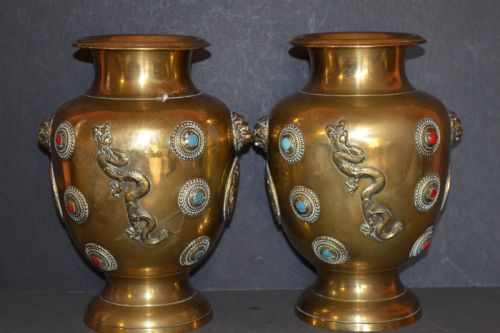
Metalworkers cast these vessels using bronze and copper alloy, sometimes incorporating mixed metals or applying ormolu mounts to enhance the silhouette. Champlevé and cloisonné enamel often provide vibrant colour accents across the metallic surfaces, contrasting with patinated bronze.
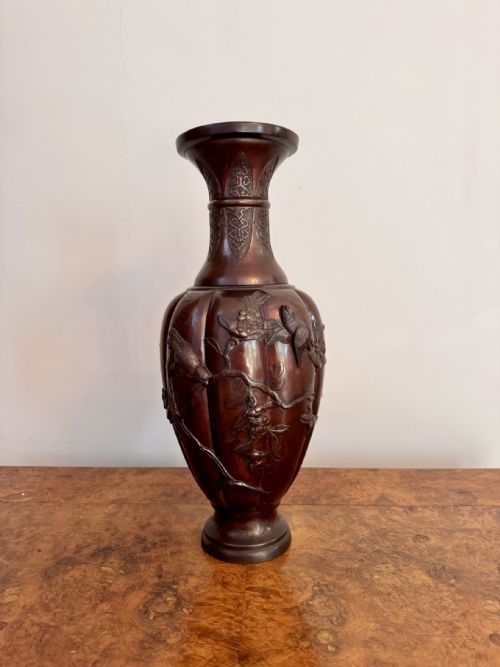
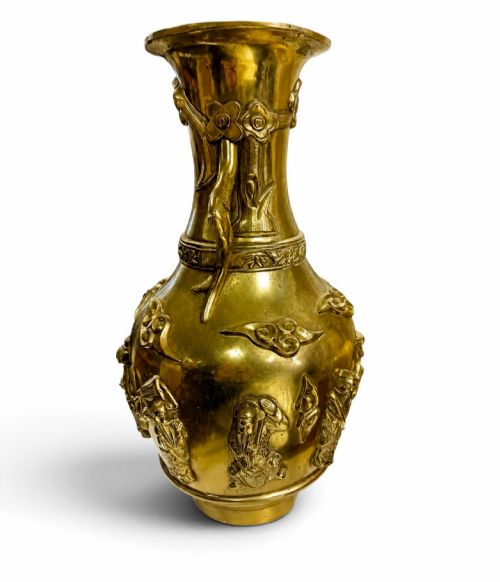
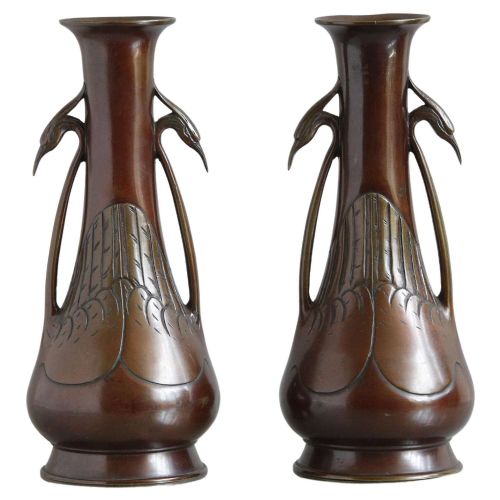
Surface decoration relies on techniques such as high-relief modelling, where figures like Daoist immortals or egrets emerge dynamically from the body. Base marks, such as the Xuande style, and fine hand-chasing demonstrate the precise foundry work typical of these Asian antiques.
Several bronze urns double as unexpected perches for detailed egrets and immortal deities.
Distinctions in quality
The standard of a piece rests primarily on the crispness of the cast relief and the depth of the metal patina. Superior examples display intricate, hand-chiselled details on figures and handles, whereas lesser pieces show softer contours and perfunctory finishing.
Integration of secondary materials like ormolu mounts or enamel work also dictates the tier of the object. High-grade specimens maintain structural harmony between the original bronze body and any subsequent Victorian conversions or decorative additions.
The Bronze Baluster Urns Glossary
- Baluster
- A vertical architectural form resembling a vase or pillar, characterised by a rounded lower body tapering to a narrow neck. This silhouette provides the structural foundation for many classical urns.
- Champlevé
- An enamelling technique where troughs or cells are hollowed out in the metal surface and filled with vitreous enamel before firing. It creates distinct colour fields bounded by metal lines.
- Cloisonné
- A method of decorating metalwork objects with coloured material held in place or separated by thin metal strips welded upright. This creates intricate geometric or figurative patterns across the body.
- Ormolu
- Gilded bronze mounts applied to furniture, porcelain, or metal vessels, popular during the nineteenth century. It adds a bright metallic contrast to darker patinated surfaces.
- Meiji Period
- A Japanese era lasting from eighteen sixty-eight to nineteen twelve, marked by intense artistic production for export. Pieces from this time often feature elaborate metalwork and dynamic animal or human motifs.
Bronze Baluster Urns: Frequently Asked Questions
Are these bronze urns original?
The pieces span the nineteenth century and earlier, originating from traditional Asian workshops and Meiji period foundries. Their authenticity is established through metal composition, casting techniques, and period-specific decorative motifs.
Later additions, such as nineteenth-century European ormolu mounts or lamp fittings, reflect historical Victorian conversion practices rather than modern reproduction.
How do I care for bronze?
Bronze requires minimal intervention to preserve its historic patina. Dust the surface gently with a soft, dry cloth and avoid chemical polishes that strip away the natural ageing.
Keep the pieces away from direct moisture and direct sunlight to protect any integrated enamel or applied gilt details.
Were these used as lamps originally?
Many of these vessels started as decorative vases or ritual urns in Asian contexts. Victorian collectors frequently adapted them into table lamps by adding wiring and ormolu mounts.
Both unconverted vases and period-adapted lamp forms appear within these listings.
What is a Xuande base mark?
A Xuande mark references the Ming dynasty emperor under whom certain bronze casting techniques reached a celebrated peak. Later workshops often stamped these historical marks onto nineteenth-century pieces as an acknowledgement of traditional craftsmanship.
Such marks indicate a style and lineage rather than a literal fifteenth-century date of manufacture.