





Pair Japanese Bronze Urns
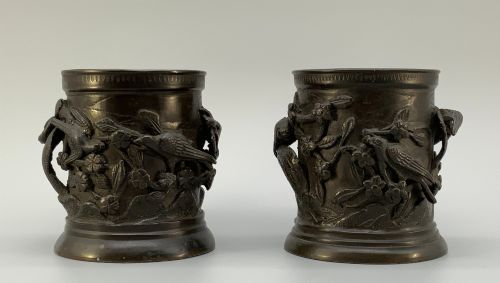
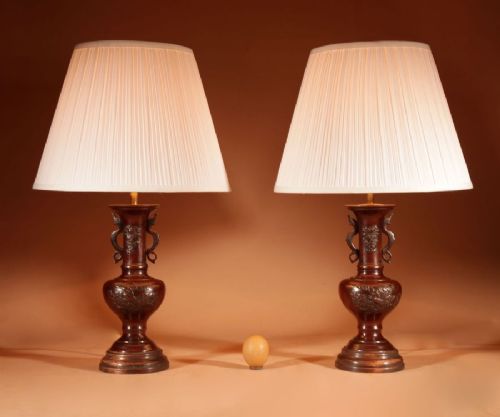
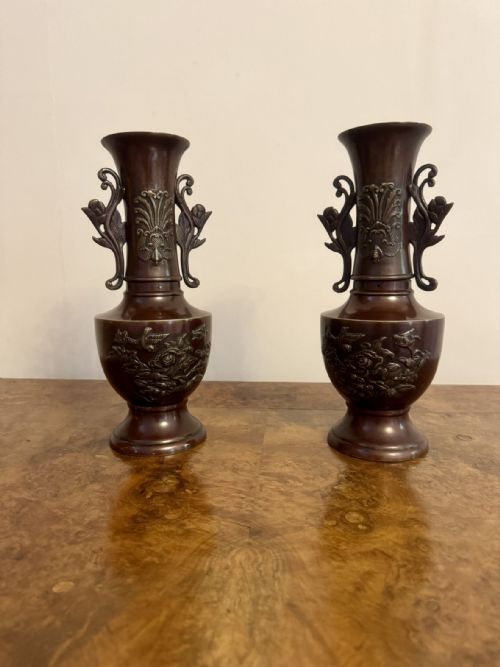
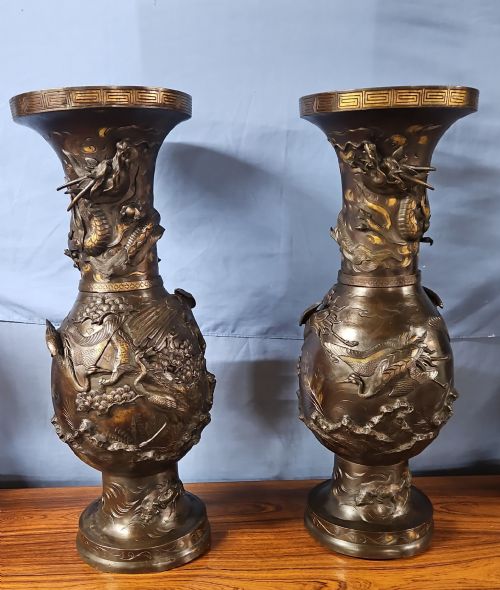
When you handle pair japanese bronze urns, you hold heavy, patinated metal bearing birds, blossoms, and raised detail from the Meiji era and the nineteenth century.
Pair Japanese Bronze Urns
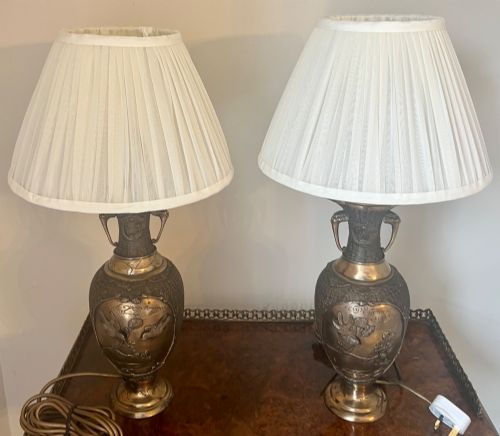
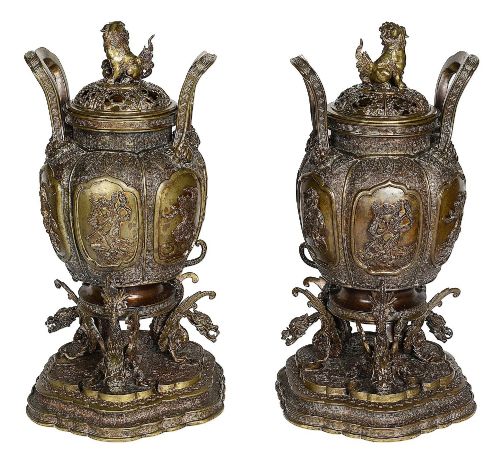
Pair japanese bronze urns encompass twin metal vessels designed for display, illumination, or planting, originating primarily from the Meiji period and the nineteenth century. Buyers seek matching dual objects configured as vases, lidded urns, table lamps, jardinieres, and garden planters that share symmetric decorative programmes.
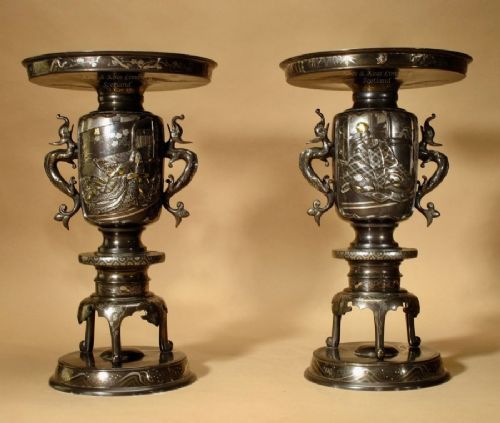
The specimens met most frequently on this page date from the nineteenth century and the early twentieth century, spanning Meiji production alongside Victorian and Edo period pieces. Forms range from miniature stem vases and ginger jars to large baluster urns and heavy garden usubata urns.
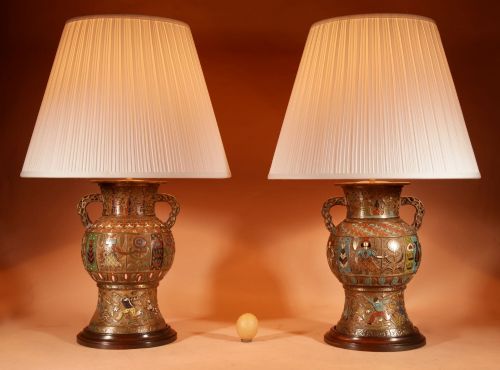
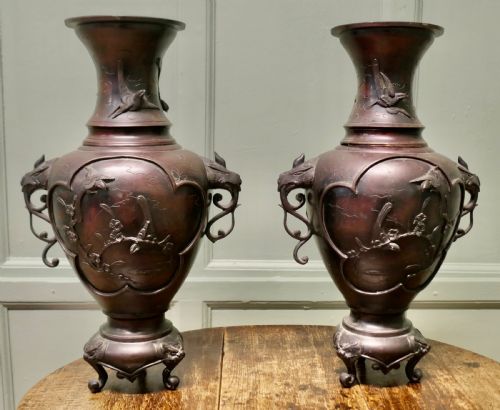
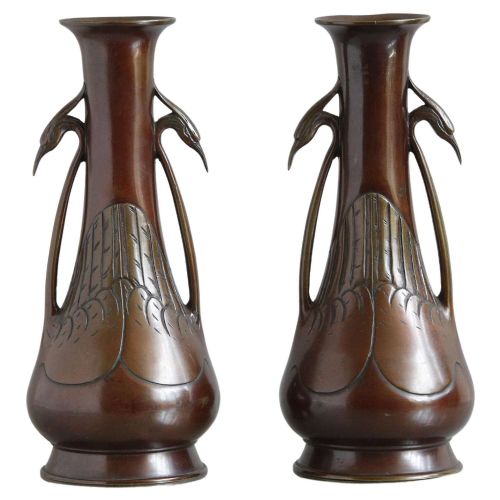
Makers produced these works with twin handles, egret handle decorations, elephant motifs, and champleve enamel or inlaid surfaces. They function today as decorative centrepieces, mantel ornaments, or converted lighting.
How they were made
Metalworkers utilised bronze, brass, copper, and gilt bronze, often applying patinated finishes to achieve deep, dark tones across the body of the vessels. Mixed metal techniques incorporated contrasting metallic elements for raised floral and avian details.
Artisans also employed champleve and cloisonne enamel, cutting troughs or soldering wire onto the bronze substrate to receive coloured vitreous pastes before firing and polishing. Wood bases sometimes accompanied larger jardinieres and table lamps.
Some bronze urns wear handles shaped like tiny egrets or elephants, keeping watch over the mantelpiece.
What varies in quality
The degree of crispness in surface decoration separates standard vessels from exceptional works, visible in the depth of relief for birds, blossoms, and raised floral motifs. Sharp casting and precise metal inlay demand greater skill than soft, rounded contours.
The sophistication of the patination and the integration of champleve or mixed metal elements dictate visual balance across a matching set. Substantial weight and harmonious proportions between the twin vessels complete the upper tier of production.
The Pair Japanese Bronze Urns Glossary
- Meiji Period
- The era of Japanese history lasting from 1868 to 1912. Much of the decorative bronzework seen on the market originates from this time of intensive craft production.
- Champleve
- An enamelling technique where artists hollow out troughs in the metal surface to hold coloured enamel. These recessed areas are then fired and polished flush with the bronze.
- Usubata
- A specific form of bronze vessel featuring a wide, shallow basin supported on a pillar and base. They were traditionally utilised for formal floral arrangement displays.
- Baluster
- An architectural shape characterised by a rounded body that tapers toward a narrow neck and flares at the rim. Many antique vases and urns follow this graceful silhouette.
- Jardiniere
- A large ornamental pot or container designed to hold growing plants or cut flowers. These are frequently cast in heavy bronze with twin handles.
Pair Japanese Bronze Urns: Frequently Asked Questions
How were pair japanese bronze urns used?
These vessels served primarily as ornamental display pieces within traditional Japanese interiors, often placed in tokonoma alcoves or reception rooms to display seasonal foliage.
Over time, many examples were exported to European and Western markets, where owners frequently placed them on mantelpieces or converted them into table lamps.
How can I date a Meiji period bronze?
Dating relies on stylistic markers, casting methods, and surface treatments associated with the late nineteenth and early twentieth centuries. Pieces produced during the Meiji era often exhibit sophisticated mixed metal inlay and distinctive patination.
Reference to specific reign dates or associated Victorian import periods helps narrow the decade of manufacture.
What is the difference between an urn and a vase?
Urns generally feature a closed or lidded form with a more robust, architectural presence often tied to ritual or display. Vases are typically open-topped containers intended specifically for holding floral displays.
In antique metalwork, the terms often overlap depending on the handle configuration and whether a lid accompanies the piece.
How do I care for antique bronze?
Maintain antique bronze by dusting gently with a soft, dry cloth to prevent the accumulation of grit in recessed details. Avoid using commercial metal polishes or abrasive cleaners, which can strip the historic patina.
Keep the metal away from direct moisture and extreme temperature fluctuations to preserve the stability of any enamel or mixed metal inlay.