


British School Maritime Art
British school maritime art captures coastal life and naval history on canvas and paper across the nineteenth and twentieth centuries.
British School Maritime Art
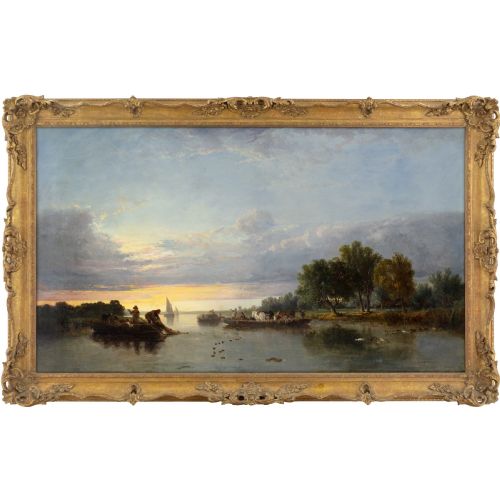
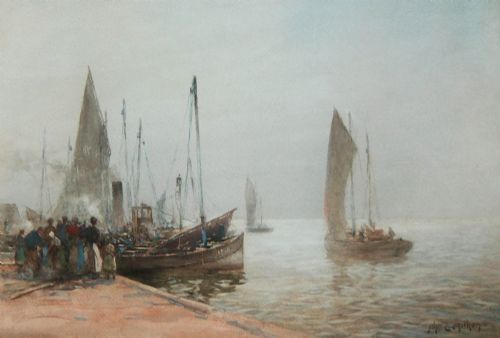
Buyers seeking British school maritime art encounter works depicting coastal landscapes, harbours, rivers and open seas. The selection spans the nineteenth century through to the mid-twentieth century, capturing changing coastal communities and maritime trade.
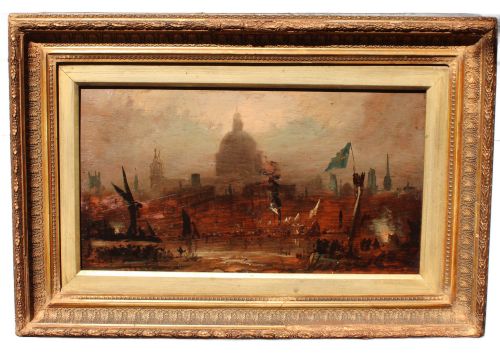
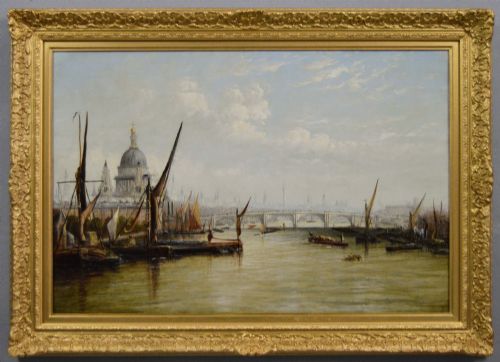
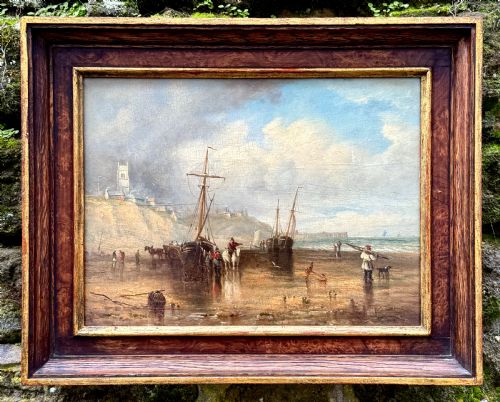
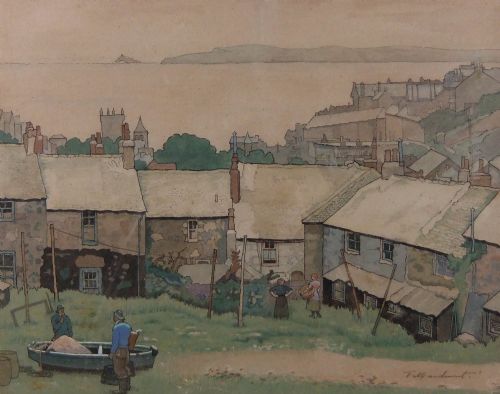
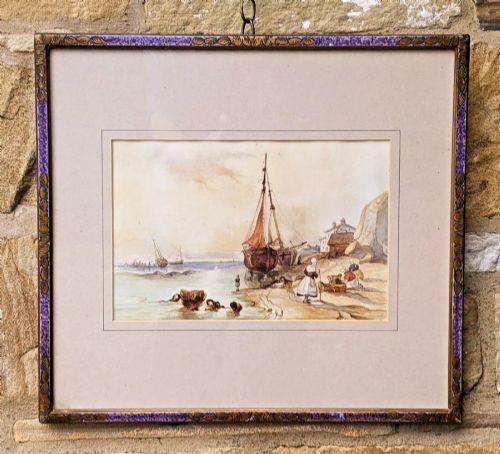
Watercolours on paper and oil paintings on canvas or card dominate the selection. Coastal spots such as St Ives, Staithes and the river Thames recur across the works.
Represented styles include Victorian marine painting, Newlyn school works, British impressionism and romanticism. Pieces range from detailed shipping scenes to atmospheric coastal townscapes.
Materials and techniques
Artists worked primarily with watercolour pigment on paper or applied oil paint to canvas, card or wood panels. Some pieces feature framing with gold leaf and gesso mouldings.
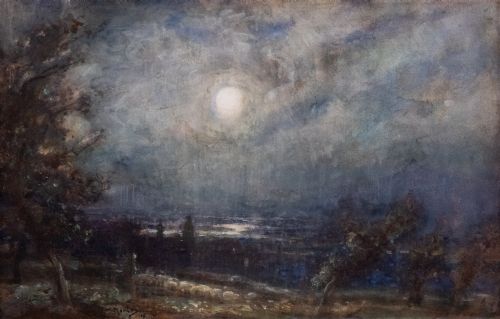
Watercolour works rely on transparent washes and paper texture to capture coastal light and water movement, while oil paintings utilise heavier brushwork and layered pigments to build depth in stormy seas and moonlit skies.
Sailors occasionally moonlighted as watercolourists when dry land offered them a steady desk.
Distinctions in quality
Quality rests upon the handling of light, atmosphere and maritime perspective by the artist. Stronger works demonstrate confident brushwork or watercolour control that evokes movement in water and weather conditions.
The distinction between standard topographical views and finer artistic achievements lies in the composition and the ability to render the specific character of coastal and river environments.
James E. Aitken·Thomas William Morley·Francis Moltino·Thomas Creswick·William Frederick Settle·Arthur Tucker·Frank H. Mason·William Wyld·Henry Barlow Carter·Percy Brooke·William Lambert Bell·Ralph Todd·Thomas Bush Hardy·William Lee Hankey·S. J. Lamorna Birch·Arthur Netherwood·Alec Caruthers Gould·Rowland Henry Hill·Walter Williams·Gordon Meadows
The British School Maritime Art Glossary
- Newlyn school
- An art colony based in Cornwall focused on naturalistic depictions of local fisherfolk and coastal life. Artists in this movement painted outdoors to capture authentic light.
- Watercolour pigment
- A colour medium suspended in a water-soluble vehicle, applied to paper to create transparent washes. It forms the basis of many detailed coastal scenes.
- Gesso
- A paint mixture consisting of a binder mixed with chalk or plaster, used to prepare wood or canvas surfaces. It often appears beneath gold leaf on period frames.
- Oil on canvas
- Pigment bound in an oil medium applied to a stretched cloth support. This technique allows for rich colour blending and textured brushwork in marine paintings.
British School Maritime Art: Frequently Asked Questions
What subjects do these maritime paintings show?
The artworks depict fishing boats, clippers, frigates, and coastal harbours around Britain. Scenes range from busy London rivers to quiet Yorkshire and Cornish fishing villages.
Many pieces focus on local fisherfolk, stormy seas, and moonlit coastal landscapes. Each work records specific nineteenth and twentieth-century maritime environments.
How do I identify a watercolour from an oil painting?
Watercolours are created with pigment on paper, showing the texture of the sheet beneath thin, translucent washes. They are typically framed behind glass to protect the paper surface.
Oil paintings use heavier pigments applied to canvas, card, or wood panels. The surface holds visible brush marks and texture without requiring glass protection.
What periods are represented?
The works date primarily from the nineteenth and early twentieth centuries. Pieces span the Victorian era, Edwardian period, and later modernist movements.
Specific dates range from early nineteenth-century studies to mid-twentieth-century impressionist canvases. This timeline captures the evolution of British marine painting.
How should I display maritime art at home?
Watercolour paintings require protection from direct sunlight to prevent the pigments from fading over time. Hanging them away from bright windows preserves the delicate paper.
Oil paintings on canvas are more robust but benefit from stable indoor humidity and temperature. Original frames with gold leaf and gesso add period character to the display.