

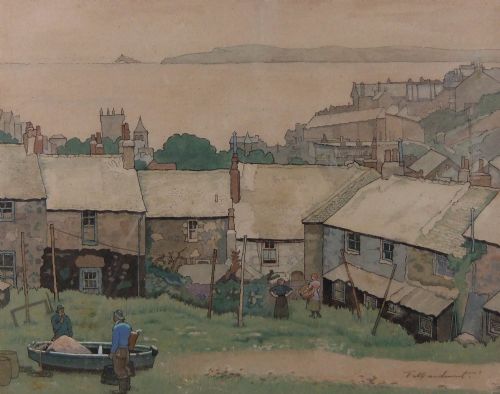



British School Coastal Landscape
A british school coastal landscape brings the grey northern sea and slate-roofed harbours onto your wall with quiet authenticity.
British School Coastal Landscape
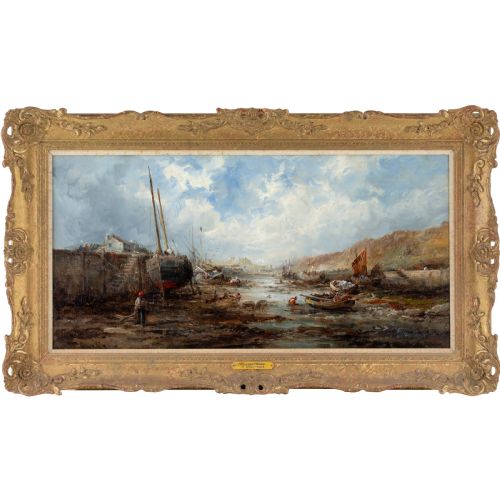
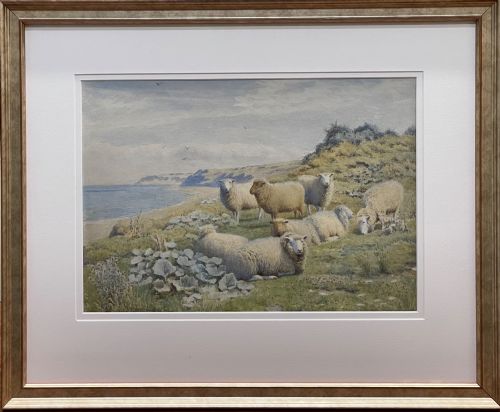
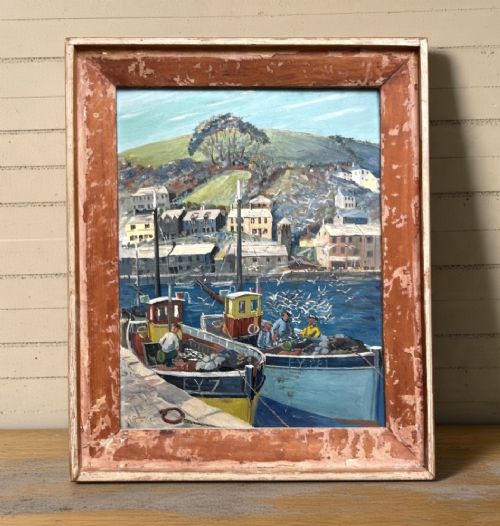
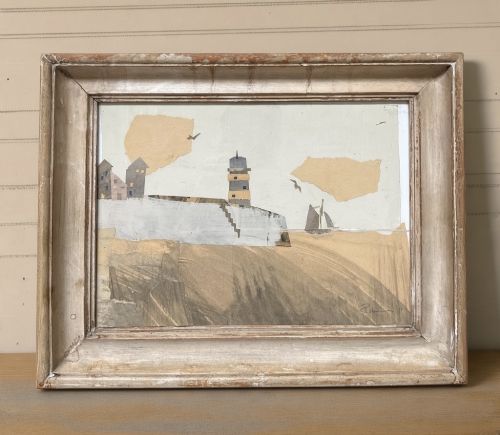
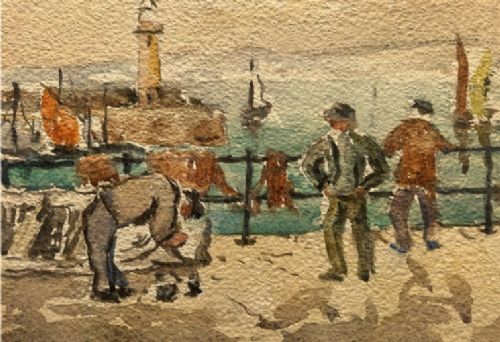
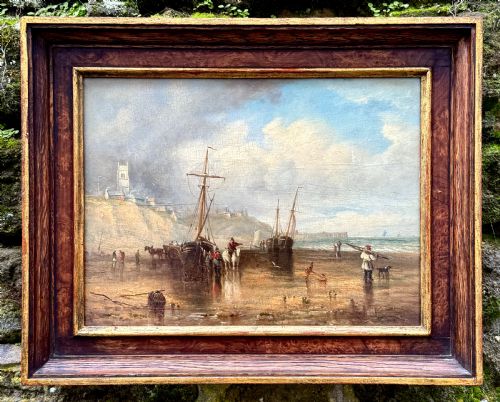
A british school coastal landscape captures the maritime edges of Britain through oil paint, watercolour, and mixed media collage. You will encounter works spanning the nineteenth century up to the mid-twentieth century, recording harbours, cliffs, and fishing boats.
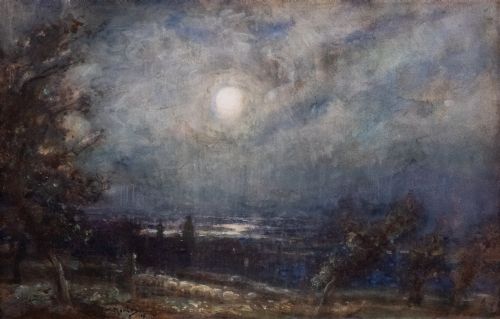
The regional focus draws heavily upon Cornish fishing ports like St Ives and Newlyn, alongside Yorkshire coastal villages such as Staithes and Whitby. These locations inspired artists to record daily maritime labour, moonlight over the water, and low tide harbour scenes.
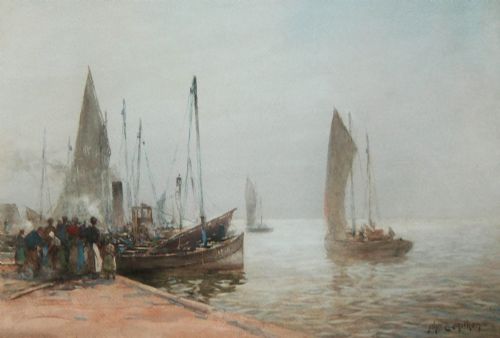
Works appear on canvas, paper, wood panels, and glass-fronted framed presentations. The most common form on this page is the watercolour painting, often signed by listed regional artists.
Materials and Technique
Painters relied upon oil paint laid over canvas and wood panels to build rich textures of sea and sky. Watercolours utilised pigment on paper, capturing the translucent light of coastal weather and damp shorelines.
Brushwork ranges from the tight academic detail of Victorian pastoral realism to the looser application found in British Impressionism and Modern British works. Artists applied these techniques outdoors before finishing compositions in the studio.
British School Coastal Landscape Retail Price Guide 2026
Typical asking prices for british school coastal landscape among the pieces listed under this phrase on Sellingantiques today, from the lower quarter to the upper quarter. They describe what is for sale here now, not the wider market.
Fishermen mending nets in St Ives provided endlessly patient sitters for artists willing to brave the Cornish wind.
Judging Quality
Quality rests upon the confidence of the brushwork and the artist's command of maritime atmosphere. Stronger examples capture the specific light and weather of locations like Cornwall or Yorkshire rather than relying on generic formulas.
The preservation of the paper or canvas dictates the overall appeal. Well-maintained watercolours retain their pigment strength without heavy fading, while oils show stable paint surfaces free from excessive craquelure.
William Edward Webb·William Sidney Cooper·Geoffrey Robinson·Bob Quixley·George F Pennington·James E Aitken·Thomas William Morley·Thomas Creswick·Thomas Maidment·George Turland Goosey·Arthur Tucker·Florence Hess·Percy Brooke·William Lambert Bell·William Shayer·Thomas Bush Hardy·S J Lamorna Birch·Clarence Woodburn·Cuthbert Crossley·Alec Caruthers Gould·Rowland Henry Hill·Walter Williams
The British School Coastal Landscape Glossary
- British Impressionism
- A style developed in the late nineteenth and early twentieth centuries that adopted broken brushstrokes and natural light. It marked a shift away from dark studio varnishes toward outdoor observation.
- Watercolour Pigment
- Finely ground colour suspended in a water-soluble binder applied to paper. It allows for translucent washes that simulate the damp atmosphere of the British coast.
- Oil on Canvas
- Pigment bound in linseed oil spread across a stretched woven fabric support. This combination permits deep layering and rich textural effects for seascapes.
- Modern British
- An umbrella term for art produced in Britain during the mid-twentieth century that absorbed continental modernist ideas. It often resulted in simplified forms and expressive colour palettes.
British School Coastal Landscape: Frequently Asked Questions
What distinguishes St Ives school paintings?
St Ives paintings focus on the unique quality of light and harbour life found in the Cornish fishing community. Artists there embraced both traditional realism and modern abstraction.
Works from this school often feature docked boats, mending nets, and slate-roofed cottages clustered around narrow slipways. They reflect a direct engagement with the local topography.
Are these paintings signed by the artists?
Many examples bear the artist's signature or monogram, often placed in the lower corner of the canvas or paper. Some pieces also carry contemporary inscriptions on the reverse.
Unsigned works can still belong to the British School tradition when stylistic evidence, framing, and subject matter align with known regional practices.
How do I choose between oil and watercolour?
Oil paintings on canvas offer heavier textures and deeper colour saturation that suits dramatic seascapes and moonlight scenes. They bring a robust physical presence to a room.
Watercolours provide a lighter, more luminous quality that excels at capturing fleeting coastal mists and pale skies. They require careful placement behind protective glass.