

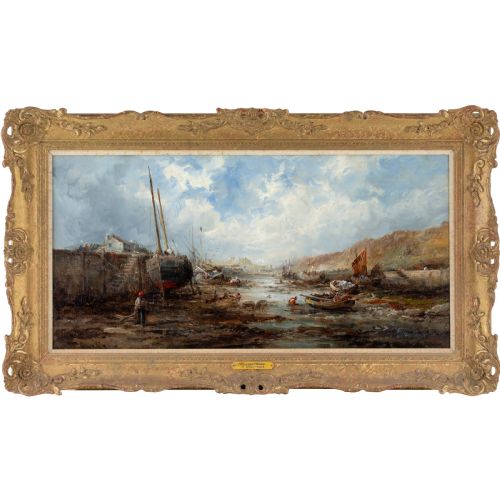
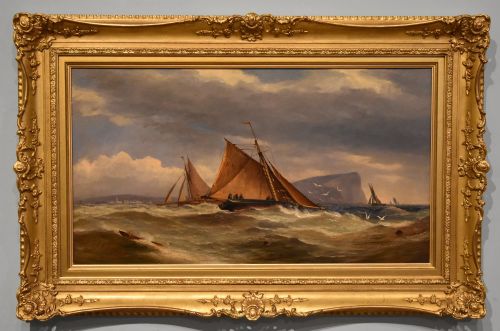
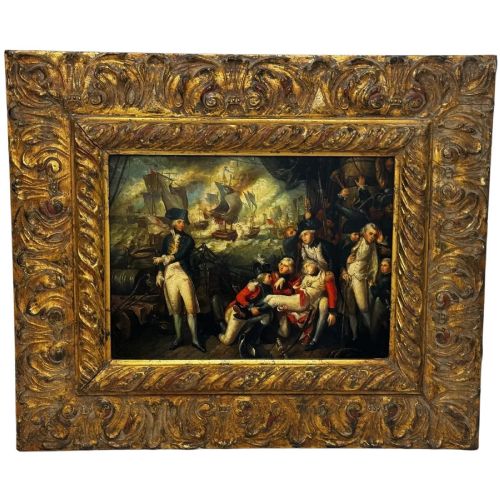
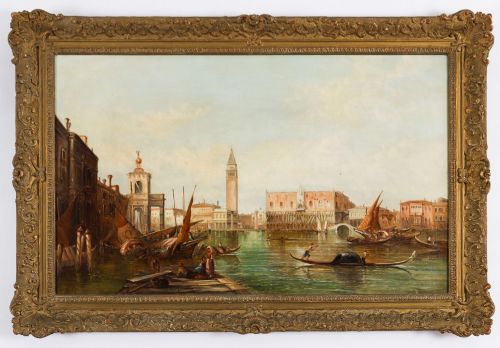
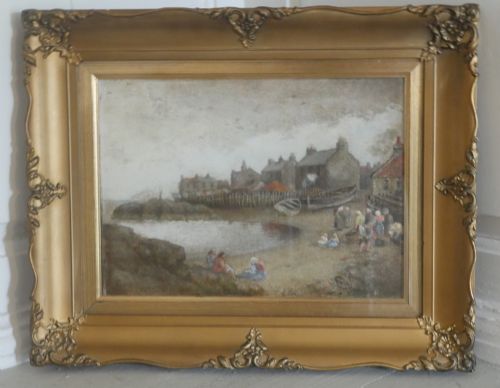
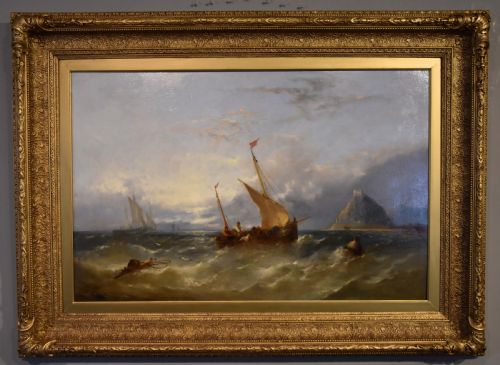


Ornate Gilt Frame Seascape
An ornate gilt frame seascape brings maritime atmosphere and period warmth to a room through traditional oil paint and heavy moulded decoration.
Ornate Gilt Frame Seascape
When you search for an ornate gilt frame seascape, you encounter oil paintings on canvas depicting maritime subjects, coastal views, and harbour scenes housed within elaborate surrounds. The pieces appearing here span from the Regency era through the Victorian period into the twentieth century.
The subjects range from British and European coastal shipping and Venetian canals to quiet beach scenes and bustling estuaries. Most examples originate from the nineteenth century, reflecting deep Victorian and maritime interests in marine artistry.
How they were made
Artists painted primarily with oil on canvas, capturing light on water and sky through layered brushwork and rich pigments. These canvases were then set inside frames constructed from wood and gesso, finished with gold leaf or giltwood.
The elaborate frames rely on moulded gesso applied over a wooden base to create scrolls, leaves, and corner ornaments before gilding. This combination protects the painting while providing the heavy, reflective border characteristic of the period.
Ornate Gilt Frame Seascape Retail Price Guide 2026
Typical asking prices for ornate gilt frame seascape among the pieces listed under this phrase on Sellingantiques today, from the lower quarter to the upper quarter. They describe what is for sale here now, not the wider market.
Several artists painted Venetian canals without ever visiting, relying instead on earlier prints and their own considerable imagination.
What varies in quality
Quality separates through the finesse of the brushwork in the water and sky, alongside the depth and crispness of the gesso mouldings on the frame. A superior painting commands attention with confident handling of light and atmosphere.
The condition and complexity of the giltwood frame also dictate value, as original matching frames with intact gesso enrich the whole piece considerably. Finer frames display sharply defined ornamentation without heavy modern restoration.
William Edward Webb·Frederick John Aldridge·Alfred Pollentine·William Henry Williamson·William Raymond Dommersen
The Ornate Gilt Frame Seascape Glossary
- Giltwood
- Wood carved and covered with thin gold leaf or gilt paint. This material forms the bright, reflective surface surrounding many period oil paintings.
- Gesso
- A plaster mixture applied to wood and moulded into relief decoration. It creates the raised floral and scroll patterns found on ornate frames.
- Oil on canvas
- Pigment mixed with drying oil applied to stretched fabric. It serves as the primary medium for nineteenth century marine and coastal views.
- Regency
- The period spanning the early nineteenth century. Pieces from this era often display specific neoclassical restraint before Victorian elaboration takes over.
- Victorian maritime
- Artworks depicting ships, coastal towns, and marine life during the reign of Queen Victoria. These scenes frequently focus on British naval power and local fishing fleets.
Ornate Gilt Frame Seascape: Frequently Asked Questions
What periods do these paintings date from?
The works on this page span the Regency era, the nineteenth century, and into the mid twentieth century. Most examples cluster in the Victorian period.
Specific dates or estimated decades appear in the individual titles where recorded by the dealers.
How were these marine scenes originally displayed?
Owners typically hung these oil paintings in principal reception rooms of townhouses and country homes. The heavy gilt frames were designed to catch candle or gas light.
They served to display the owner's appreciation for maritime trade, naval victories, or European travel.
How do I care for an oil painting and gilt frame?
Keep the canvas away from direct sunlight and steady humidity fluctuations to prevent cracking in the oil paint. Dust the gesso frame gently with a dry, soft brush.
Avoid using liquid cleaners or water on either the canvas surface or the delicate gold leaf finish.
How can I tell a nineteenth century frame from a modern copy?
Period frames display hand-applied gesso over timber, often showing shrinkage cracks and subtle wear to the underlying red bole beneath the gold leaf. Modern reproductions tend to use synthetic resins and uniform factory finishes.
Examination of the backboards, corner mitres, and fixings also reveals the age of the construction.