
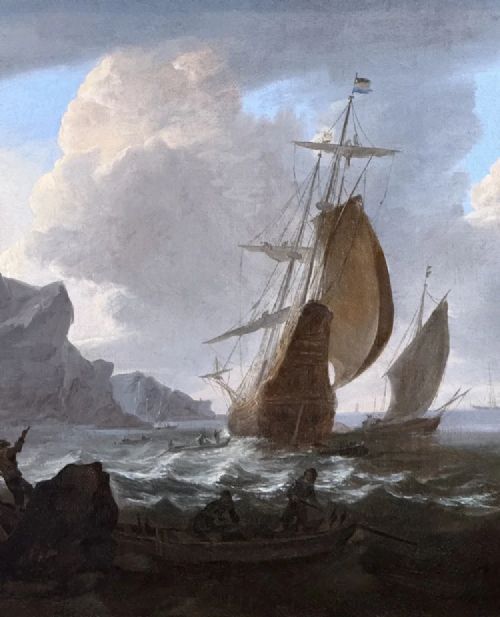
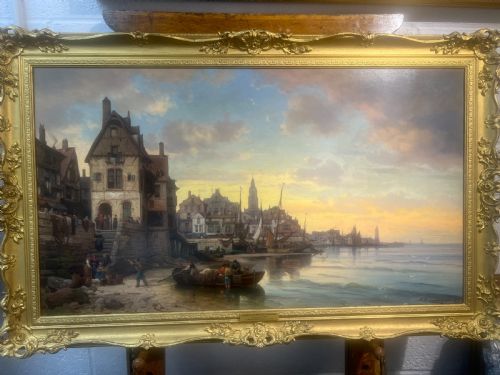
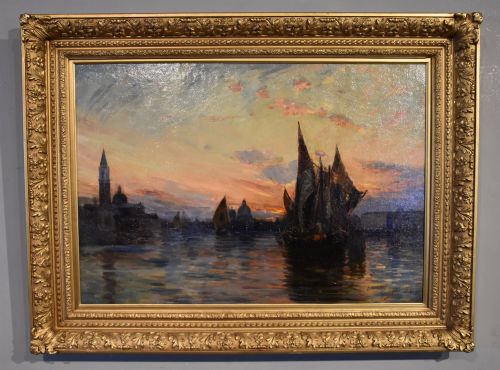


Gold Leaf Framed Seascape
These gold leaf framed seascape works capture centuries of maritime movement, bringing turbulent waters and quiet harbours into the room.
Gold Leaf Framed Seascape
A gold leaf framed seascape brings together historical maritime painting and ornate metallic framing, ranging from seventeenth-century Dutch scenes to Edwardian river views. When searching for gold leaf framed seascape options, buyers encounter oil on canvas works depicting gales, naval engagements, and peaceful coastal harbours.
The selection on this page spans several eras, featuring nineteenth-century British and French compositions alongside earlier continental examples. These oil paintings and watercolours record shipping vessels, fishing boats, and urban river life along the Thames or the Medway.
Subjects vary from dramatic open sea battles with warships to calm evening impressions of Venice. Each piece pairs its maritime subject with a substantial giltwood or gesso frame finished in gold leaf.
Materials and construction
These works rely on traditional oil paint applied to woven canvas supports, capturing the light and texture of maritime scenes. Watercolours on paper also appear, offering a lighter medium for coastal views.
The frames are constructed from wood and gesso, serving as a robust base for the application of gold leaf or gilt wood finishes. Artisans built these mouldings to protect the canvas while adding visual weight to the composition.
Warships in these stormy canvases carry raised sails and ready cannons, perpetually poised to settle old arguments across the centuries.
Markers of distinction
Quality rests in the handling of light and water by the painter, alongside the depth and preservation of the gilding on the frame. Skilled brushwork distinguishes dynamic wave studies and architectural precision in harbour scenes from simpler decorative works.
The integrity of the wooden subframe and the preservation of the original gesso and gold leaf surface significantly shape the character of each piece. Frames retaining their original gilding without heavy restoration hold greater visual harmony with the canvas inside.
Bonaventura Peeters·Thomas Hodgson Liddell·Charles William Wyllie·Pieter Cornelis Dommersen·George Henry Knight·Thomas Bush Hardy·Hubert Thornley·Francis Moltino
The Gold Leaf Framed Seascape Glossary
- Giltwood
- Wood that has been coated with gold leaf or a gold-coloured metallic finish. This decorative treatment provides the bright borders typical of traditional picture frames.
- Gesso
- A plaster-like mixture applied to wooden frame bases to create a smooth surface for gilding. It allows craftsmen to carve intricate relief details before adding gold leaf.
- Marine art
- Painting or imagery focused on ships, shipping, sea battles, and coastal views. This genre encompasses both calm harbour scenes and dramatic open-water gales.
- Oil on canvas
- Pigments bound with drying oils applied to a stretched cloth support. This medium allows for rich colour blending and textured impasto application.
- Galleon
- A large, multi-decked sailing ship used by European states from the sixteenth through the eighteenth centuries. These vessels frequently feature in historical sea battle paintings.
Gold Leaf Framed Seascape: Frequently Asked Questions
What periods do these seascapes cover?
The pieces span from the seventeenth century through the Edwardian era, encompassing Dutch Golden Age works and Victorian maritime art.
Collectors can find eighteenth-century battle scenes alongside nineteenth-century depictions of the River Thames and southern coast harbours.
How should I clean a gilded frame?
Gilded frames require gentle dusting with a soft, dry brush to remove particles without disturbing the delicate gold leaf surface. Avoid liquid cleaners and moisture, which can damage the underlying gesso and wood.
Professional conservators should handle any deeper cleaning or repair of flaking leaf.
Are these paintings original works?
The selection consists of original oil paintings and watercolours created by historical artists rather than modern reproductions. Each piece reflects the technique and style of its specific period.
Signatures, dates, and recorded provenances help verify the authorship of individual works.
Where were these maritime scenes painted?
The subjects range across European waters, including Dutch coastal views, Venetian lagoons, and specific British locations such as Hastings, Rochester, and London.
Artists often recorded bustling commercial traffic, naval engagements, and quiet fishing vessels operating in these coastal and river environments.