
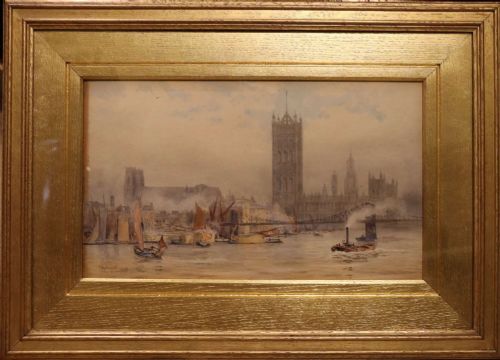
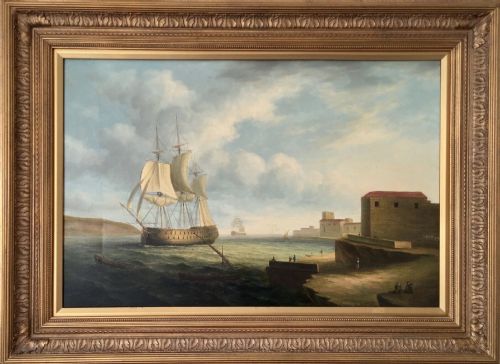

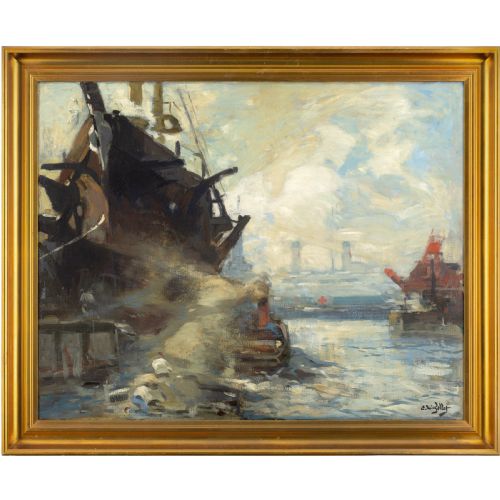
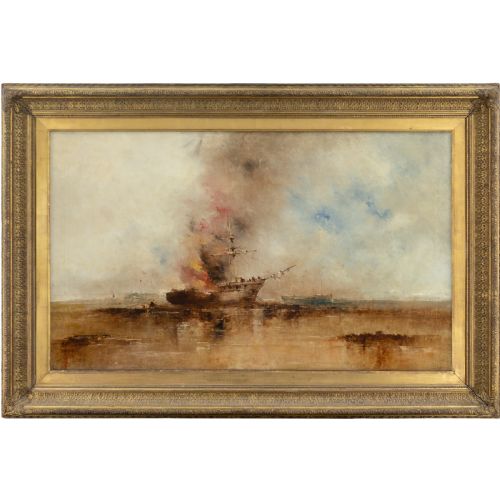
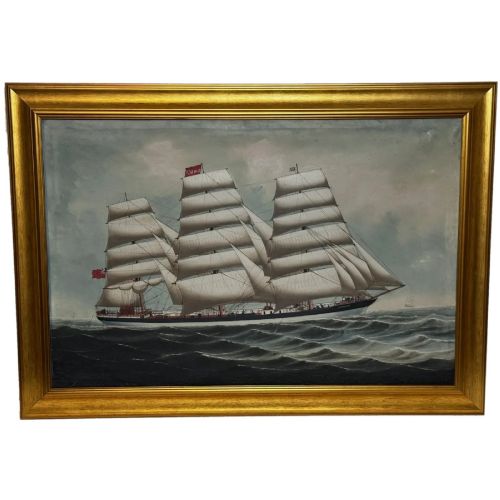
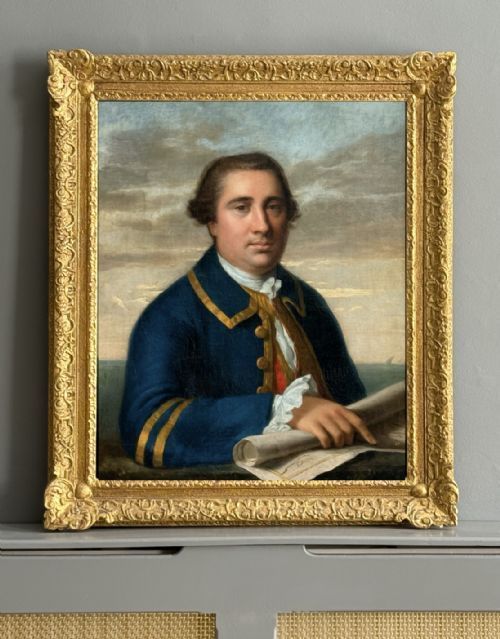

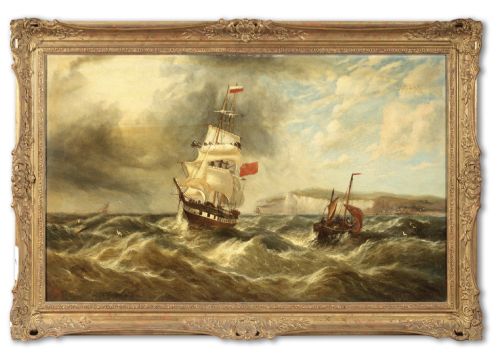
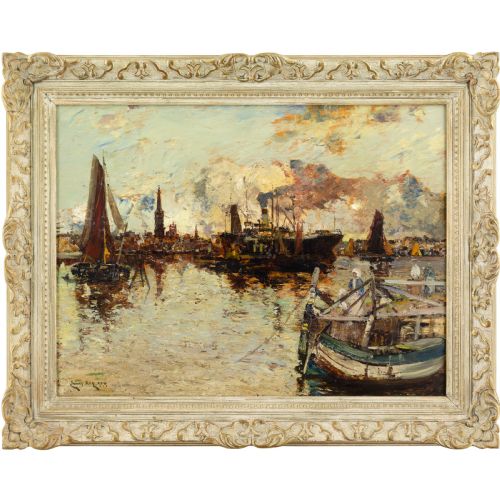
Gold Framed Nautical Painting
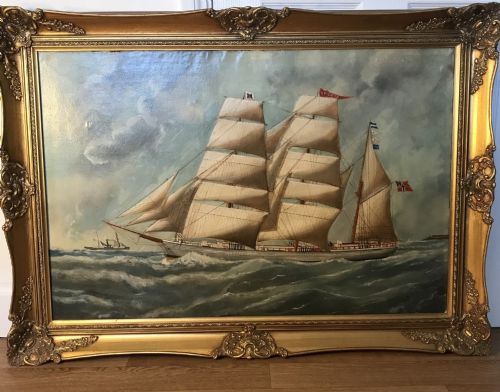
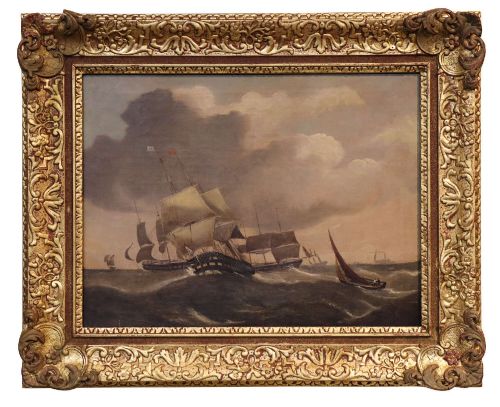
When you search for a gold framed nautical painting, you are looking at maritime art housed in gilded wood.
Gold Framed Nautical Painting
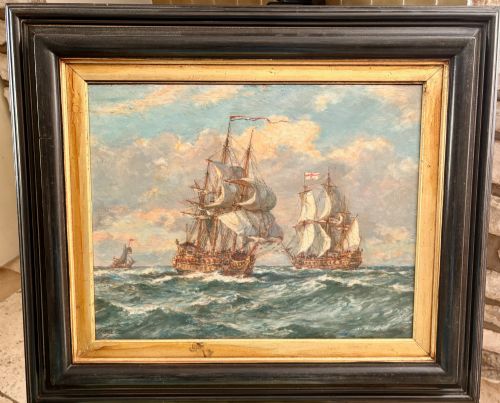
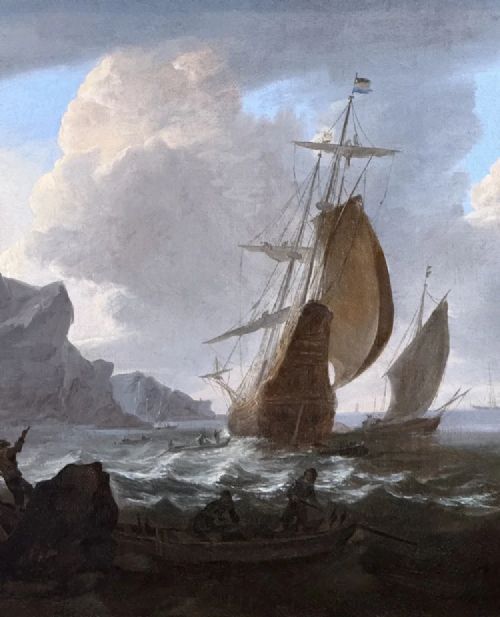
A gold framed nautical painting captures maritime history, shipping scenes, and coastal views through traditional media. These works depict warships, merchant vessels, lighthouses, and harbour scenes across various scales. The selection relies heavily on nineteenth-century and Edwardian examples housed in ornate gilt frames.
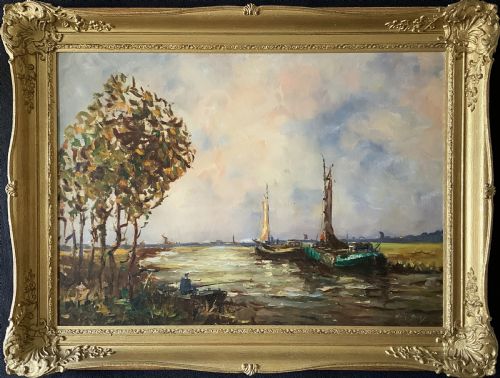
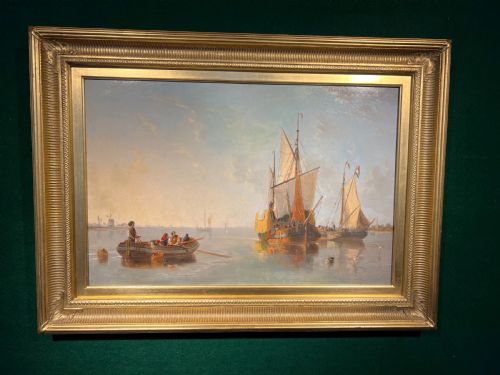
Buyers encounter oil paintings on canvas, panel, and board alongside waterworks. The subjects range from calm river canals and peaceful evening docks to dramatic storms at sea. Many pieces record specific vessels and historical locations along British and European coastlines.
How they were made
Artists painted primarily with oil paint on stretched canvas, wooden panels, or card, capturing light on water and the details of rigging. Watercolour paintings on paper also appear, often protected beneath glass and mounted securely.
The enclosing frames are constructed from wood and finished with giltwood or gold leaf application. These mouldings range from simple banded profiles to heavily decorated Victorian and Edwardian ornamental designs.
Several captains kept these framed seascapes close by, proving that even the saltiest sea dog appreciated a dry window onto a storm.
What varies in quality
Quality rests upon the artist's ability to render marine anatomy, water movement, and atmospheric light convincingly. Master hand-carved gilt frames with original gilding elevate a piece above standard factory mouldings.
Condition of both the painted surface and the surrounding frame dictates distinction. Works retaining original stretchers, clear signatures, and well-preserved paint layers without extensive overpainting command greater attention.
H. Medlycott·James Hardy·Eugène-Louis Gillot·William McAlpine·Reginald Arthur Borstel·LEMUEL FRANCIS ABBOTT·John Rose Miles·James Kay·BERNARD GRIBBLE·BONAVENTURA PEETERS·Willem Bos·John Wilson Carmichael·Nicholas Condy·William Henry Williamson·Bernard Benedict Hemy·George Stanfield Walters·Abraham Hulk I·Charles Napier Hemy·Gustave De Bréanski·Pieter Cornelis Dommersen·Adrian Van Porten·Daniel Sherrin·Fred Waugh·George SHAW·Charles Sim Mottram
The Gold Framed Nautical Painting Glossary
- Giltwood
- Wood carved and coated with gold leaf or metallic gilt paint. This material forms the ornate borders common to period maritime art.
- Oil on Canvas
- Pigment mixed with drying oils applied to woven fabric. This combination allows for rich colour blending and texture in marine scenes.
- Marine Art
- Artistic works depicting ships, the sea, and coastal subjects. This genre includes historical vessel portraits and dramatic storm scenes.
- Panel
- A flat piece of wood used as a rigid painting support. Artists often utilised these for smaller coastal studies.
- Watercolour
- Paint consisting of transparent pigment suspended in a water-based solution. These works on paper capture lighter, atmospheric coastal views.
Gold Framed Nautical Painting: Frequently Asked Questions
What subjects do these paintings show?
The artwork depicts a wide range of maritime subjects, including merchant sailing ships, warships, lighthouses, and harbour scenes. Many pieces record specific vessels navigating coastal waters or battling rough seas.
Other works focus on peaceful river canals, fishing boats returning to shore, and calm coastal sunsets. The diversity reflects different periods and artistic interpretations of the sea.
How should I hang a gilt framed painting?
Heavy oil paintings require secure wall fixings suited to the combined weight of the canvas and the wooden gilt frame. Position the artwork away from direct sunlight and moisture to protect both the paint surface and the gilded wood.
Ensure the hanging wire or brackets on the back match the weight distribution of the piece. Professional mirror and picture hangers provide the safest installation for larger maritime works.
How do I identify the period of a frame?
Victorian and Edwardian frames often feature deep plaster ornamentation over a wooden core, showing hand-applied gilding techniques. Earlier nineteenth-century examples display distinct corner construction and composition ornament details.
Examining the reverse reveals timber ageing, construction methods, and sometimes old labels or maker stamps. Comparing the frame style with the date of the canvas helps confirm if they are original to one another.
Are watercolours framed differently than oils?
Watercolour paintings require protection behind glass to prevent atmospheric damage to the paper. They are typically set within mounts and framed with narrower wooden mouldings than heavy oil paintings.
Oil paintings on canvas remain unglazed to let the textured brushwork breathe. Their frames are therefore sturdier and designed to support the weight of the stretched canvas directly.