


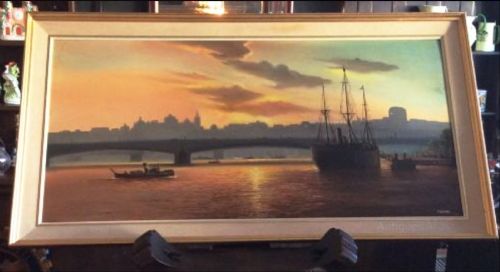
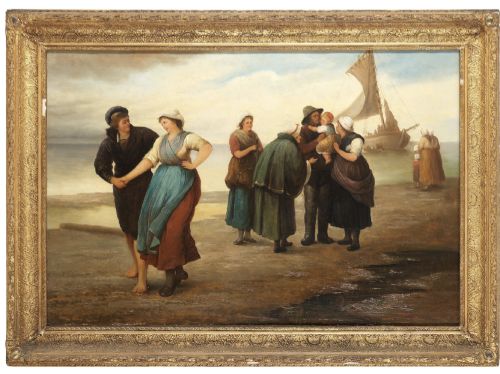
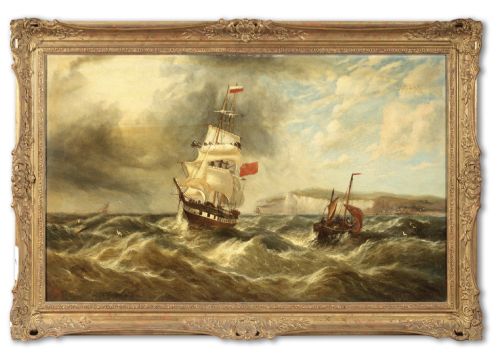

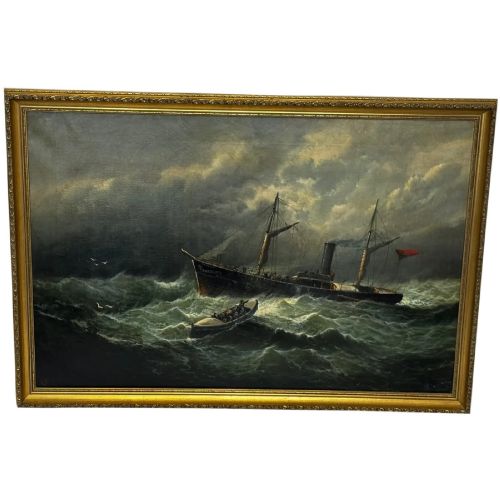
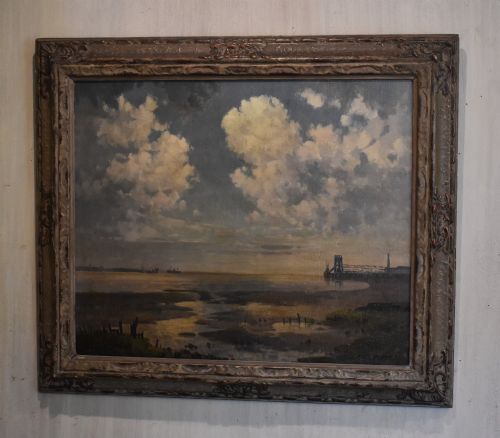
Framed Canvas Marine Art
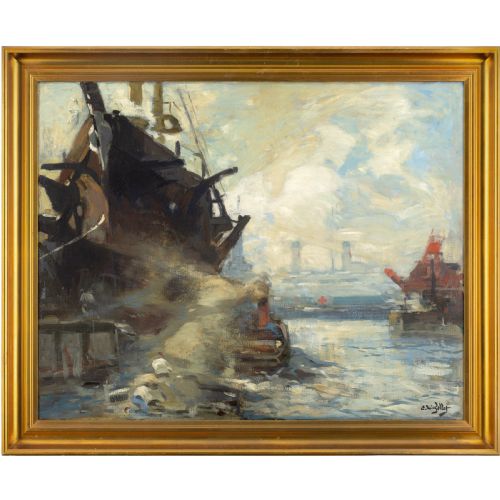
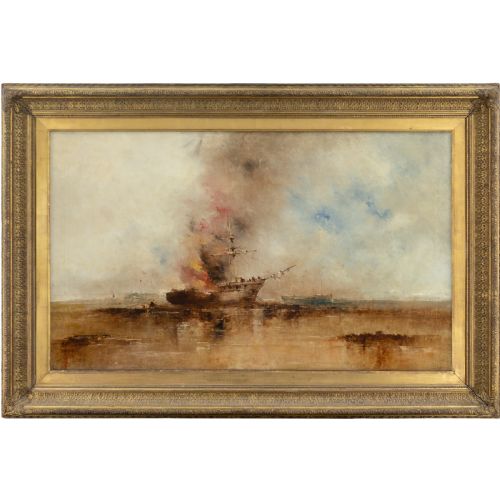
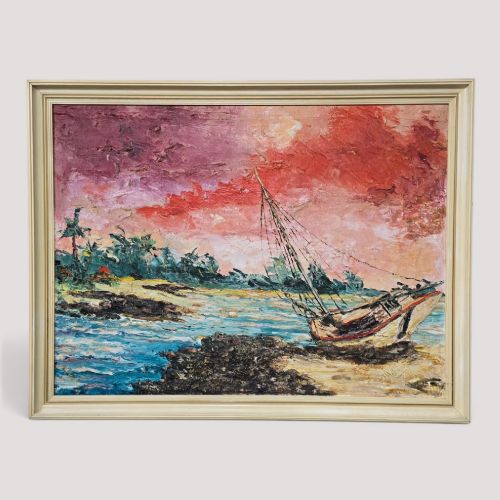
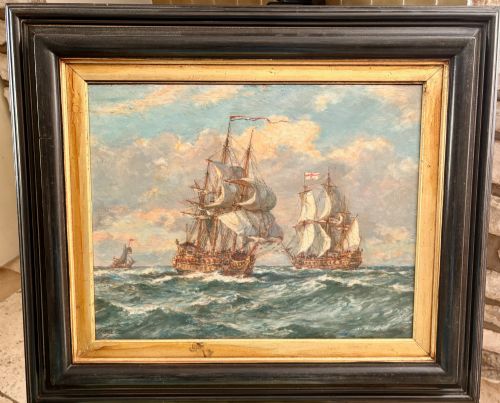
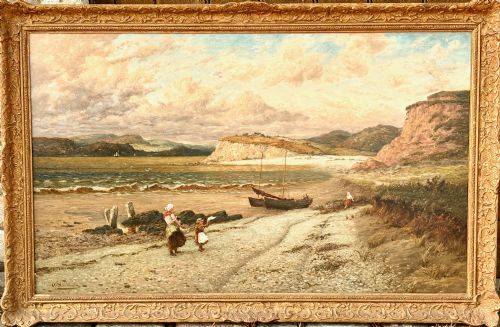
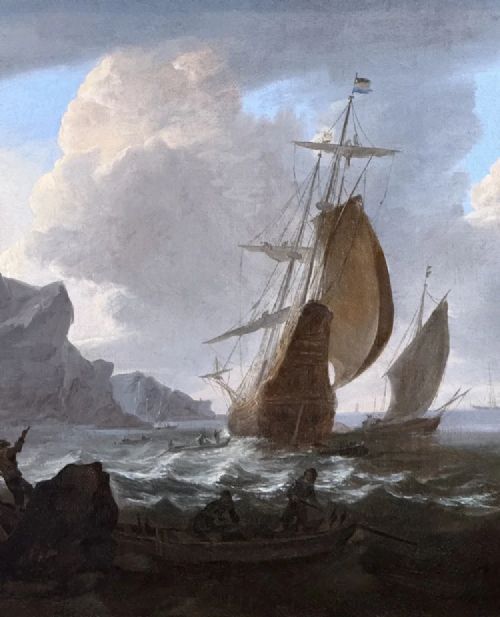
Framed canvas marine art brings historical shipping, coastal harbours and turbulent open waters directly into a room through oil paint on fabric.
Framed Canvas Marine Art
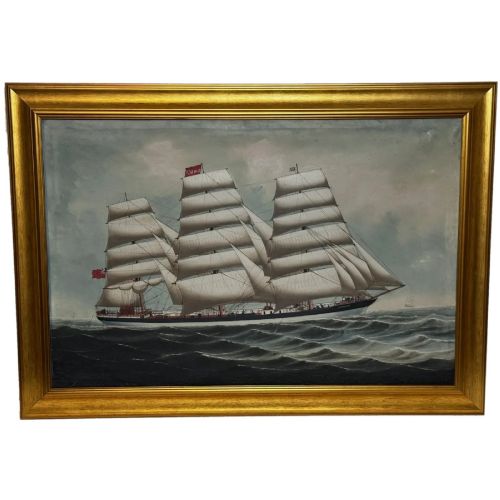
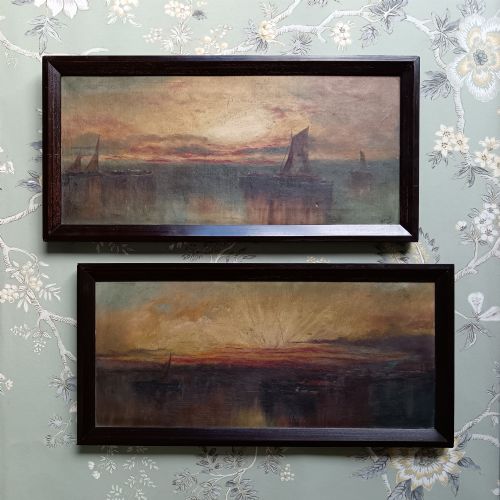
When you search for framed canvas marine art, you encounter oil paintings on canvas depicting ships, coastal landscapes and maritime scenes, predominantly housed within period frames of wood and gilt. These works span from the 17th century through the Victorian and Edwardian eras into the mid-20th century, encompassing diverse national schools.
The versions most commonly met on this page are 19th-century and early-20th-century British and European works capturing specific vessels, rescues, calm coastal views and stormy seas. Alongside traditional oil paintings, the selection includes oval formats, panoramic river views and large-scale canvases depicting historical shipping movements.
Such pieces serve both as historical records of maritime trade and naval architecture and as decorative focal points for interiors. The subjects range from localized British coastal scenes to bustling international harbours and dramatic shipwrecks.
Materials and technique
These works are executed in oil paint on stretched canvas, utilising the slow-drying medium to build rich layers of colour, light and texture across water and sky. Painters applied pigment with varying brushwork to render the transparent quality of waves, the weight of billowing sails and the atmospheric haze of coastal light.
The completed canvases are secured within timber frames, often embellished with gilt, giltwood or gold leaf to complement the composition and provide a finished architectural boundary. Structural framing materials commonly include shaped wood mouldings designed to support and protect the stretched fabric over generations.
Some Victorian canvases measure up to six feet wide, ensuring the sea dominates the entire room.
Assessing quality
Quality rests upon the artist's command of maritime anatomy, perspective and atmospheric conditions, distinguishing convincing depictions of water and rigging from static representations. A superior hand captures the weight of a vessel, the chaotic movement of a gale and the precise play of light on open sea.
The integrity of the canvas and the preservation of the original oil paint layer dictate the condition tier, while the harmony between the artwork and its period wood or gilt frame influences the overall artefact. Works displaying documented attribution to recognised marine painters carry distinct historical weight compared to anonymous school pieces.
Clifford Hanney·Eugène-Louis Gillot·William McAlpine·Reginald Arthur Borstel·B. Nash·John Rose Miles·William Broome·Bernard Gribble·Bonaventura Peeters·Clive Browne·Peter Brannan·Paul Bret·Francis Moltino·Bernard Benedict Hemy·Thomas Creswick·Willem Bos·John Wilson Carmichael·Lai Fong·Nicholas Condy·Richard B. Spencer·William Henry Williamson·John Holland·Walter Goodin·Abraham Hulk I
The Framed Canvas Marine Art Glossary
- Giltwood
- Wood carved and coated with gold leaf or metallic powder to create a reflective, ornate frame finish. This technique was standard for framing significant 19th-century fine art.
- Barque
- A sailing vessel with three or more masts having the fore- and mainmasts square-rigged and the mizzenmast fore-and-aft rigged. This rig frequently appears in 19th-century shipping records and maritime paintings.
- Seascape
- A painting depicting the sea, coastal views or marine subjects. It forms the primary category for these canvas works.
- Provenance
- The chronological history of the ownership of a work of art. Documented provenance helps establish authenticity and attribution.
Framed Canvas Marine Art: Frequently Asked Questions
What subjects do marine paintings show?
These artworks depict a wide array of maritime activity, including merchant shipping, naval engagements, harbour scenes and coastal rescues. They also capture quieter moments such as fishing boats at anchor and panoramic river views.
Artists frequently documented specific vessels, historical events, and recognizable coastal landmarks across Britain and Europe.
How do I identify the period of a canvas?
Dating relies on a combination of framing styles, canvas preparation techniques, and the depicted maritime subject matter. Clothing styles of figures and types of watercraft provide further chronological markers.
Signatures, dealer labels, and inscriptions on the reverse of the canvas or frame often clarify the exact era.
Are these paintings original works?
The listings consist entirely of original oil paintings executed by hand on canvas. Each piece represents a unique artistic creation rather than a modern reproduction or print.
Artists applied oil pigments directly to stretched fabric, resulting in distinct surface textures and brushwork.
How should I care for an oil painting?
Display the canvas away from direct sunlight and fluctuating humidity levels to protect both the oil paint and the wooden frame. Gentle dusting with a soft, dry brush maintains the surface.
Avoid using liquid cleaners on the paint layer or the gilt surround.