


British Maritime Watercolour
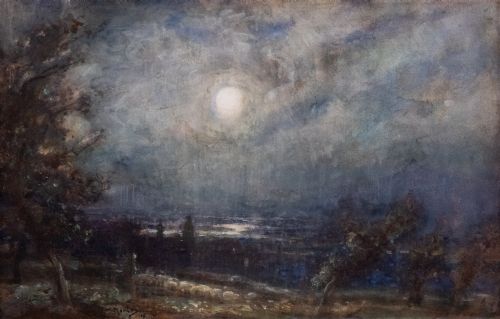
British maritime watercolour works capture coastal life, working harbours, and coastal shipping with swift pigment on paper.
British Maritime Watercolour
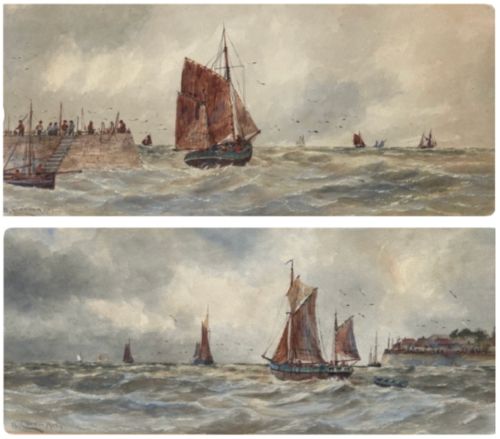
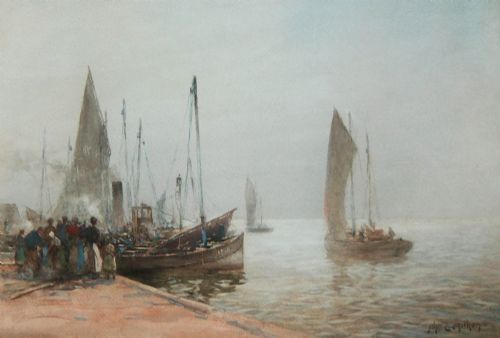
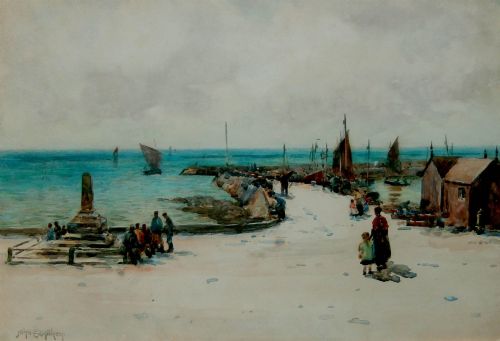
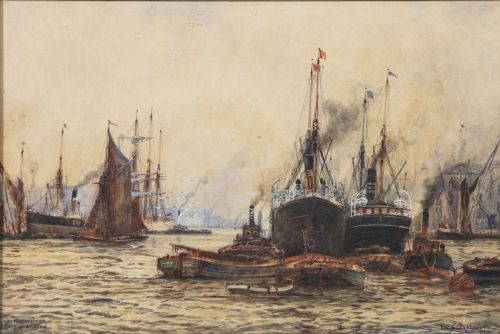
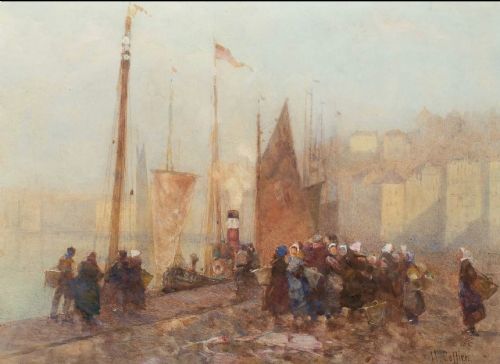
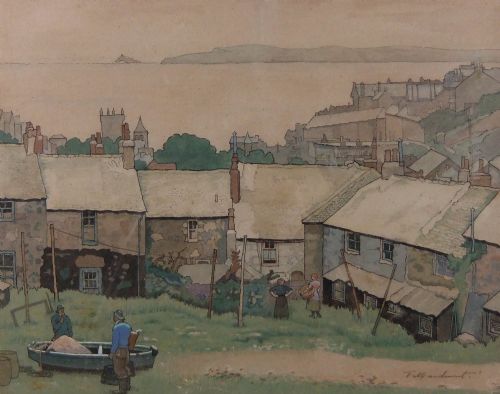
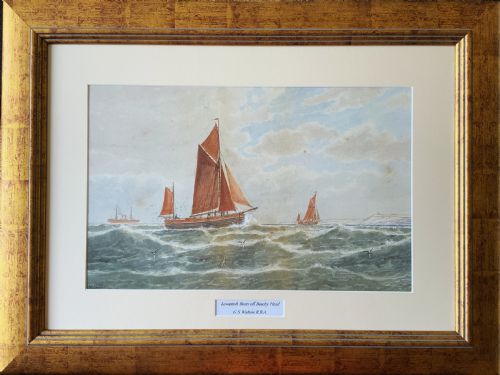
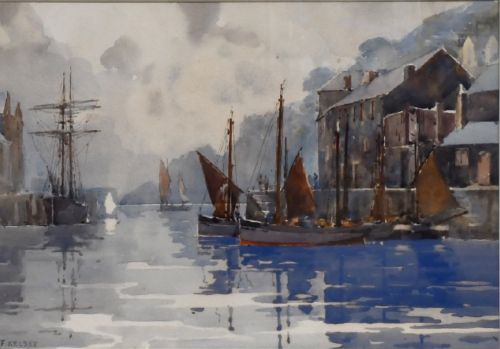
A British maritime watercolour records coastal and marine subjects across the nineteenth and twentieth centuries, capturing harbours, fishing fleets, and estuaries. The works commonly depict identifiable locations such as Whitby, St Ives, Scarborough, and the River Humber, alongside scenes from continental ports.
The pieces on this page are predominantly works on paper executed during the Victorian and Edwardian periods, extending through the interwar years up to the mid-twentieth century. Collectors encounter finished cabinet pictures alongside spontaneous plein air studies created by regional and nationally exhibited artists.
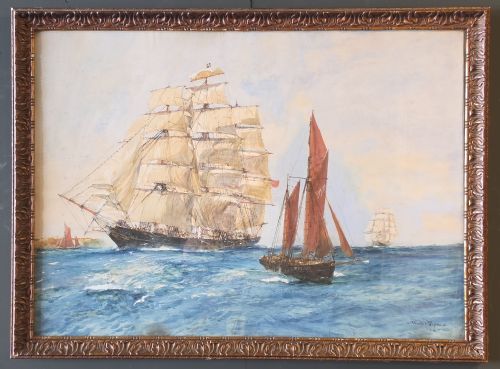
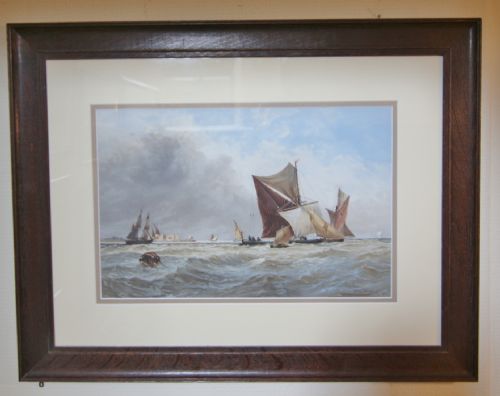
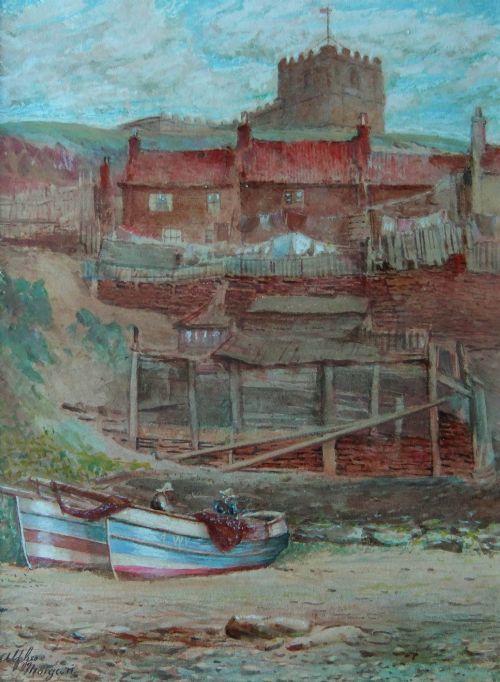
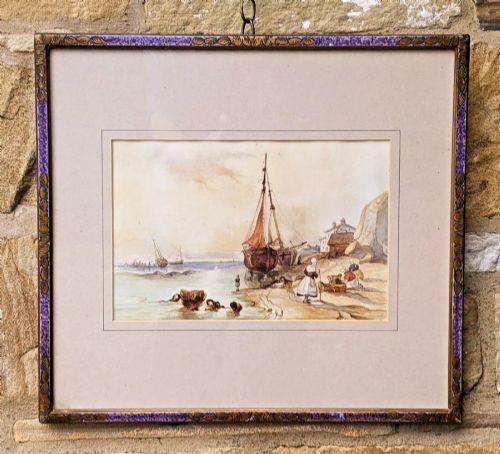
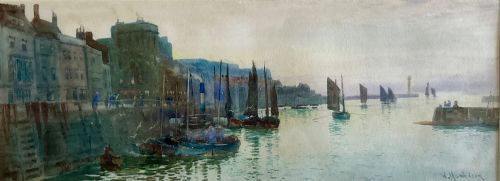
Most compositions focus on the working life of the sea, showing sailing vessels, clippers, cobles, and fishing luggers at anchor or navigating coastal waters. Architectural elements such as town abbeys, piers, and harbour walls frequently anchor the marine composition.
Materials and Technique
The primary support is heavy watercolour paper, occasionally prepared with a tinted wash or pencil underdrawing to establish perspective and composition before the application of pigment. Artists utilised transparent watercolour paint alongside bodycolour for opaque highlights on white water and foam.
Framed works commonly feature protective glass held within wood frames, frequently finished with gilt details that complement the historical tones of the paintings. The combination of fluid washes and precise brushwork allows the texture of the paper to remain visible through the sky and water.
British Maritime Watercolour Retail Price Guide 2026
Typical asking prices for british maritime watercolour among the pieces listed under this phrase on Sellingantiques today, from the lower quarter to the upper quarter. They describe what is for sale here now, not the wider market.
Listings span the nineteenth and twentieth centuries, featuring works on paper by regional British artists and coastal specialists.
Evaluating Quality
Quality rests upon the artist's handling of light, atmosphere, and movement in the water, separating masterly depictions of tidal movement from static topographical records. Superior examples demonstrate confident brushwork that captures transient weather conditions, reflections on wet sand, and the specific rigging of vessels.
The clarity of the paper support and the preservation of pigment vibrancy also determine the standing of a piece. Works that retain their original tonal contrast without excessive fading showcase the enduring skill of the painter.
Thomas Bush Hardy·George Stanfield Walters·Charles Edward Dixon·Edward Seago·William Matthison
The British Maritime Watercolour Glossary
- Watercolour
- A paint consisting of pigment suspended in a water-based solution applied to paper. It relies on the white of the paper to provide luminosity through transparent washes.
- Bodycolour
- Watercolour paint mixed with a white pigment to make it opaque. This technique adds solid highlights to foam, sails, and clouds.
- Coble
- A traditional open fishing boat peculiar to the northeast coast of England, featuring a flat floor and high bow. These vessels frequently appear in regional coastal paintings.
- Wash
- A thin, fluid layer of diluted watercolour spread evenly across the paper to represent skies or open water. It forms the atmospheric foundation of the composition.
British Maritime Watercolour: Frequently Asked Questions
How should I frame a watercolour?
Watercolours require framing behind glass with acid-free mounts to prevent the paper from touching the glazing. This protects the delicate pigments from atmospheric moisture and physical degradation.
Keep framed works away from direct sunlight to preserve the fugitive tones typical of nineteenth-century watercolours.
How do I identify the period of a painting?
Dating relies on stylistic evidence, artist signatures, clothing styles of figures on the shore, and the type of vessels depicted in the harbour. Victorian works often display detailed narrative elements, whereas later twentieth-century pieces favour looser impressionistic marks.
Examine framing labels, inscriptions on the reverse, and biographical dates of the recorded artist to narrow the production window.
Were these painted outdoors?
Artists created preliminary sketches and small studies directly on location to capture changing light and tidal conditions. Finished exhibition watercolours were frequently completed within the studio using these field notes.
plein air methods became increasingly common towards the end of the nineteenth century with the availability of portable paint boxes.
What distinguishes marine art from coastal art?
Marine art primarily focuses on ships, naval history, and deep-water navigation. Coastal art places greater emphasis on shorelines, harbours, beach scenes, and local fishing communities.
Many British works bridge both categories by showing vessels at rest within busy domestic ports.