


British Maritime Landscape Painting
British maritime landscape painting captures coastal vistas and river scenes through the brushwork of artists recording the nation's shores and waterways.
British Maritime Landscape Painting
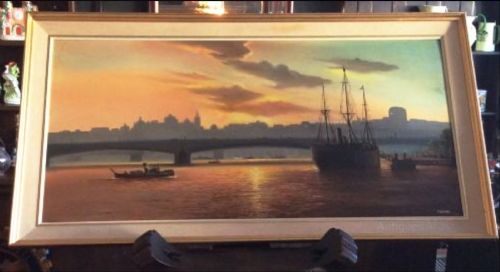
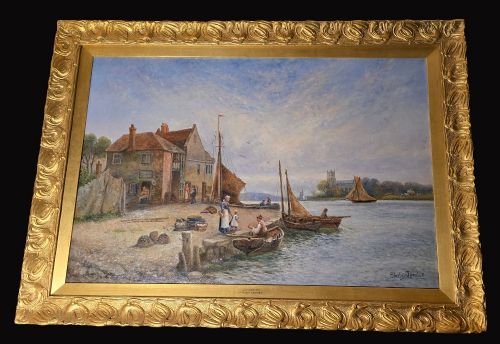
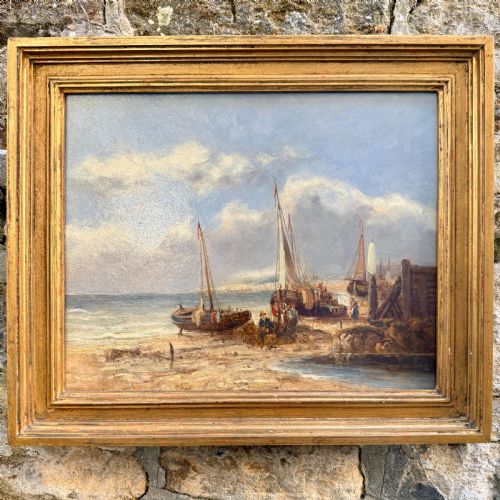
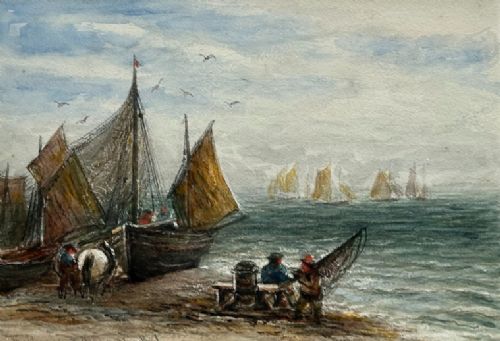
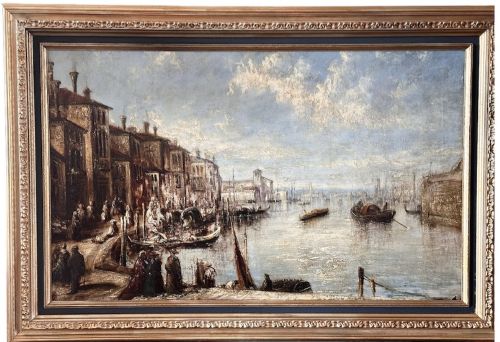
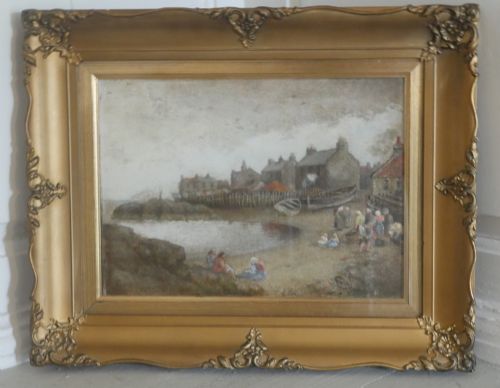
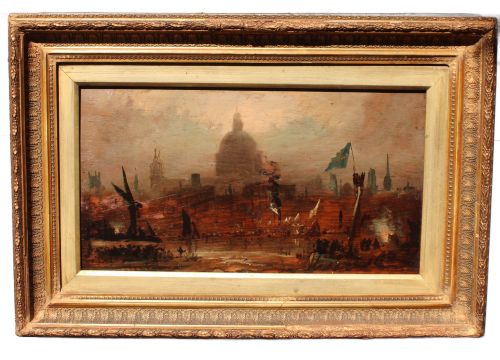
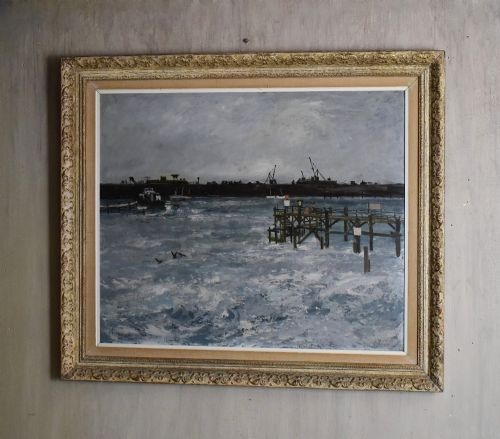
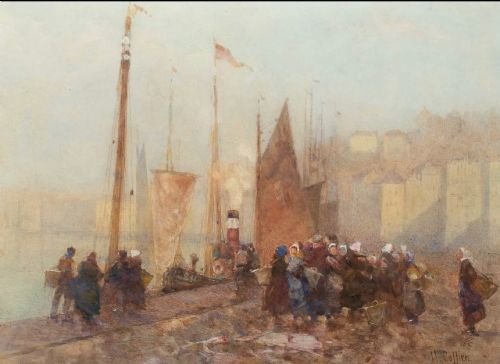
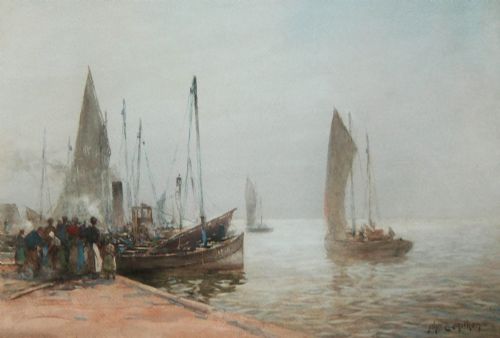
A British maritime landscape painting presents views of harbours, fishing boats, rivers, and coastal paths from the nineteenth century into the mid twentieth century. These works document historic ports such as Whitby, St Ives, and the River Thames through changing eras and artistic movements.
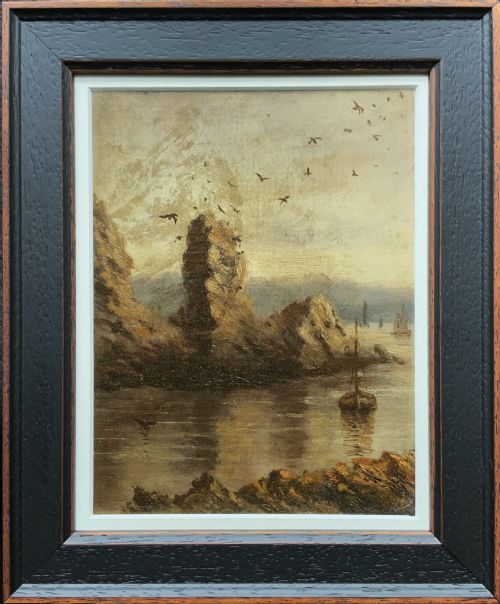
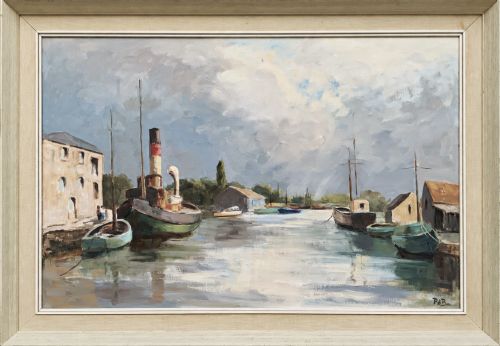
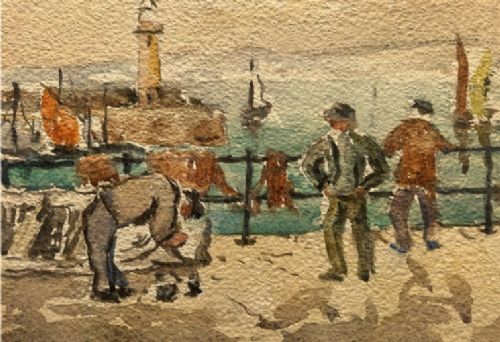
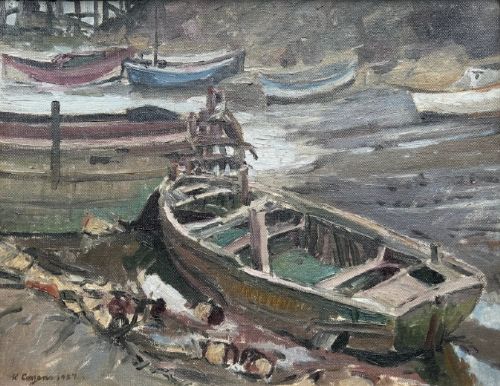
The most common examples on this page are oil paintings on canvas or board and watercolour works on paper. They range from small intimate coastal studies to large nineteenth century maritime canvases framed in gilt wood.
Makers and artists represented span the Victorian period, Edwardian era, British Impressionism, and Modern British styles, capturing everyday maritime labour alongside wide estuary views.
How They Were Made
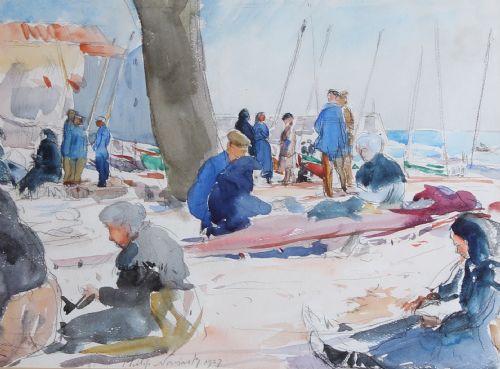
Artists painted primarily in oil on canvas or board, and in watercolour pigment on paper, utilising traditional brush techniques to render water, sky, and coastal architecture. Oil mediums allowed for textured impasto on large canvases, while watercolours provided translucent washes for lighter coastal atmospheres.
Framing typically involved timber and gilt wood surrounds that preserved the paper and canvas supports behind glass or in open frames. These materials reflect the standard studio practices of British painters from the early nineteenth century onwards.
British Maritime Landscape Painting Retail Price Guide 2026
Typical asking prices for british maritime landscape painting among the pieces listed under this phrase on Sellingantiques today, from the lower quarter to the upper quarter. They describe what is for sale here now, not the wider market.
Listings feature works spanning the nineteenth century, 1900, 1910, 1920, 1930, 1950, and 1960.
What Varies in Quality
Quality rests in the handling of light, atmosphere, and spatial depth, distinguishing accomplished plein air observation from formulaic studio production. Stronger pieces demonstrate confident brushwork and precise topographical rendering of maritime activity.
Condition of the support and pigment stability also separate examples, with well-preserved watercolours retaining their original pigment intensity and oils maintaining stable surfaces across canvas and board.
William Calcott Knell·Stanley Leader·George F Pennington·Peggy de Brett·William Shayer·Philip Naviasky·Kenneth Cozens·James Orrock·Edward Mills·James E Aitken·John E Aitken·William Banks Fortescue·Thomas William Morley·Peter Brannan·Francis Moltino·Hector Caffieri·Bernard Benedict Hemy·Thomas Creswick·Lucy Pratt·Cyril Walduck Edwards·Thomas Maidment·Donald McIntyre·Cecil Allan Mould·John Wilson Carmichael·Alfred G Morgan
The British Maritime Landscape Painting Glossary
- Oil on Canvas
- Pigment mixed with drying oil applied to stretched fabric. This medium permitted rich colour layering and textured brushwork for maritime scenes.
- Watercolour Pigment
- Water-soluble colour applied to paper supports. It created transparent washes suited to capturing shifting coastal light and skies.
- Gilt Wood
- Timber framing finished with a thin layer of gold leaf or metallic gilt. It provided traditional decorative borders for nineteenth century paintings.
- British Impressionism
- An artistic approach focusing on light and everyday subjects. It influenced domestic painters capturing open-air coastal scenes.
- Seascape
- A work depicting the sea, coast, or maritime vessels. It forms the core subject matter across these historical paintings.
British Maritime Landscape Painting: Frequently Asked Questions
What periods do these paintings cover?
The works span from the early nineteenth century through the Edwardian era and into the mid twentieth century. They reflect shifting artistic approaches across these decades.
Artists recorded changing coastal towns, busy ports, and river scenes using traditional oil and watercolour techniques appropriate to each era.
How should I hang a maritime painting?
Consider the lighting in your room to avoid direct sunlight fading watercolours on paper or oil pigments. Wall placement should protect works behind glass from moisture and excessive heat.
Pair the frame style, such as traditional gilt wood, with the period of the painting to maintain historical harmony in your interior space.
Are these works signed by the artists?
Many pieces feature visible signatures, monograms, or studio attributions inscribed by the artist on the front or reverse of the canvas, board, or paper. Documentation often links specific paintings to known exhibition histories.
Unsigned works are attributed through stylistic comparison, period evidence, and subject matter matching documented coastal locations.
What subjects appear in these scenes?
Common subjects include working fishing boats, busy harbours, estuary views, and historic bridges along rivers like the Thames. Scenes frequently capture daily maritime labour such as mending nets.
Coastal landscapes range from northern ports and rocky shores to southern beaches and moonlit tidal waters.