


British Coastal Fine Art
British coastal fine art captures the shifting light and rugged shores of our islands through Victorian landscapes, watercolours and twentieth-century oils.
British Coastal Fine Art
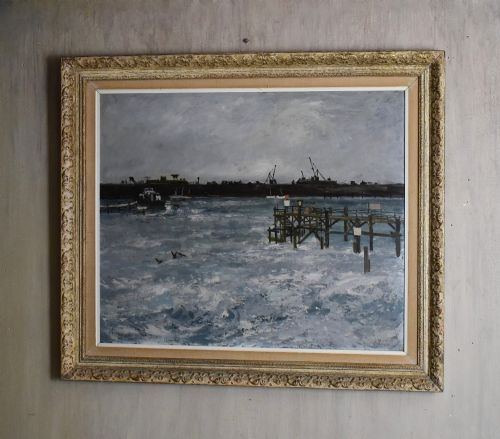
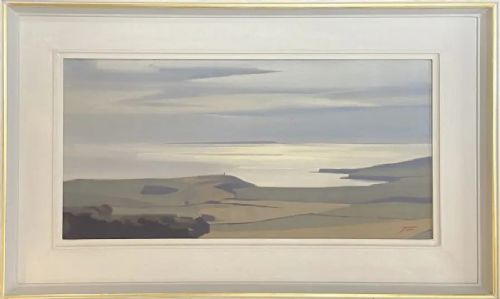
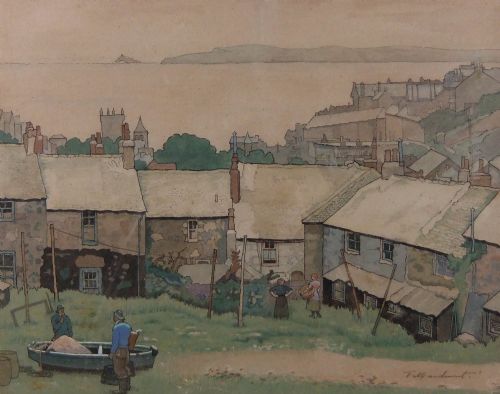
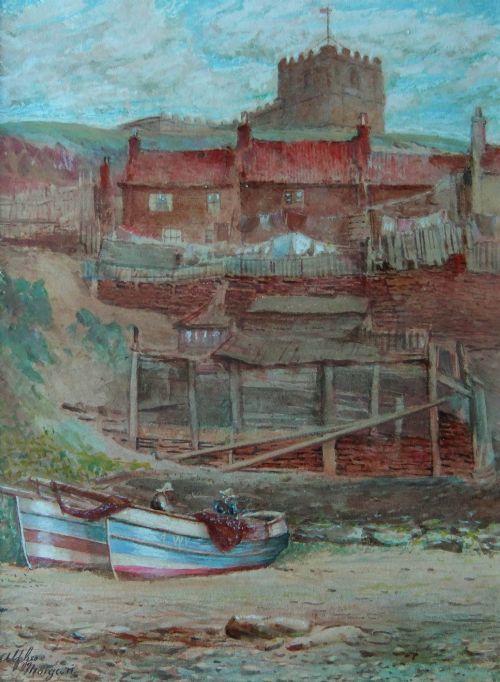
British coastal fine art spans framed watercolours and oil paintings depicting harbours, cliffs and fishing boats from the nineteenth century through the mid-twentieth century. Buyers encounter depictions of familiar fishing ports like Whitby and St Ives alongside quiet estuaries and dramatic headlands.
The selection ranges from detailed Victorian watercolours to looser Edwardian and Modern British oils. Works often highlight specific regional shores, including Yorkshire bays, Scottish borders and Cornish harbours, rendered by regionally active artists.
How they were made
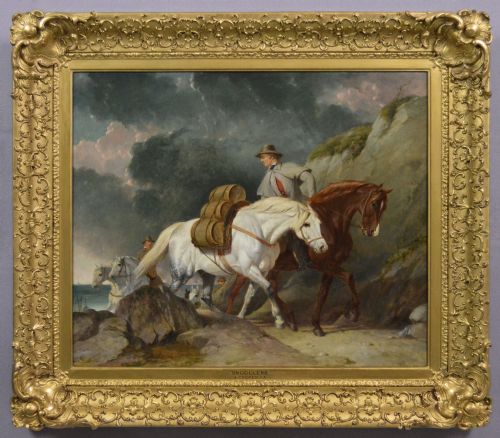
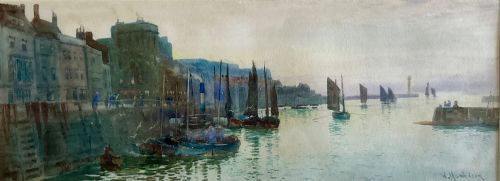
Painters used oil paint on canvas, board or panel, as well as watercolour on paper, often finished with gesso frames. Oils allowed for rich, layered textures suitable for stormy seas and coastal cliffs, while watercolours captured luminous skies and translucent tidal waters.
Artists worked both <em>en plein air</em> along clifftops and harbours and within studios using preliminary sketches. Support materials like primed canvas and heavy watercolour paper dictated the permanence and finish of each composition.
Smugglers, sheep and fishing boats share these shores, proving that British weather was just as busy a century ago.
What varies in quality
Quality rests upon the artist's command of light, atmosphere and perspective rather than the mere subject matter. Stronger works demonstrate confident brushwork and precise tonal control that convey the damp air and movement of the sea.
The relationship between the medium and the chosen view dictates overall success. A successful oil painting manages heavy impasto without losing structural clarity, while a watercolour relies on paper preservation and transparent washes.
Peter Brannan·James Fry·Thomas Maidment·Alfred G Morgan·Abraham Cooper·William Matthison·Arthur Tucker·Herbert Royle·William Pitt·Sir William Russell Flint·Thomas Rose Miles·John McDougal·Frank Wasley·Thomas Bush Hardy·Hirst Walker·Owen Bowen·H Hadfield Cubley·John Sanderson Wells·William Savage Cooper·William Collins·Thomas Swift Hutton·Walter Holmes·William Sidney Cooper·James Ward·Walter Meegan
The British Coastal Fine Art Glossary
- Watercolour
- A painting method where fine pigment is suspended in a water-based, translucent solution applied to paper.
- Oil on Canvas
- Pigment bound in drying oil applied to a stretched woven fabric support, offering depth and durability.
- Gesso
- A plaster-like mixture applied to wooden panels or frames to prepare a smooth surface for painting or gilding.
- Board
- A rigid flat support used instead of canvas for oil paintings, common in sketching and smaller landscape works.
British Coastal Fine Art: Frequently Asked Questions
What periods do these coastal paintings cover?
The works span from the nineteenth century through the Victorian era into the 1950s and 1960s.
Styles shift from traditional Victorian landscapes to Edwardian watercolours and mid-century modern interpretations.
How should I care for a watercolour painting?
Watercolours require placement away from direct sunlight to prevent fading of the pigments on paper.
Glazing with appropriate conservation glass protects the delicate paper surface from moisture and atmospheric damage.
Where were most of these scenes painted?
Artists focused heavily on British fishing ports and coastal inlets, particularly in Yorkshire, Cornwall and Scotland.
Locations like Whitby, St Ives and various northern estuaries appear frequently across the selection.
What is the difference between oil and watercolour works here?
Oils utilise heavy pigments on canvas or board, creating textured surfaces that capture dramatic skies and crashing waves.
Watercolours employ fluid washes on paper to achieve softer atmospheric effects, luminous light and transparent water.