



Breakfront China Cabinet
A breakfront china cabinet provides a commanding architectural presence in a room while keeping prized porcelain and glass safely on display.
Breakfront China Cabinet
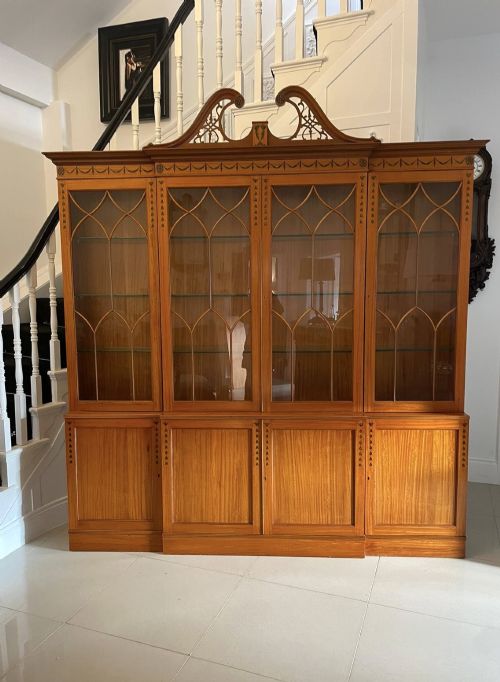
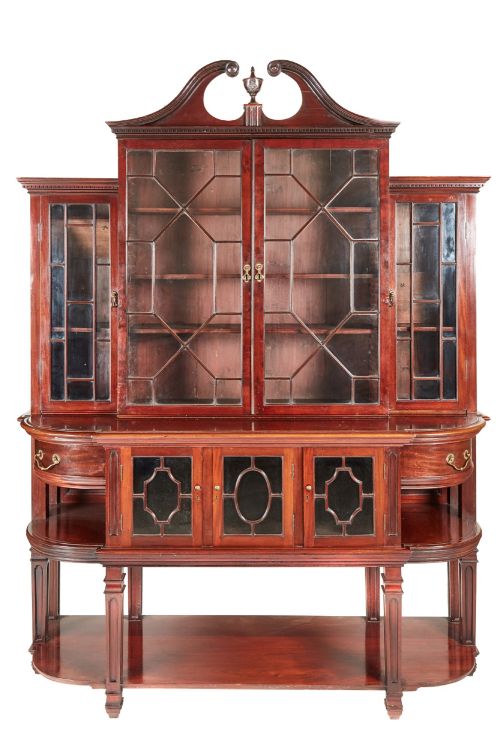
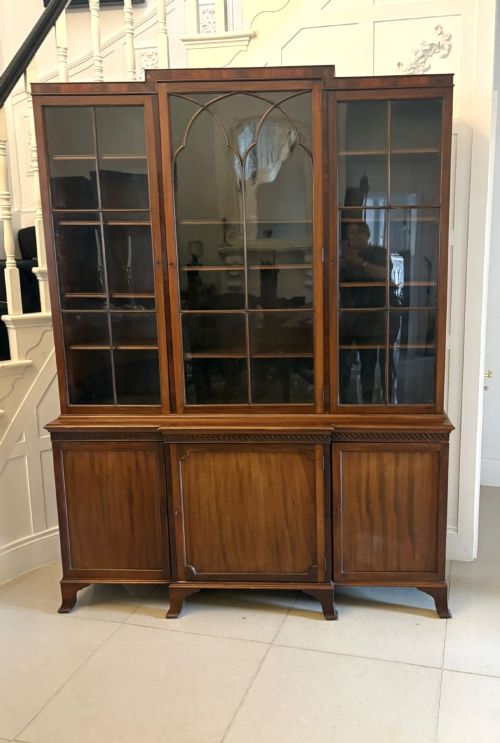
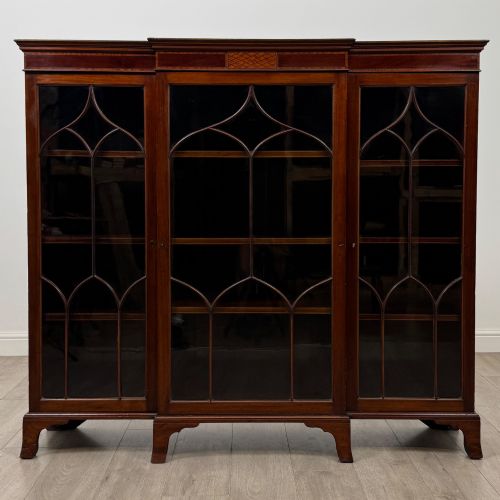
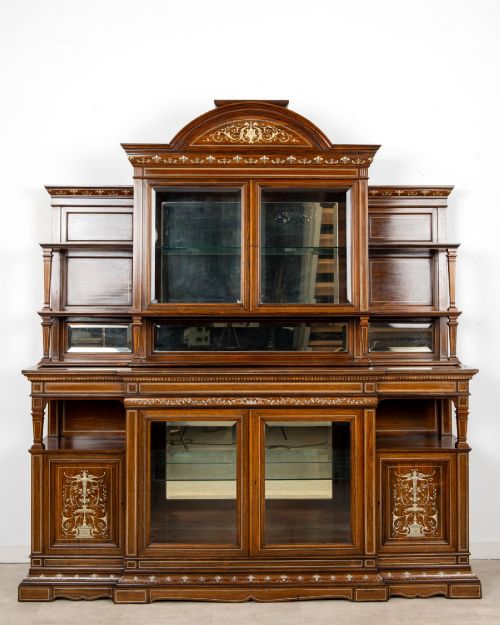
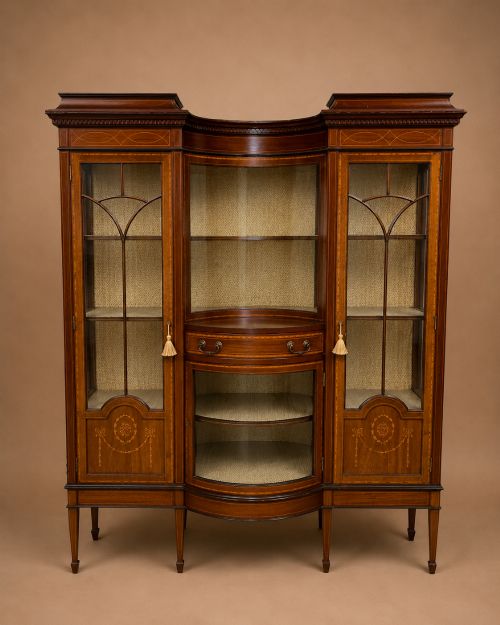
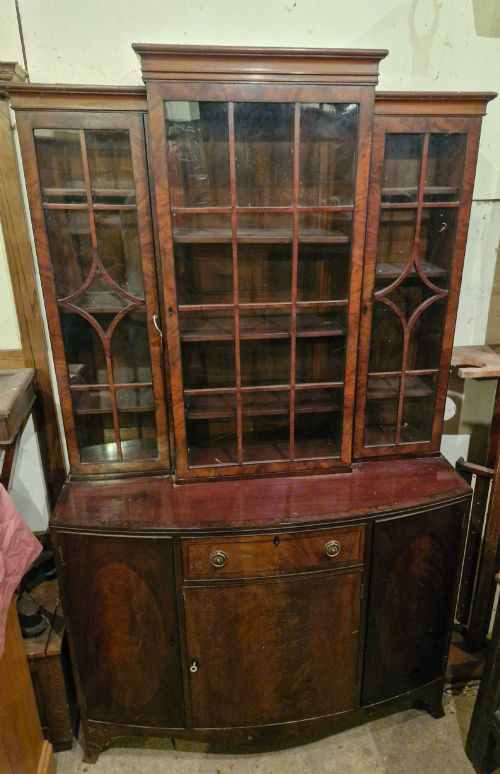
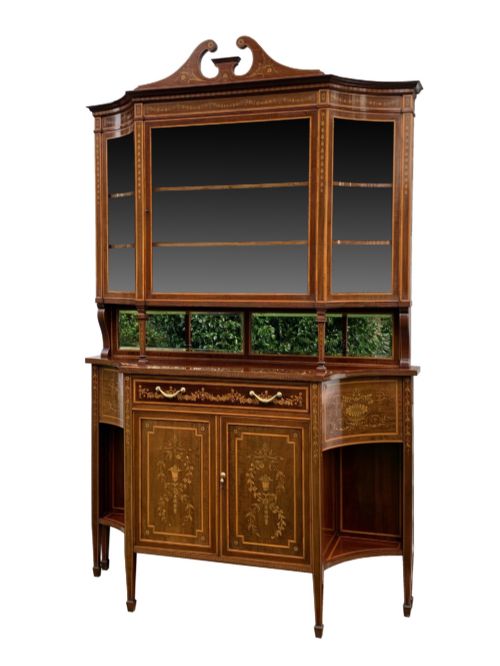
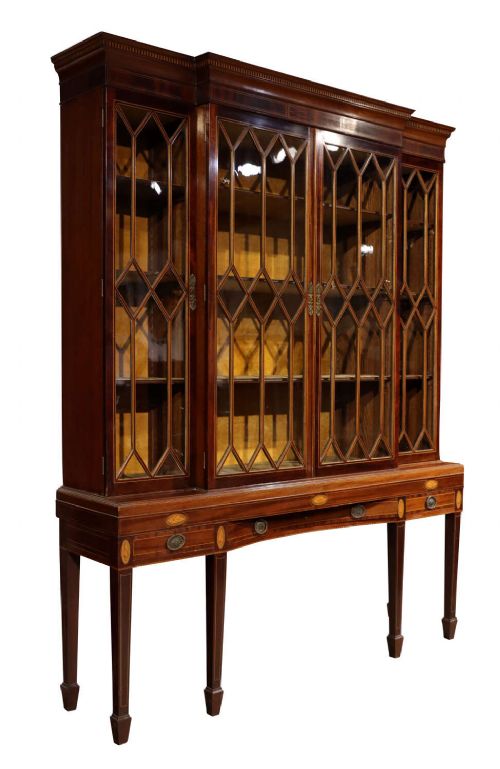
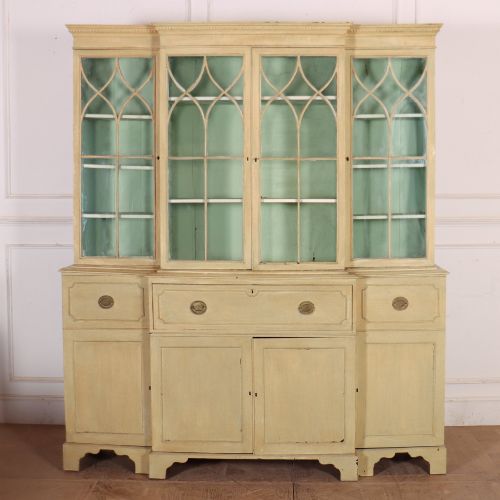
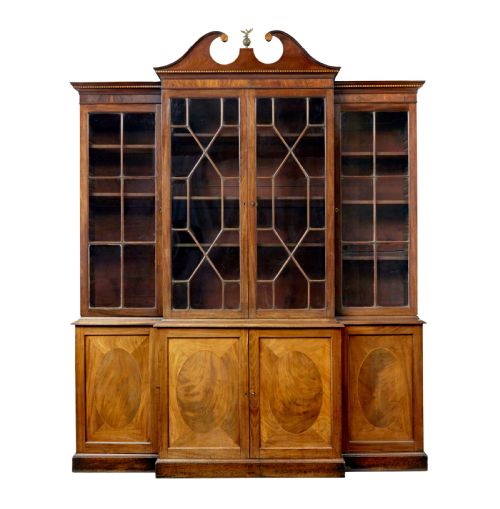
A breakfront china cabinet projects forward in its central section, creating a stepped facade that breaks the long flat line of traditional storage furniture. This form emerged strongly during the Victorian and Edwardian periods, drawing on earlier Georgian proportions and revival styles.
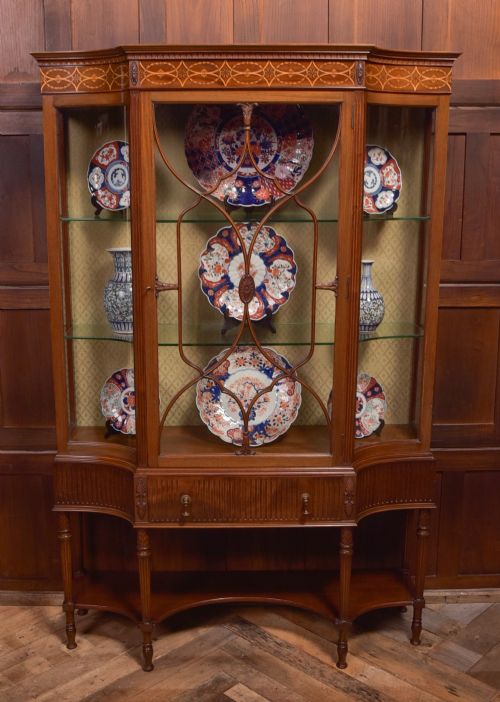
The versions most commonly met on this page combine glazed upper doors with lower wooden cupboards or drawers, often utilising mahogany, satinwood, or rosewood as the primary carcass material. They serve primarily as display cabinets or bookcases, housing collections behind glass panels.
Makers adapted the form through various revivals, producing Chippendale Revival, Sheraton Revival, and Victorian Gothic examples alongside plain architectural iterations. The scale ranges from large library bookcases to smaller display cabinets intended for domestic drawing rooms.
How they were made
Glazing techniques define the upper sections, utilising astragal bars to divide the glass into smaller panes that let in maximum light. Ebonised wood and parcel-gilt details appear on specific aesthetic and Victorian pieces to create sharp tonal contrasts.
Structural integrity relies on traditional joinery, with larger breakfront bookcases built in separable sections to facilitate transport and installation in grand homes. Back panels and internal carcases are typically executed in secondary softwoods or oak.
Listings feature mahogany, satinwood, and rosewood cabinets spanning the Victorian, Edwardian, and Georgian revival periods.
What varies in quality
The choice and matching of timber veneers dictate the visual impact of the facade, with symmetrical flame mahogany or figured satinwood marking out superior workshop output. Poorer examples rely on plain, unfigured timber with minimal attention to grain continuity across the breakfront steps.
Hand-carved detailing and crispness in the astragal glazing bars separate standard production from exceptional furniture. Cabinets bearing maker signatures or attributions to prominent London firms generally display tighter joinery tolerances and heavier, better-cast brass mounts.
Jas Shoolbred·Collinson & Lock·Edwards & Roberts·Maple & Co
The Breakfront China Cabinet Glossary
- Breakfront
- An architectural cabinet design where the central section projects forward beyond the flanking side sections. This creates depth and shadow across the front elevation.
- Astragal
- A small convex moulding used to divide glass panes within a door. In these cabinets, wooden astragal bars form geometric patterns across the display windows.
- Vitrine
- A glass-fronted display cabinet specifically designed for showcasing porcelain, curiosities, or objects d'art. The term emphasises the all-glass visual presentation.
- Secrétaire
- A desk unit incorporating a pull-down writing flap concealed within the cabinet structure. These often sit beneath the upper glazed bookcase sections.
Breakfront China Cabinet: Frequently Asked Questions
How do I date a cabinet?
Dating relies on identifying timber choices, construction methods, and stylistic revival cues. Victorian and Edwardian pieces often combine rich mahogany or satinwood with specific inlay motifs.
Comparing the secondary woods inside drawers and back panels helps confirm the manufacturing era.
Can these hold heavy books?
Many examples function as both display cabinets and library bookcases with sturdy internal shelving. The depth and construction of the shelves determine their load-bearing capacity.
Most period pieces easily accommodate standard book collections behind their glazed doors.
Are the cabinets in sections?
Larger breakfront bookcases and display cabinets were built in multiple modular sections to aid transport. The top glazed portion typically lifts off the lower cupboard base.
This modular construction made it feasible to move heavy furniture into upper rooms of period homes.