

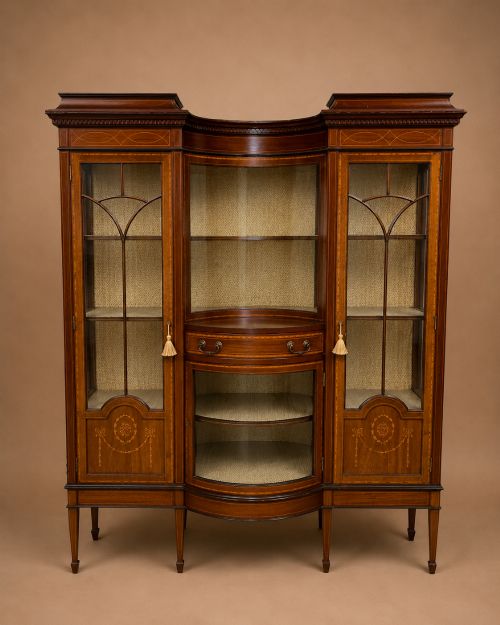
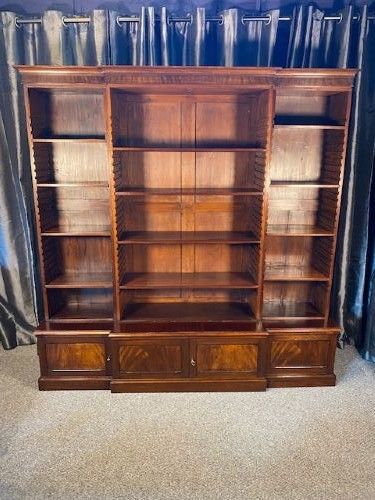
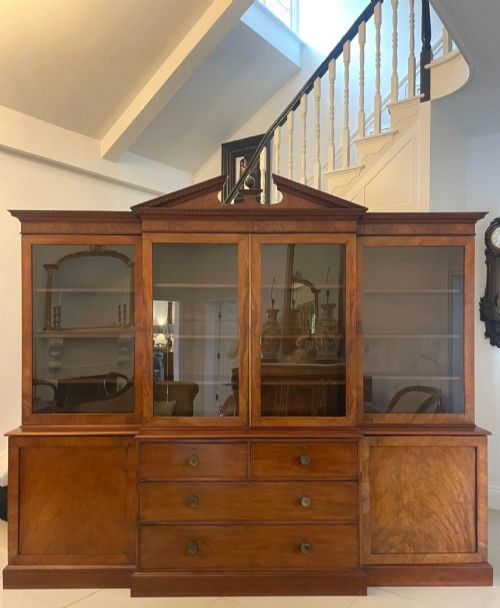
Breakfront Bookcase Cabinet
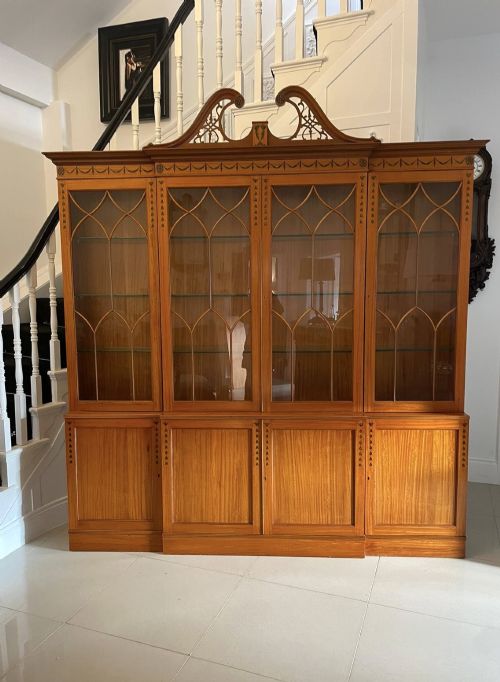
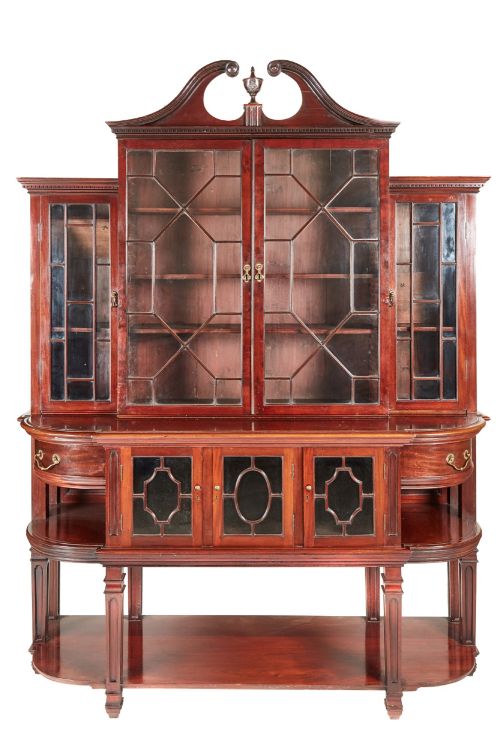
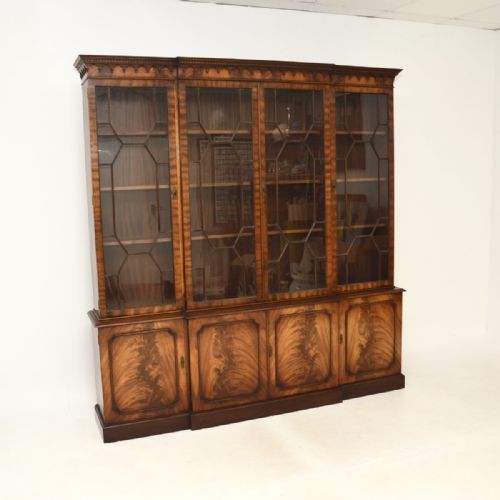
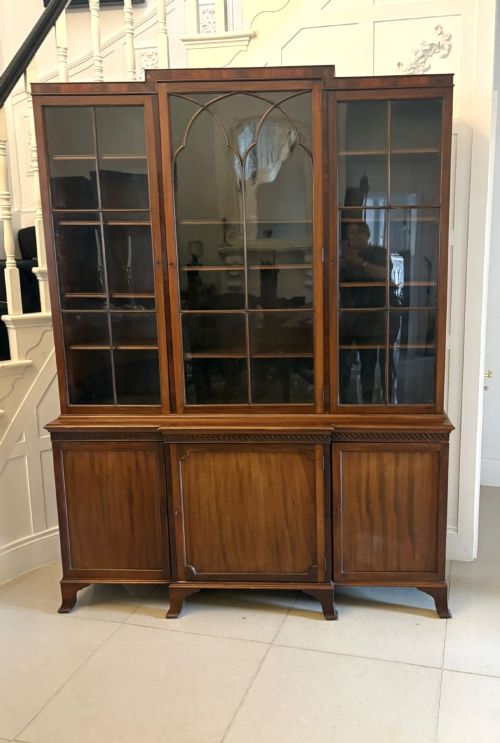
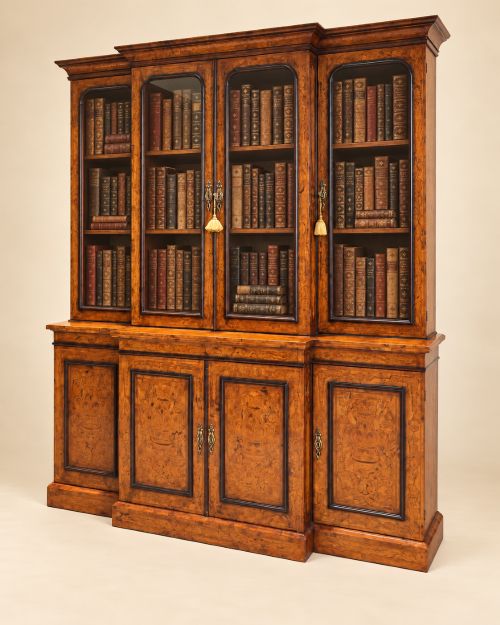
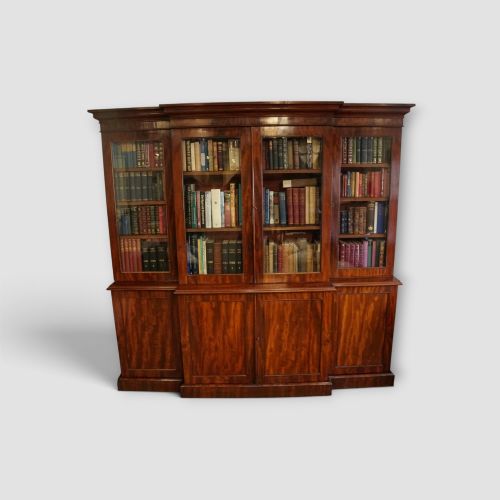
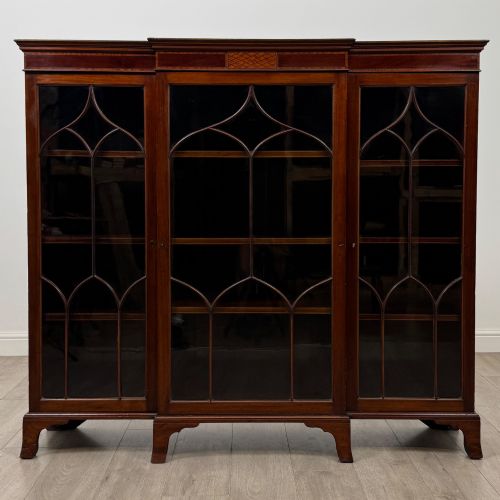
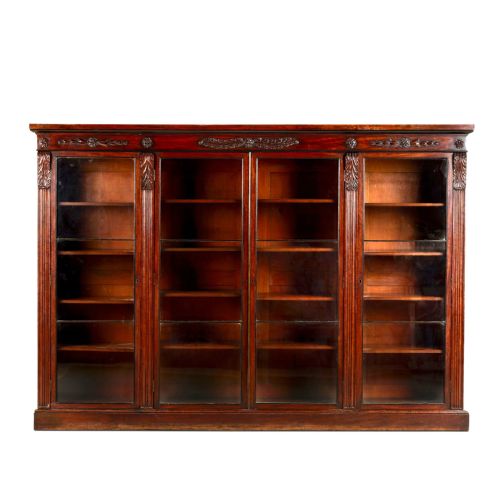
When you search for breakfront bookcase cabinet, you are looking at substantial library furniture designed with a projecting central section.
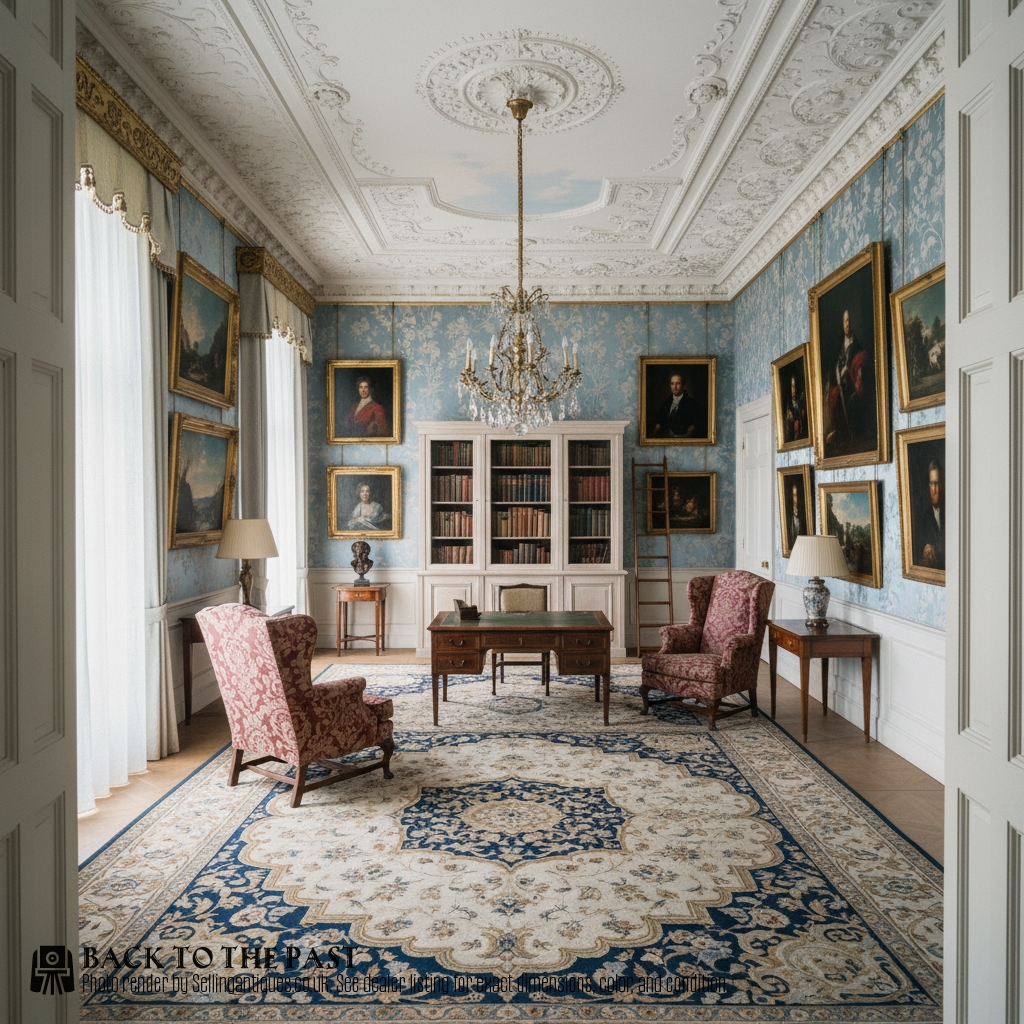
Breakfront Bookcase Cabinet
A breakfront bookcase cabinet forms a commanding presence in a room, offering generous vertical storage combined with display space. These large library pieces are typically encountered from the nineteenth century onwards, reflecting periods from Regency to Edwardian times.
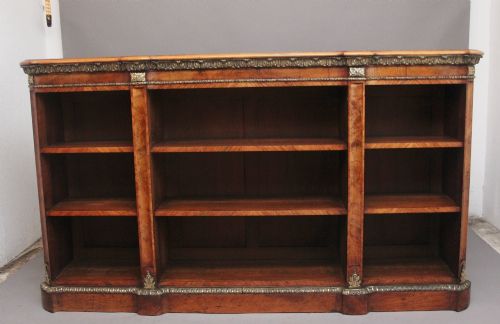
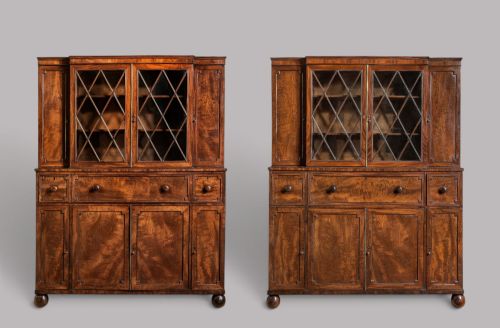
The defining architectural feature is the forward-projecting central portion that breaks the linear continuity of the facade. Cabinets appear in configurations featuring glazed doors for display, open shelving for immediate access, or enclosed wooden lower cupboards.
How they were made
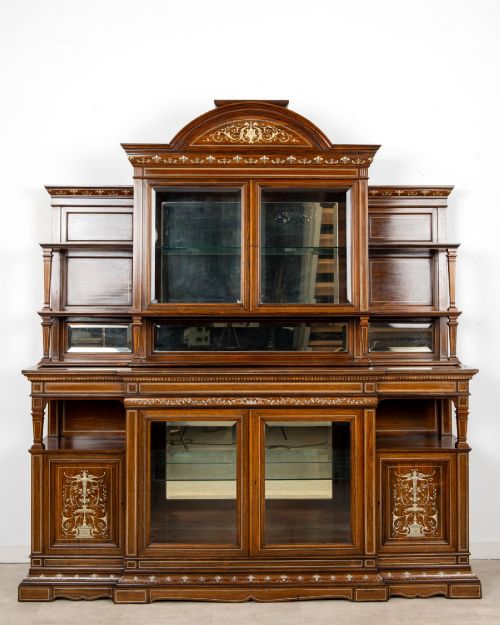
Cabinetmakers utilised dense timbers such as mahogany and walnut, frequently selecting figured veneers and burr walnut to create striking grain patterns across large surfaces. Satinwood and oak also appear, sometimes paired with contrasting inlay and marquetry detailing.
Glass panels are housed within astragal frames, while metalwork mounts in brass and ormolu accent doors and cornices. Structural integrity relies on traditional joinery to support the weight of extensive shelving and heavy timber carcases.
Some nineteenth-century volumes demanded secret compartments, ensuring your library keeps its own quiet secrets behind the glass.
What varies in quality
The distinction between standard production and exceptional craftsmanship rests in the selection of timbers and the precision of decorative details. Finer examples display carefully matched veneer grains across multiple doors and refined hand-carved mouldings rather than cast ornamentation.
Internal elements such as adjustable shelving mechanisms and original glass integrity indicate the level of care invested in the construction. Pieces originating from notable workshops demonstrate superior joinery and thoughtful proportions that elevate the entire object.
Johnstone and Jeanes·Jas Shoolbred·Collinson and Lock·Gillows·Edwards and Roberts·Lamb of Manchester
The Breakfront Bookcase Cabinet Glossary
- Breakfront
- An architectural arrangement where the central section projects forward from the flanking wings. This configuration creates depth and visual rhythm across large case furniture.
- Astragal
- A moulding profile used to divide glass panes within a door frame. In glazed bookcases, these delicate wooden bars form geometric patterns.
- Ormolu
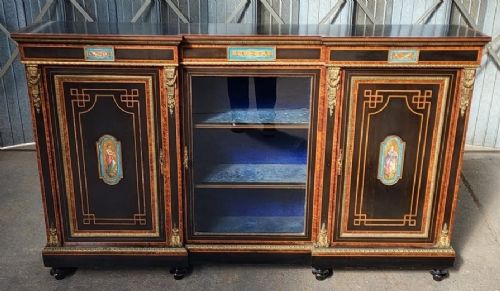
- Gilded bronze applied as decorative mounts on furniture. It provides metallic contrast against dark woods like mahogany and ebonised finishes.
- Marquetry
- The art of applying veneers in decorative patterns using different coloured woods. It creates elaborate pictorial designs on cabinet doors and panels.
Breakfront Bookcase Cabinet: Frequently Asked Questions
Where should I place a large breakfront bookcase?
These imposing cabinets require a substantial wall with adequate clearance to accommodate their width and projecting central section. They function effectively as focal points in studies, libraries or spacious living rooms.
Ensure the floor is level and capable of supporting significant weight, as large timber bookcases combined with hundreds of books exert considerable downward pressure.
How do I adjust the internal shelving?
Many nineteenth-century and later bookcases feature adjustable wooden shelves supported by traditional rack-and-pinion systems or brass studs. This allows you to customise shelf heights for varying book sizes or display items.
Take care when lifting heavy mahogany or walnut shelves to avoid damaging the interior lining or side panels during adjustment.
Are the glass doors original?
Original glazed doors often exhibit minor bubbles, striations or slight waviness within the glass panes, reflecting older manufacturing methods. Inspecting the putty or wooden glazing beads can also reveal whether the glass has been replaced over time.
Matching the thickness and clarity of surrounding glass panes helps maintain the historical consistency of the cabinet.
How do I care for polished mahogany and walnut surfaces?
Maintain timber surfaces by dusting regularly with a soft, dry cloth and occasionally applying a quality beeswax to nourish the wood. Avoid placing furniture in direct sunlight or near heat sources to prevent veneer lifting.
Check ormolu mounts and brass hardware periodically to ensure fixings remain secure without over-tightening into the aged timber.