
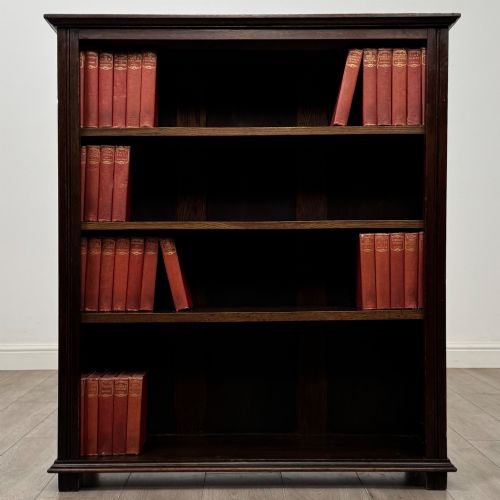
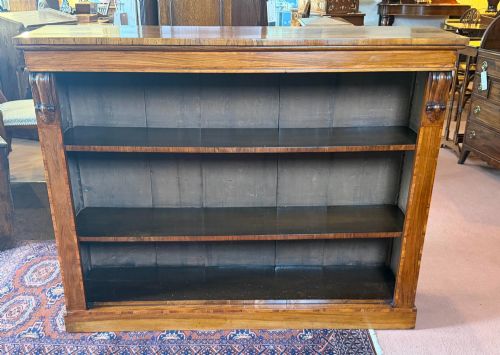
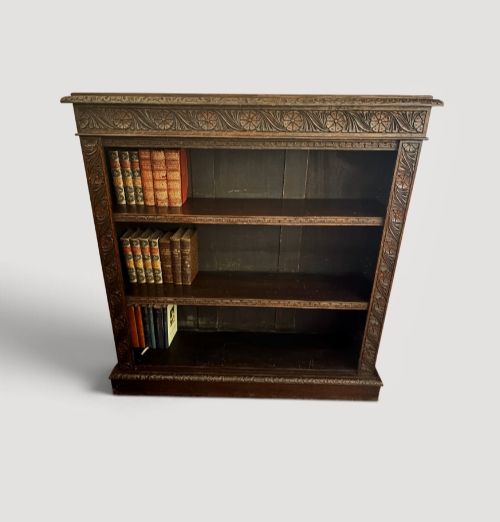
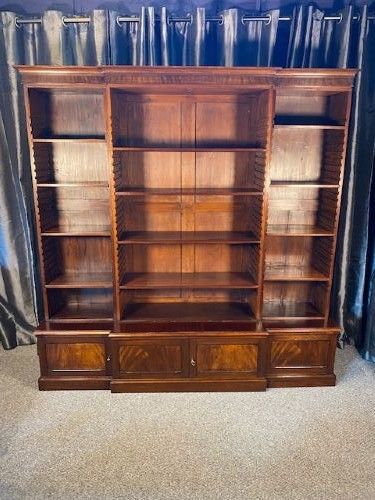
Wooden Library Display Cabinet
A wooden library display cabinet brings structured book storage and display into a room, spanning periods from the George III era through the Edwardian years.
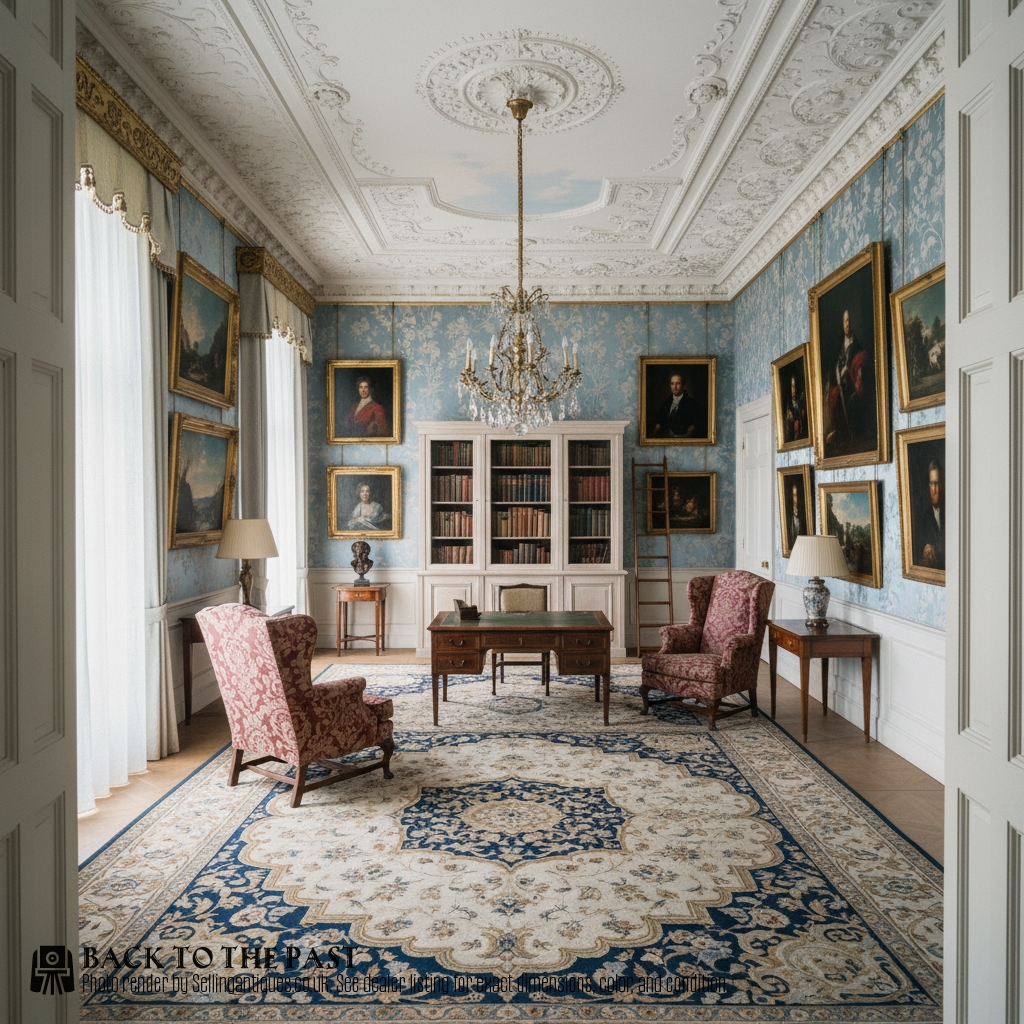
Wooden Library Display Cabinet
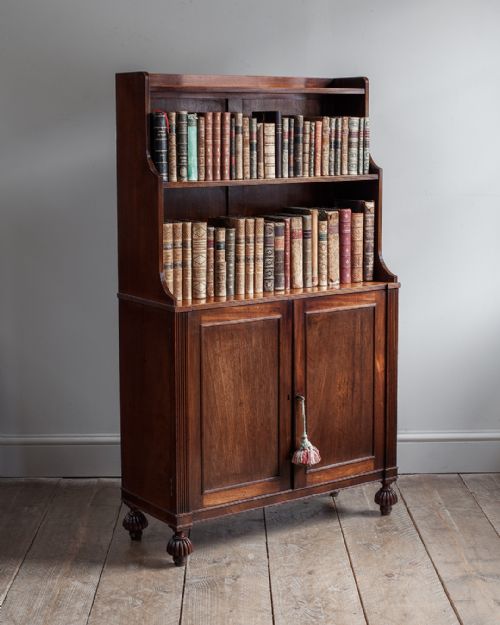
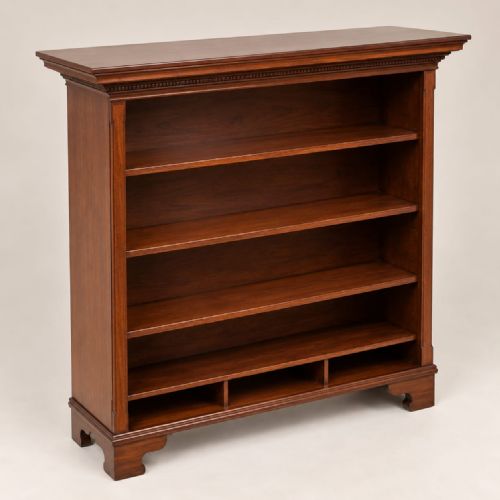
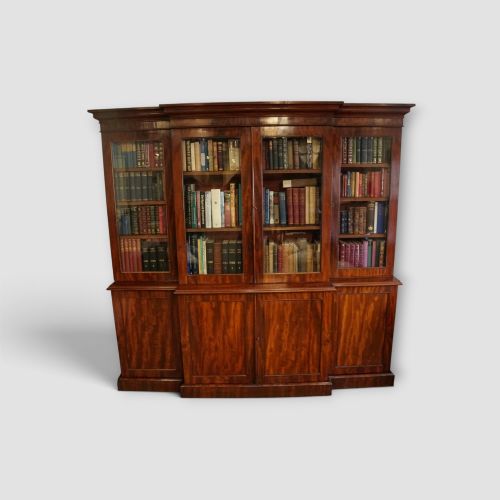
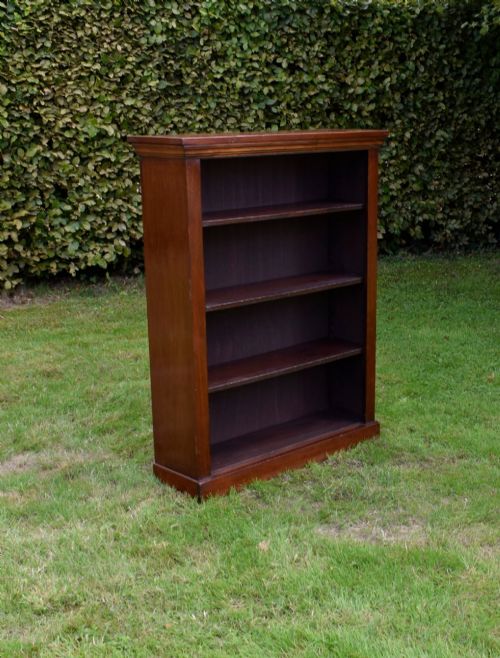
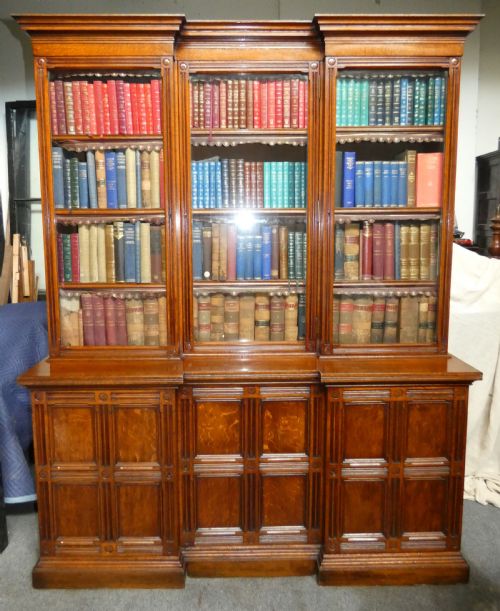
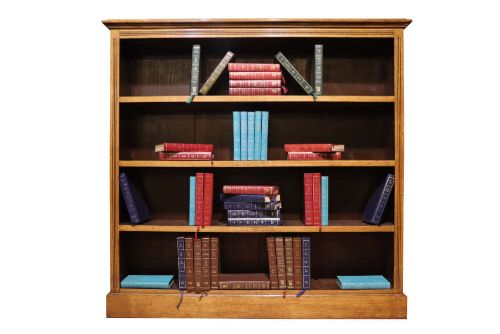
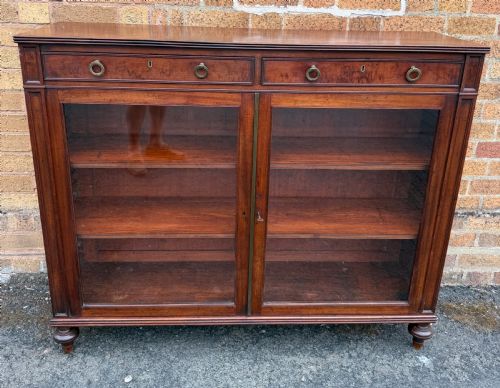
When searching for a wooden library display cabinet, buyers encounter a range of bookcases, open bookcases, breakfront bookcases, and glazed double bookcases designed for housing books and display items. These pieces originate from multiple eras including the Georgian, Regency, Victorian, and Edwardian periods, as well as the early twentieth century.
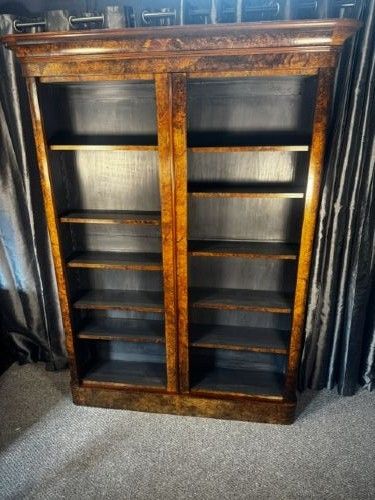
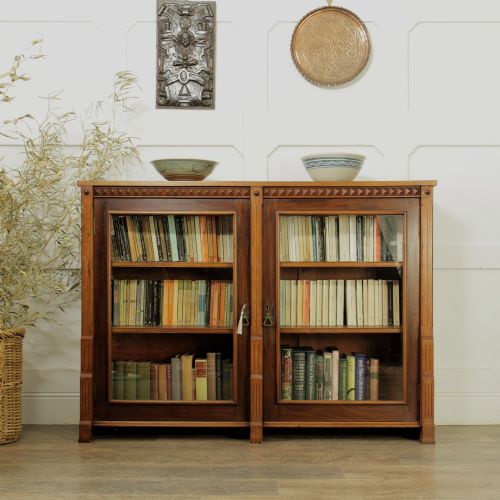
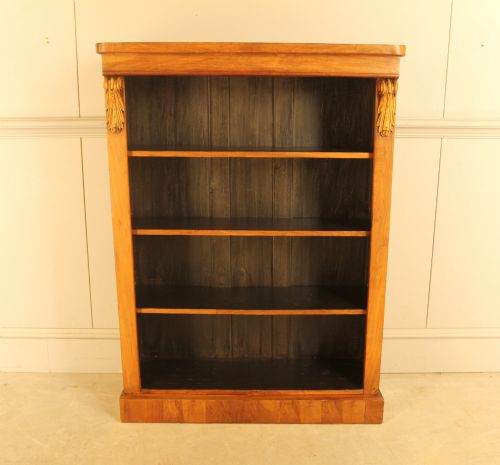
The most common versions met on this page are Victorian and Edwardian examples constructed from mahogany, oak, and walnut, often featuring adjustable shelves and glass doors or open fronts.
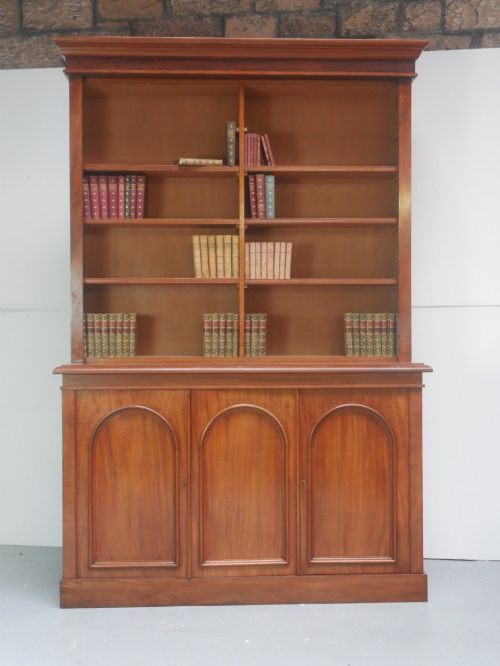
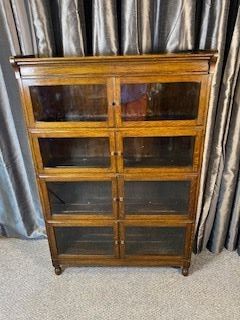
Larger forms include breakfront bookcases and tall library bookcases, whilst smaller options encompass narrow bookcases and stacking bookcases by makers such as Minty.
How they were made
Cabinet makers utilised dense hardwoods such as mahogany, oak, walnut, and burr walnut, sometimes framing glazed sections with brass or ormolu mounts.
Construction techniques involved solid wood framing, hand carving, and the integration of adjustable shelving mechanisms to accommodate volumes of varying heights.
Listings span multiple decades, incorporating Georgian, Regency, Victorian, Edwardian, and 1930s pieces in oak, mahogany, walnut, and pine.
What varies in quality
Quality differences appear in the selection of timbers, such as figured burr walnut veneers versus plain pine, and the depth of hand-carved ornamentation on pilasters and cornices.
The sophistication of the internal fittings, including the precision of adjustable shelf supports and the clarity of the glass in glazed doors, separates standard storage pieces from finer library furniture.
The Wooden Library Display Cabinet Glossary
- Breakfront
- A large cabinet design where the central section projects forward from the flanking outer wings.
- Glazed
- Fitted with glass panels in the doors to protect books from dust while allowing visibility.
- Waterfall bookcase
- A tiered piece of shelving where each lower shelf is slightly deeper than the one above it.
- Barrister bookcase
- A stacking bookcase featuring glass-fronted tiers that lift and slide inward to access the books.
- Adjustable shelves
- Shelves resting on movable supports that allow the internal vertical spacing to be altered.
Wooden Library Display Cabinet: Frequently Asked Questions
What is a wooden library display cabinet?
A wooden library display cabinet is a piece of furniture designed to hold and exhibit books whilst protecting them behind glass doors or within open shelving.
These pieces range from tall Victorian breakfront units to compact Edwardian open bookcases made from mahogany, oak, and walnut.
How do I choose between open and glazed cabinets?
Open cabinets provide immediate access to books and allow bindings to contribute to the room's decor.
Glazed cabinets offer greater protection from dust and light exposure, making them suitable for preserving older or more delicate volumes.
What woods were commonly used?
Makers predominantly used mahogany, oak, and walnut throughout the nineteenth and early twentieth centuries.
Burr walnut appears on finer decorative surfaces, whilst pine serves as a secondary wood or for simpler provincial pieces.
How do I identify a Victorian bookcase?
Victorian bookcases often feature dense mahogany or walnut construction, substantial proportions, and hand-carved details.
Many examples from this era include adjustable wooden shelving and deep plinth bases.