



Brass Urn on Column
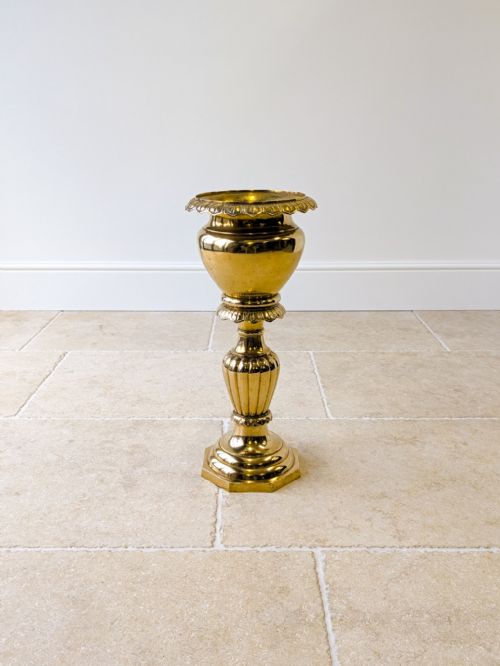
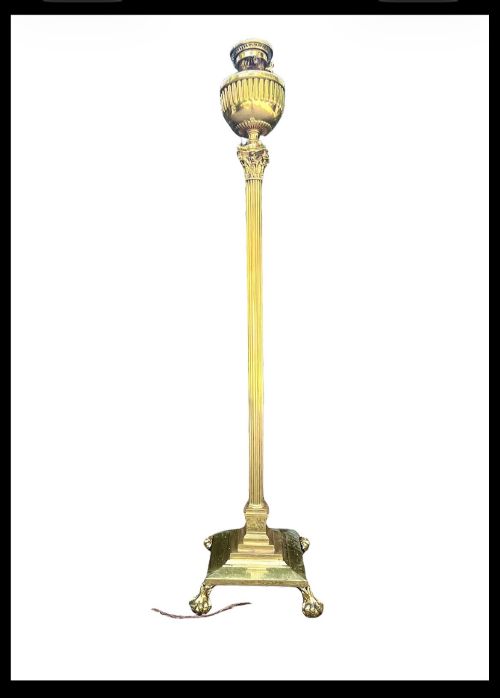
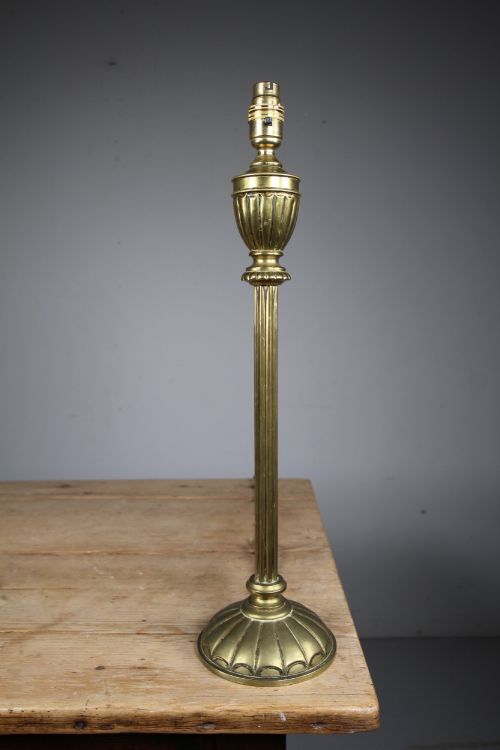
These brass urn on column pieces combine weighty metalwork and slender upright supports, offering a distinct focal point for traditional interiors.
Brass Urn on Column
A brass urn on column search brings up items designed to elevate vessels and illuminate rooms, spanning periods from the Regency era through to the Edwardian years.
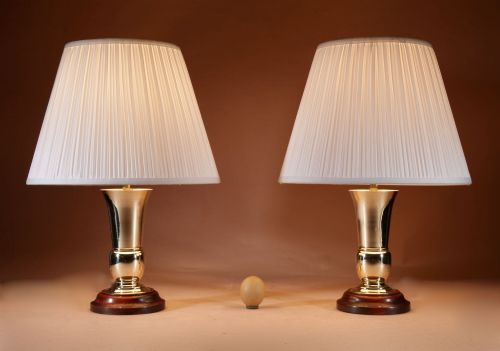
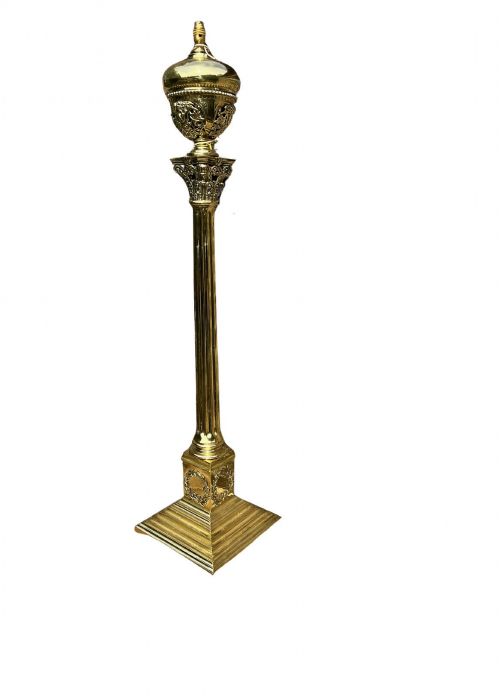
The most common forms you will encounter on this page include jardinière stands, standard lamps, and table lamps that merge cast brass with wood or marble.
Makers drew on Classical Revival, Neoclassical, and Louis XVI Revival motifs, pairing heavy metallic urns with timber columns or marble bases.
Materials and construction methods
Craftsmen utilised cast brass for the upper urns and decorative mounts, often combining them with turned mahogany or polished marble columns for structural contrast.
Surface treatments range from bright ormolu accents to dark patinated bronze effects, whilst occasional fabric elements appear on related lighting fixtures.
Brass Urn on Column Retail Price Guide 2026
Typical asking prices for brass urn on column among the pieces listed under this phrase on Sellingantiques today, from the lower quarter to the upper quarter. They describe what is for sale here now, not the wider market.
Current listings span the nineteenth and early twentieth centuries, uniting Victorian, Edwardian, and Regency periods through brass, mahogany, and marble.
Assessing build quality and proportion
The division between standard items and superior pieces rests on the crispness of the brass casting and the stability of the central column.
Better examples maintain a balanced weight distribution where the heavy brass urn sits securely atop a dense marble or well-turned mahogany support.
The Brass Urn on Column Glossary
- Jardinière
- An ornamental stand or pot designed to hold plants or flowers indoors. These pieces often feature a protective metal liner inside the brass urn.
- Ormolu
- Gilt bronze or brass applied to furniture and decorative objects. This finish provides a bright golden surface that resists tarnishing over time.
- Portico clock
- A mantel clock housed within a architectural frame supported by columns. They frequently incorporate marble and gilt brass details.
- Torcherere
- A tall ornamental stand intended to hold a candle or lamp. In later pieces, this form adapted readily to electrical standard lamps.
Brass Urn on Column: Frequently Asked Questions
What is a brass urn on column?
These pieces are decorative or functional furnishings that place a metal vessel atop a raised vertical support. They serve as plant stands, lighting columns, or clock garnitures.
Most examples date from the nineteenth and early twentieth centuries, drawing heavily on classical design traditions. They provide height and architectural interest to room corners and hallways.
How were these stands used historically?
In period homes, jardinière stands displayed indoor palms and ferns, protecting valuable floors with fitted metal liners. Lighting standards illuminated dark corners before electric wall sconces became common.
Clock garnitures sat upon mantels as centerpieces, often accompanied by matching side urns. Their primary role combined domestic utility with formal decorative display.
How do I date an Edwardian piece?
Edwardian items typically display lighter proportions and cleaner neoclassical revival details compared to heavier Victorian counterparts. They often incorporate machine-turned components alongside hand-finished brass castings.
Wiring on standard lamps from this period is generally modernised for safety, whilst the structural brass and timber components retain early twentieth-century manufacturing marks.
Can I use these with modern electrical fittings?
Many standard lamps and table lamps arriving on the market have already been safely rewired for contemporary use. It remains straightforward to update flex and plug components while preserving the historic brass column.
Careful positioning ensures the combined weight of the brass urn and column stays secure on domestic flooring. Regular dusting maintains the polished finish of the metal surfaces.