


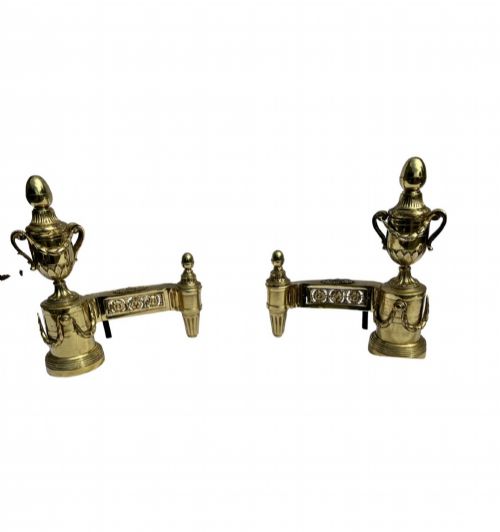

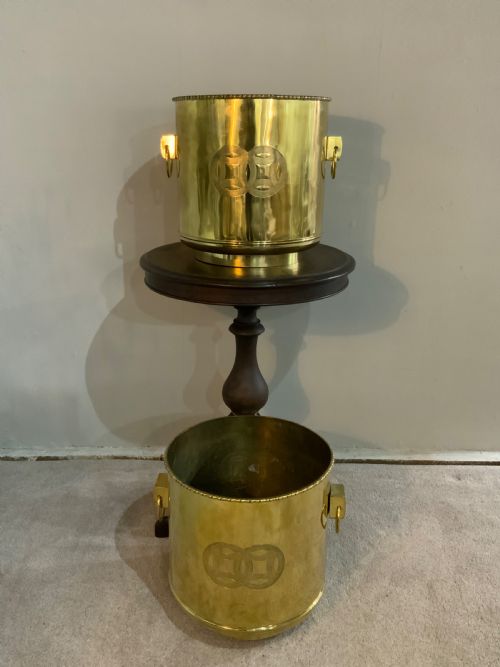
Polished Brass Urns
Polished brass urns bring heavy, reflective warmth to a room, spanning periods from Georgian dignity to Art Deco sheen.
Polished Brass Urns
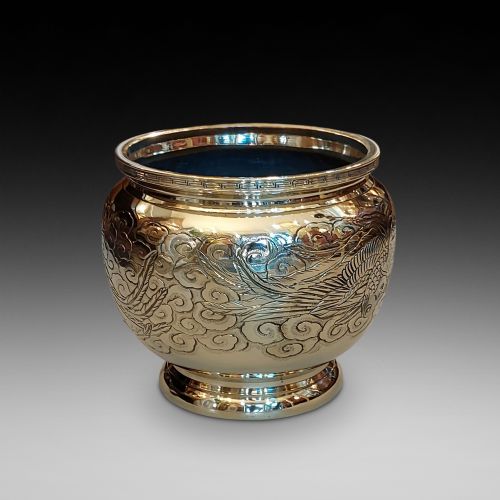
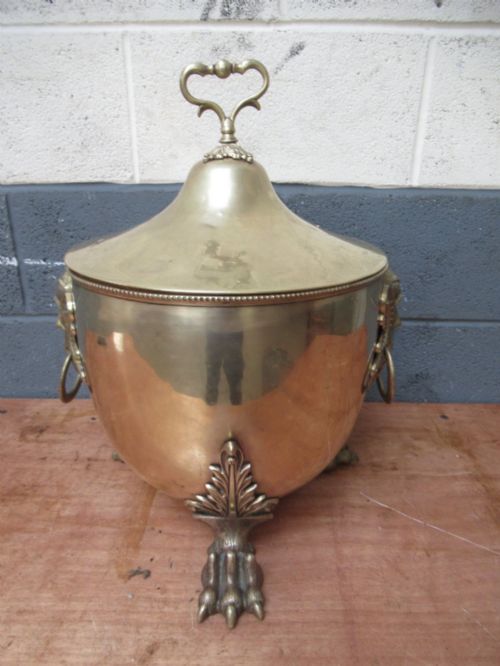
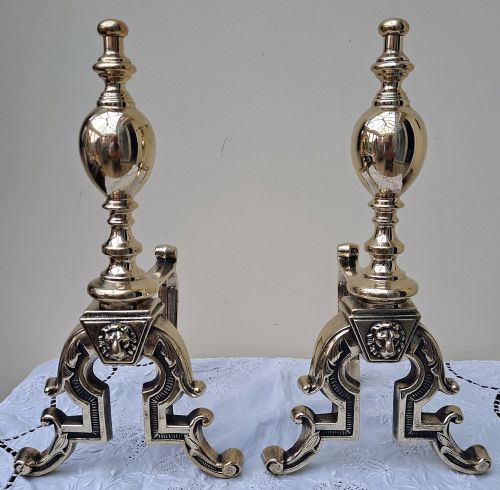
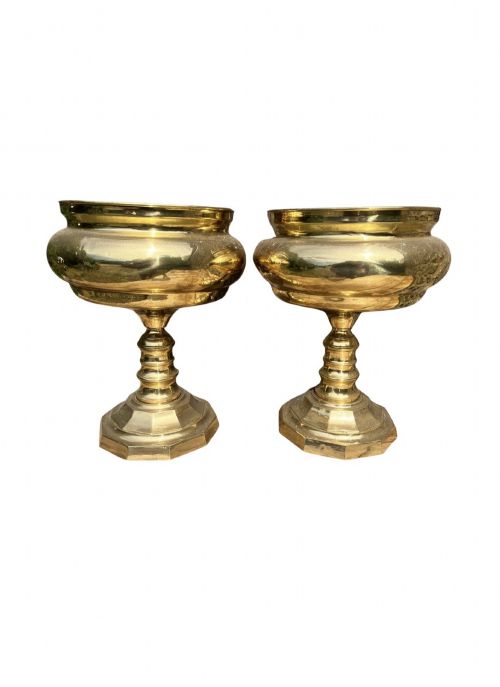
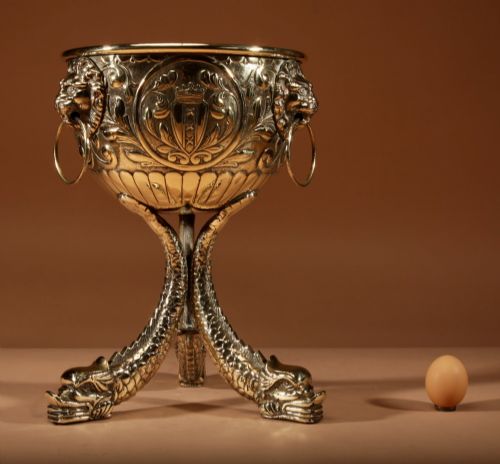
Polished brass urns encompass a varied grouping of vessels, jardinières, samovars, and vases designed for display or utility. When searching for polished brass urns, buyers encounter pieces originating across the nineteenth and early twentieth centuries, reflecting styles from Victorian and Edwardian periods down to Art Deco and Arts & Crafts designs.
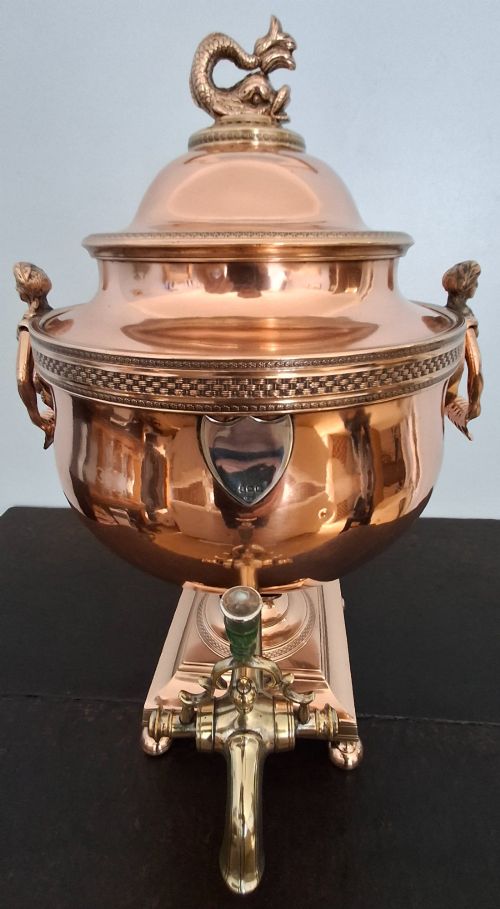
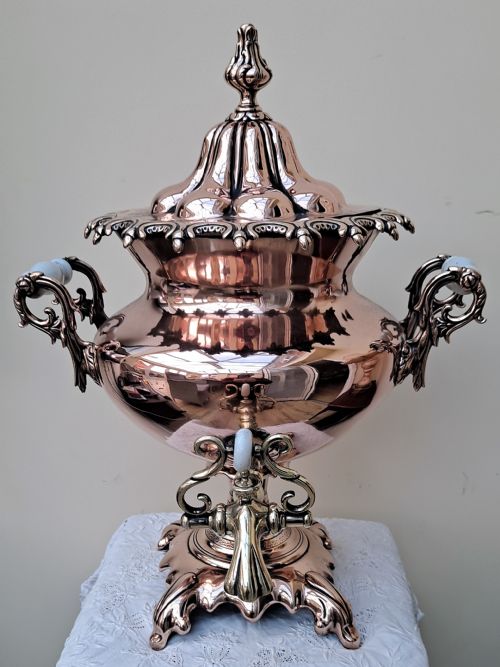
The domestic forms on this page include tea urns, samovars, planters, and twin-handled vases. Many items combine polished brass with copper, steel, or ebonised wood, showing how metalwork served both ornamental and practical functions in historic interiors.
How they were made
Makers utilised techniques such as casting, hammering, and pressing to shape sheet brass and heavier metal components. Embossed details and cast elements appear frequently on jardinières and vases from the later nineteenth century onward.
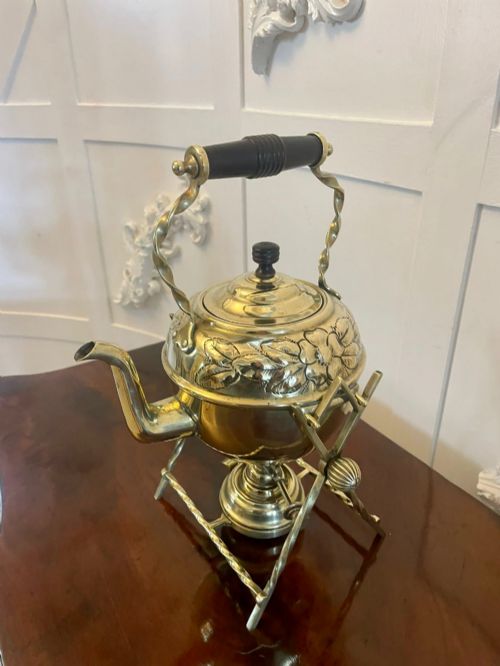
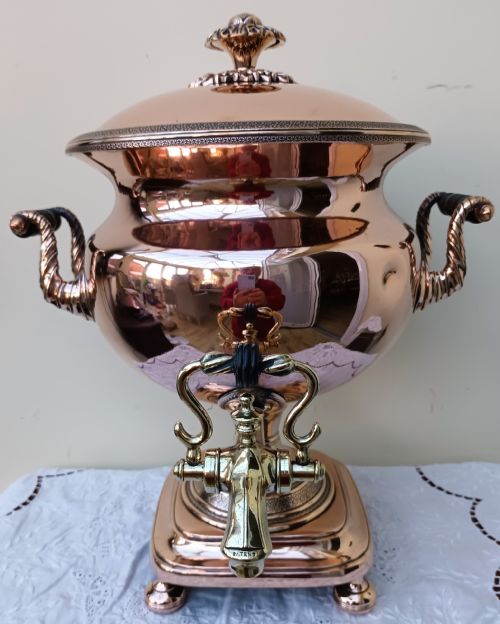
Combinations of brass and copper feature prominently in samovars and kettles, often joined with iron or steel handles and fittings. Surface finishes rely on mechanical polishing to achieve the bright reflective quality seen across the listed inventory.
Polished Brass Urns Retail Price Guide 2026
Typical asking prices for polished brass urns among the pieces listed under this phrase on Sellingantiques today, from the lower quarter to the upper quarter. They describe what is for sale here now, not the wider market.
What varies in quality
Quality rests upon the weight of the metal and the crispness of any cast or embossed decoration. Thicker gauge brass retains its structural integrity better over generations and resists denting during everyday use.
The refinement of surface finishing and the hand-detailing on handles, mounts, and bases separate standard production items from finer workshop pieces. Well-balanced proportions and clean joints indicate superior craftsmanship.
William Soutter & Sons
The Polished Brass Urns Glossary
- Samovar
- A heated metal container traditionally used to boil water for tea in Russian and European households. These vessels frequently combine brass and copper construction.
- Dinanderie
- A term for medieval and later brass or copper objects, often applied to decorative domestic metalware produced in European workshops. It describes items shaped by hammering, casting, and embossing.
- Jardiniere
- An ornamental pot or stand designed to hold growing plants or floral arrangements. They appear in brass and copper across Victorian and Edwardian listings.
- Curb fender
- A low metal guard placed around a fireplace hearth to contain embers. These are often made from polished brass or steel.
- Coupe
- A shallow bowl or tazza raised on a stem and foot, used historically for display or serving. They appear in cast brass among nineteenth-century metalwork.
Polished Brass Urns: Frequently Asked Questions
What were brass samovars used for?
Brass samovars served as self-contained heating vessels to boil water for tea in formal rooms. Internal charcoal cylinders or spirit burners kept the water hot throughout long gatherings.
Over time, these heavy vessels transitioned from functional kitchen equipment to prominent decorative pieces displayed in dining spaces and halls.
How do I clean polished brass?
Polished brass requires gentle cleaning with a soft cloth to preserve the bright metallic surface without stripping thin outer layers. Avoid harsh abrasive compounds that scratch the metal or remove historical patination.
Regular dusting and occasional treatment with appropriate metal polishes maintain the reflective quality seen on these historical vessels.
Are these urns waterproof?
Many brass urns and jardinières incorporate riveted or soldered seams that held water for plants or tea preparation historically. However, old solder and joints can develop microscopic leaks over long periods.
Using a modern liner inside antique planters protects the interior metal from standing moisture and mineral deposits.
How do I date a brass urn?
Dating relies on stylistic markers, manufacturing techniques, and material combinations recorded across different periods. Victorian and Edwardian pieces often display machine-pressed elements, whereas earlier Georgian items show heavier hand-beaten construction.
Examining fixings like screws, rivets, and handles provides further clues to the decade or century of manufacture.