
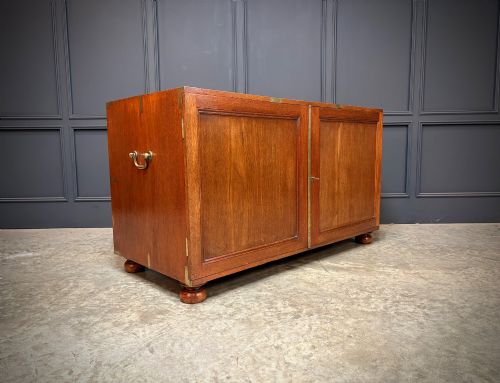
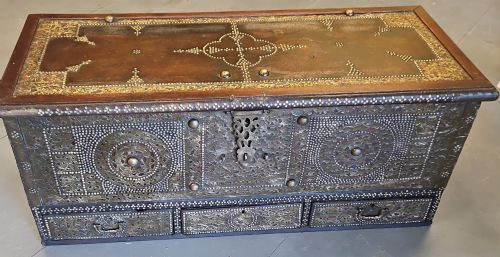


Brass Teak Storage Trunk
A brass teak storage trunk offers robust storage built for travel, combining durable timber with secure metal mounts.
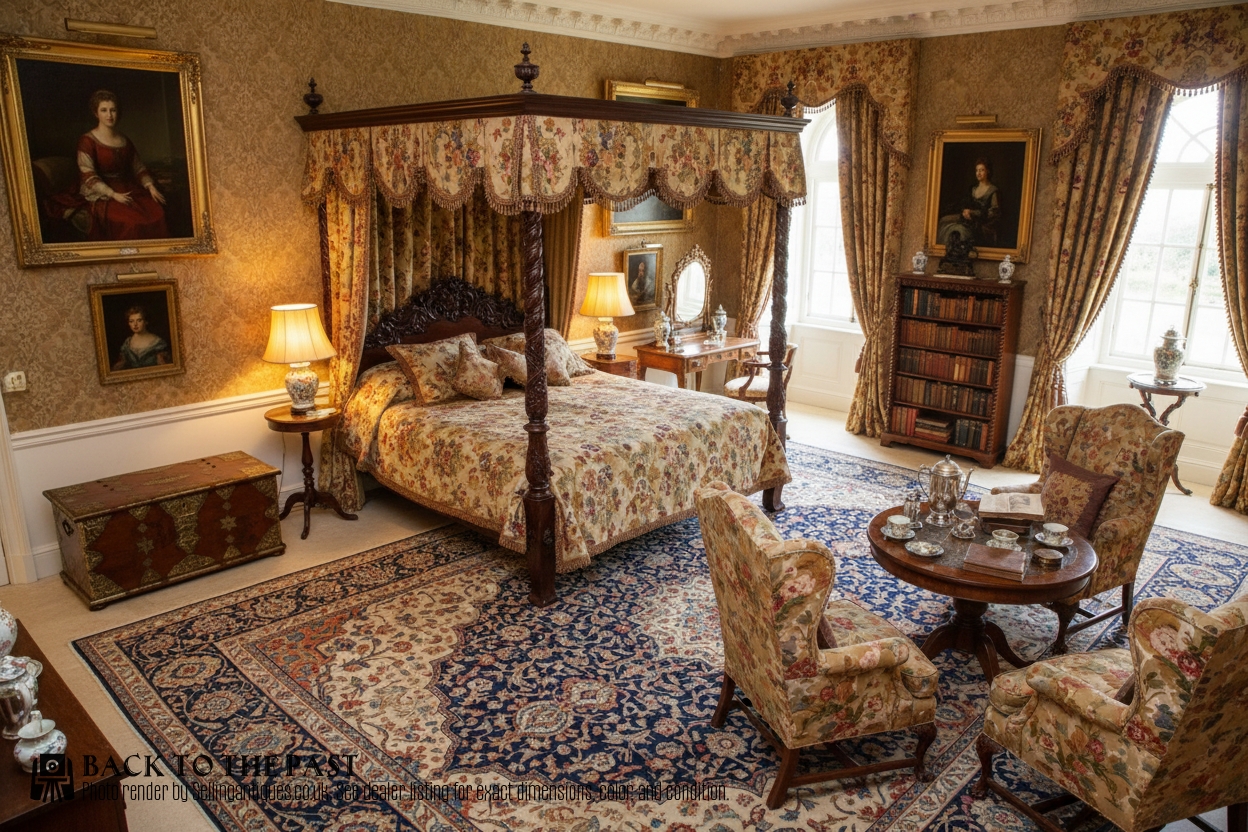
Brass Teak Storage Trunk
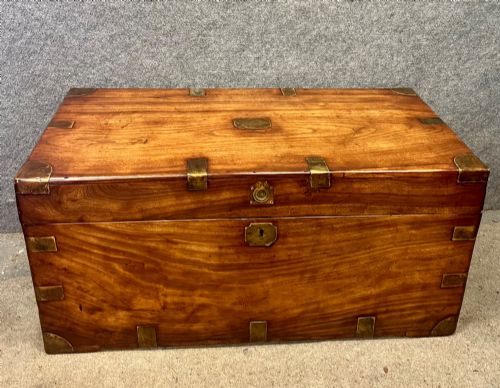
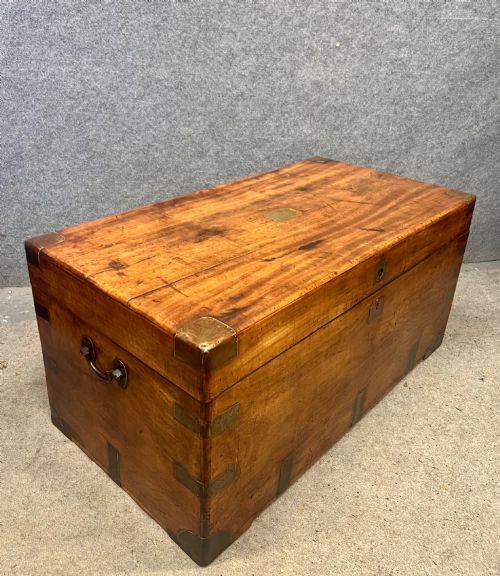
When you search for a brass teak storage trunk, you encounter heavy chests built for transit across empires and oceans during the eighteenth, nineteenth, and early twentieth centuries. These vessels served soldiers, merchants, and travellers who required durable storage that could withstand arduous journeys.
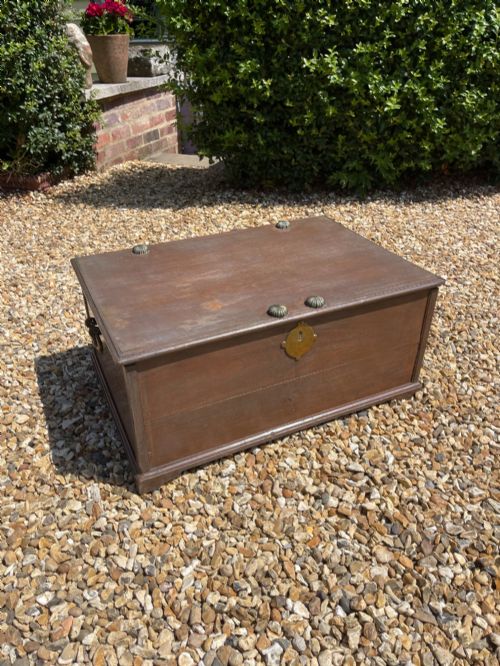
The most common examples on this page are military campaign pieces, Zanzibar chests, and Anglo-Indian trunks originating from the Victorian era down to nineteen hundred. Forms range from simple blanket boxes and tool chests to elaborate marriage chests on wheels and side cabinets.
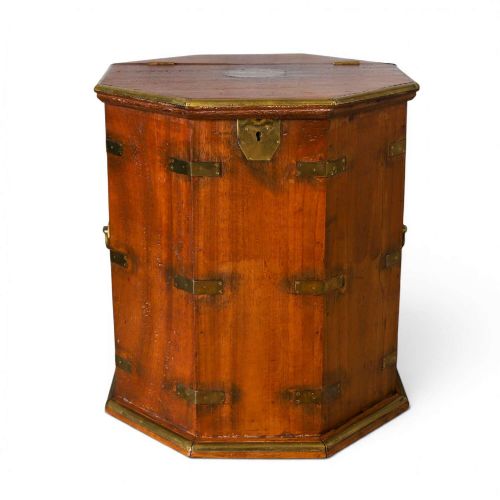
Geographic origins span India, Dutch colonial territories, and East Africa, reflecting global trade routes and colonial administration. While many remain straightforward storage coffers, others feature internal compartments or stands designed for domestic use upon arrival at a permanent home.
How they were made
Makers constructed these trunks primarily using dense teak and occasional hardwood, selected for their resistance to moisture and warping in tropical climates. Iron and ebony also appear in structural supports, mounts, and decorative elements.
Brass bands, corner brackets, and heavy studs were applied to reinforce the joints and protect the timber edges during loading and transport. These metal components were secured with numerous pins or screws, forming a rigid exoskeleton around the wooden carcase.
Listings span the eighteenth, nineteenth, and early twentieth centuries, featuring teak, brass, iron, and ebony across Anglo-Indian and Victorian campaign styles.
What varies in quality
The distinction between standard utility items and finer examples lies in the precision of the brass work and the complexity of the internal layout. Elaborate engraved brass mounts, intricate studding patterns, and secondary timbers like ebony separate bespoke pieces from basic transit boxes.
Proportion and surface preservation dictate the visual hierarchy. Deeply figured teak grain, well-maintained patination on the brass hardware, and intact original stands or wheels elevate an ordinary storage chest into a notable example of colonial craftsmanship.
The Brass Teak Storage Trunk Glossary
- Campaign trunk
- A portable chest constructed for military officers or travellers on active service, featuring recessed brass handles to facilitate stacking and movement. These items often dismantle or include internal compartments for papers and uniforms.
- Zanzibar chest
- A distinct form of storage trunk featuring heavy brass studding, strapwork, and often a concealed interior till. They reflect trade connections between India, the Persian Gulf, and East Africa.
- Anglo-Indian
- A descriptive term for furniture made in India by local craftsmen following European design requirements, or produced for the British market. This style combines indigenous timber with Western furniture forms.
- Dutch colonial
- Furniture produced in settlements governed by the Dutch East India Company, frequently incorporating robust construction methods and imported hardwoods like teak. These pieces often display specific regional decorative motifs.
- Gerobog
- A traditional large rustic marriage chest originating in India, sometimes fitted with wheels for floor mobility. They were used to store household goods and dowry items.
Brass Teak Storage Trunk: Frequently Asked Questions
How do I identify a campaign trunk?
Campaign trunks feature flush-mounted brass handles and reinforced corners designed to withstand frequent transport by ship or rail. Many split into multiple sections for ease of handling during military operations.
Look for durable teak construction and simple, functional lines intended to protect contents from rough handling and humidity.
What is a Zanzibar chest?
A Zanzibar chest is a heavily decorated storage trunk characterised by intricate brass studding, geometric strapwork, and strap hinges. They often include a secret compartment inside for currency and documents.
These pieces emerged from maritime trade routes linking India and the East African coast during the nineteenth century.
Are these trunks suitable for modern storage?
These sturdy chests provide substantial internal space for blankets, linens, and household items while serving as a coffee table or end of bed placement. The dense teak and metal bindings make them exceptionally durable for daily use.
Ensure the interior is clean and dry before storing textiles to protect fabrics from historical odours.
How do I care for teak and brass?
Maintain teak surfaces with occasional light application of natural wax or oil to prevent the timber from drying out. Avoid harsh chemical cleaners that strip the historic patination from the wood.
Polish the brass mounts sparingly with a soft cloth if you prefer a brighter appearance, or leave the metal unpolished to retain its aged dark finish.