


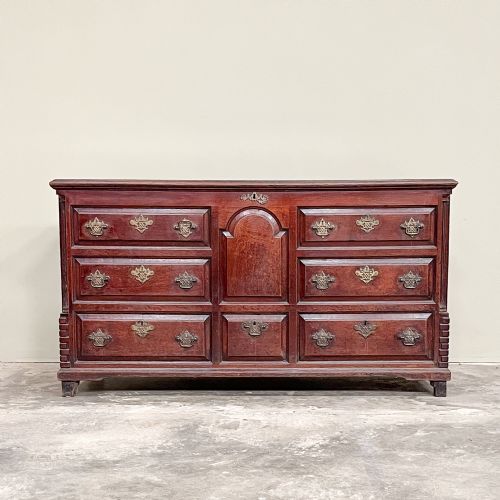
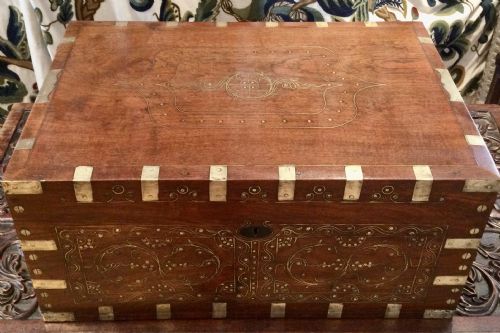


Carved Brass Mounted Trunk
These carved brass mounted trunk examples bring substantial timber and decorative metalwork into a room.
Carved Brass Mounted Trunk
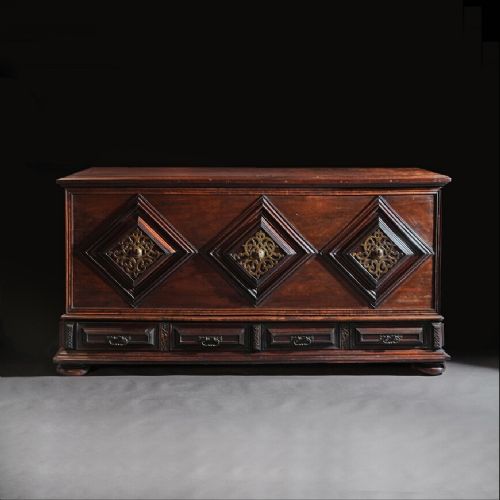
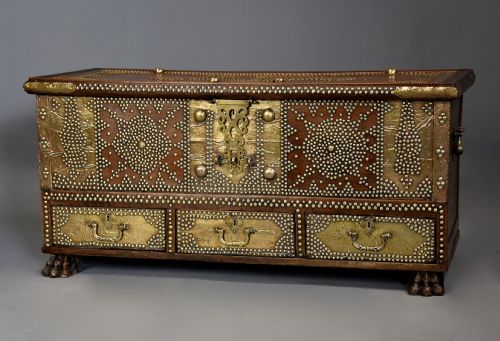
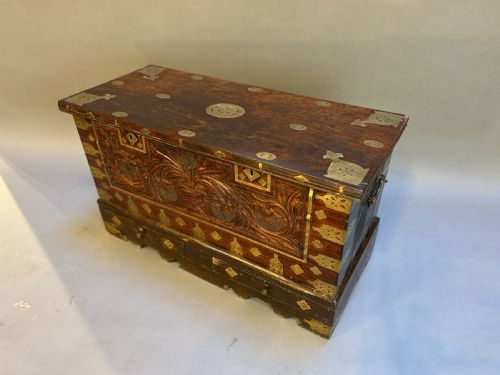
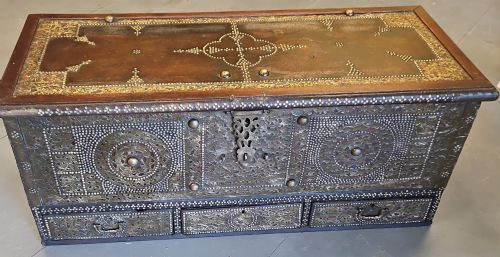
A carved brass mounted trunk combines timber construction with brass studding, strapping, or mounts, often originating from colonial trade routes or European workshops. The examples found here span centuries of craftsmanship, ranging from seventeenth-century Portuguese colonial pieces to nineteenth-century Zanzibar traders chests and Chinese camphor wood blanket boxes.
Materials and methods
The primary bodies utilise dense hardwoods such as teak, oak, mahogany, ebony, and camphor wood, selected for durability and resistance to humidity. These timbers are joined using traditional methods and frequently enriched with surface carving, ripple moulding, or panelled construction.
Brass elements including studs, strapping, and corner plates are applied by hand to secure joints and protect the edges during transit. Iron components also appear in structural placement to reinforce the weight of the timber.
The listings span from the seventeenth century to the Victorian era, utilising materials from brass and iron to oak, teak, mahogany, and camphor wood.
Distinctions in quality
Quality rests in the execution of the timber carving and the density of the brass application. Finely detailed relief work and secure, heavy-gauge brass mounts indicate a higher standard of production.
The selection of timber grain and the integrity of the original construction separate standard utility chests from those commissioned for export or wealthy households.
The Carved Brass Mounted Trunk Glossary
- Mule chest
- A storage chest featuring one or more drawers beneath the main compartment. This form emerged in domestic settings during earlier centuries before evolving into varied regional styles.
- Coffer
- A heavy wooden chest traditionally used for storing valuables or documents. These pieces often feature sturdy panelled construction.
- Ripple moulding
- A decorative, undulating profile carved directly into the wooden frame. This technique creates rhythmic patterns popular on seventeenth and nineteenth-century furniture.
- Camphor wood
- An aromatic timber frequently utilised for storage boxes due to its insect-repellent properties. It forms a distinct category within Asian export trunks.
Carved Brass Mounted Trunk: Frequently Asked Questions
Where were Zanzibar chests made?
Zinibar chests and related traders chests were produced in East Africa and along Indian Ocean trade routes, often incorporating regional carving with imported brass elements.
These pieces served merchants for storage and maritime transport, later finding their way into domestic interiors.
How do I care for a hardwood trunk?
Keep the timber away from direct heat sources and sudden humidity shifts to prevent the wood from splitting or warping. Dust with a dry cloth and apply appropriate natural waxes sparingly.
Avoid chemical polishes that can degrade the finish of both the wood and the brass mounts over time.
What is the difference between a trunk and a coffer?
A coffer generally denotes a heavier, panelled box intended for secure storage of valuables in domestic or ecclesiastical settings. Trunks often indicate pieces designed with travel or trade in mind, sometimes featuring carrying handles.
Both terms overlap frequently in historical listings depending on regional naming conventions.
How do I date an antique wooden chest?
Dating relies on examining the timber species, construction joints, tool marks, and the style of any brass mounts or decorative carving. Seventeenth-century pieces typically show heavier oak or mahogany panel construction, while nineteenth-century examples often display camphor wood or extensive brass studding.
Comparing the specific regional style against documented periods provides further chronological context.