


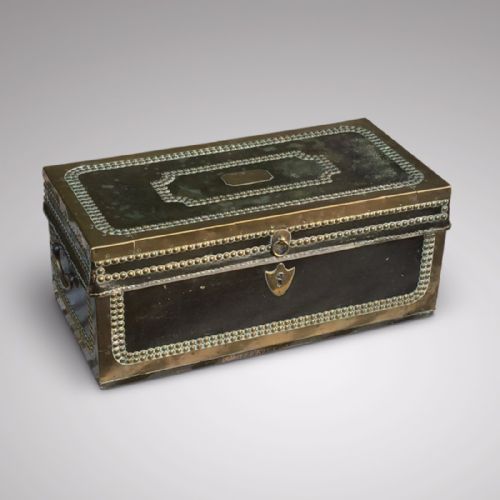

Colonial Brass Studded Chest
These colonial brass studded chest examples are robust storage trunks fashioned from dense tropical timbers and bound with metal.
Colonial Brass Studded Chest
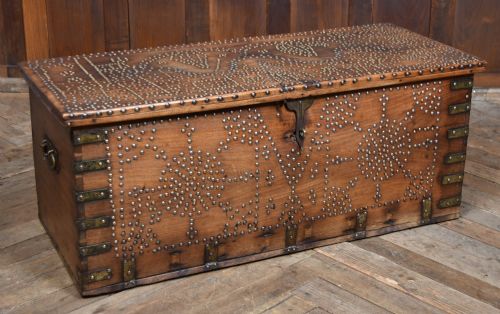
A colonial brass studded chest serves as a durable receptacle designed for travel or secure storage across distant territories. Buyers searching this phrase encounter heavy blanket boxes, domed coffers, and campaign trunks intended to withstand maritime journeys.
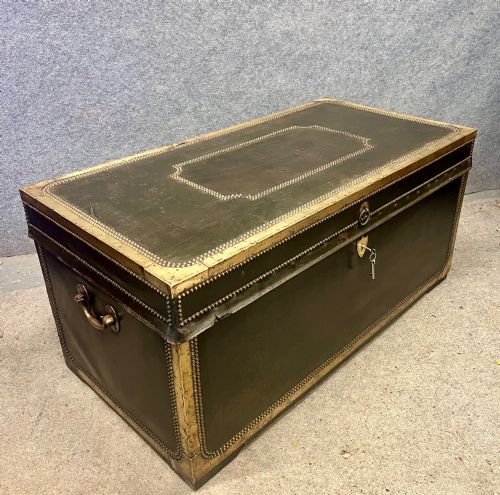
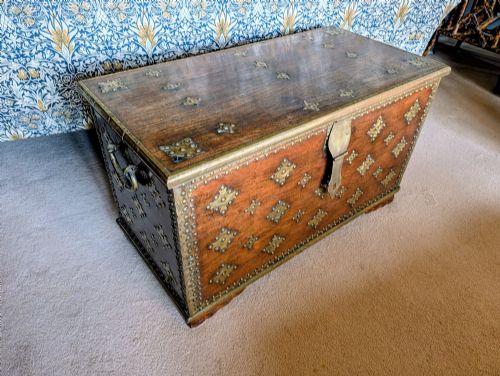
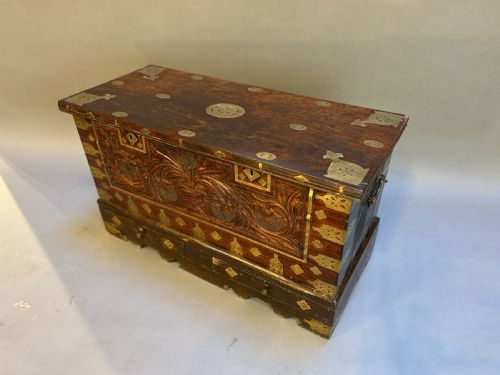
The specimens on this page span the seventeenth century through the Victorian era, showing origins from Anglo-Indian workshops to Spanish colonial centres. Most examples present as rectangular storage chests or blanket boxes constructed from camphor wood, padouk, teak, or general hardwoods.
Trunks featuring iron bindings and decorative brass studs appear frequently alongside leather-covered variants. These pieces function today as practical coffee tables or bedroom storage units while retaining their original utilitarian character.
How they were made
Carpenters utilised dense exotic timbers such as camphor wood, padouk, and teak to construct the carcase of each chest. These woods resisted insect attack and warping in humid climates, providing a stable foundation for external decoration.
Craftsmen secured the joints and reinforced the corners using iron straps and heavy brackets fixed with iron or brass nails. Surface patterns were formed by driving individual brass studs into the timber or leather covering in geometric designs.
Camphor wood trunks retain a faint, sharp scent after centuries, serving as a built-in moth repellent for modern woollens.
What varies in quality
Quality in these chests rests upon the selection of timber and the complexity of the metalwork. Dense padouk and aromatic camphor wood represent superior material choices compared to general softwood frames.
The intricacy of the brass studding and the density of the iron or brass binding elevate certain pieces above plain utility trunks. Surviving original leather coverings and functional internal compartments also distinguish finer examples.
The Colonial Brass Studded Chest Glossary
- Campaign trunk
- A portable chest built in sections or fitted with carrying handles for military officers on the move. These often feature recessed brass hardware to prevent damage during transit.
- Camphor wood
- An aromatic hardwood native to Asia, frequently utilised for colonial trunks because its strong scent deterred insects. It provides a pale, durable surface that patinates well over time.
- Zanzibar chest
- A distinct form of heavy wooden storage chest originating from East Africa and trade routes, characterised by elaborate brass studding and strapwork. They were often constructed from teak or padouk.
- Coffer
- A sturdy box with a lid, traditionally used for storing valuables or documents. Domed versions allowed rain to run off easily during outdoor transport.
- Padouk
- A heavy, reddish-brown tropical hardwood prized for its stability and rich natural colour. It appears frequently in nineteenth-century overseas furniture.
Colonial Brass Studded Chest: Frequently Asked Questions
What is a colonial brass studded chest?
It is a heavy storage trunk or blanket box bound in metal and decorated with brass nails, manufactured for use in global trade and colonial administration.
These pieces utilised durable tropical timbers like camphor wood and teak to survive long journeys by sea and land.
How were these chests used originally?
Owners used them to transport clothing, documents, and personal valuables safely across oceans and rugged terrain during military campaigns or trading voyages.
Upon reaching their destination, they served as secure stationary storage within domestic or administrative quarters.
How do I style a chest at home?
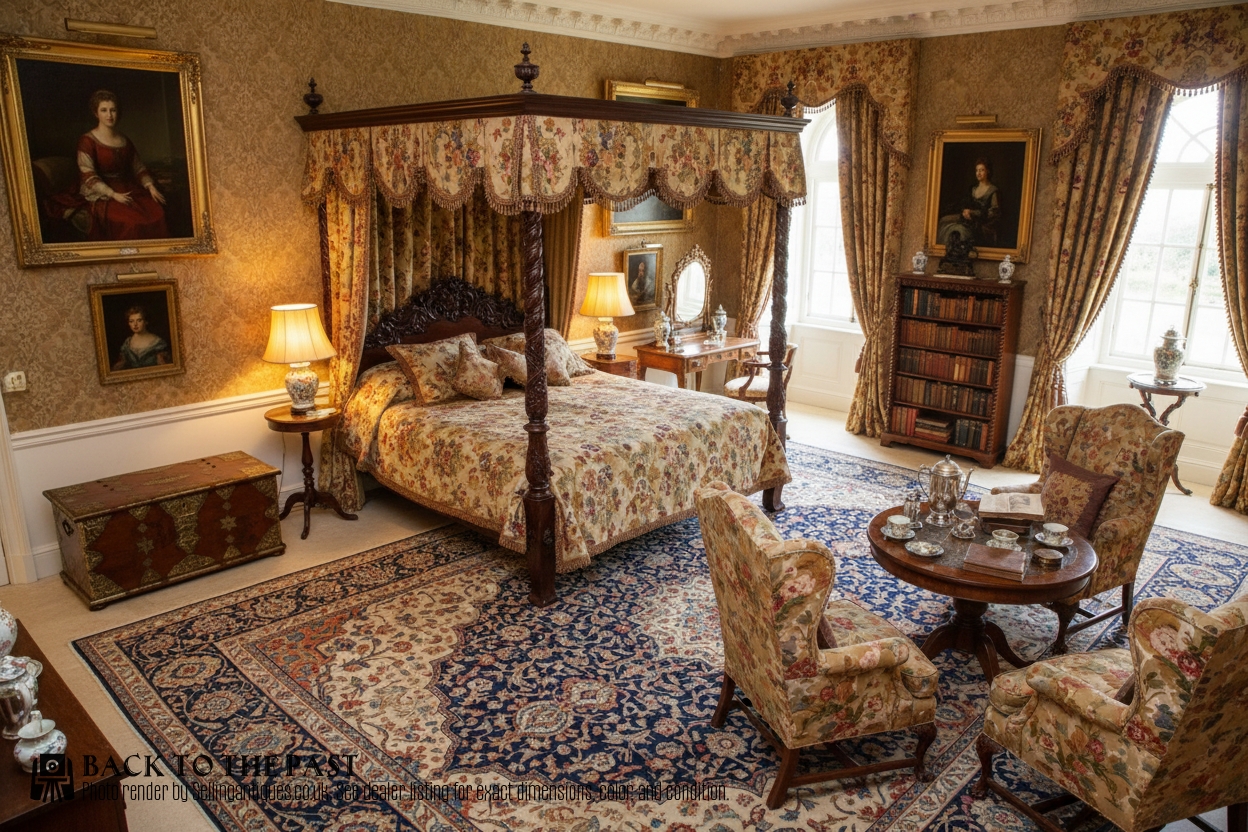
These chests function well as living room coffee tables, providing both a stable surface and hidden internal storage for blankets or books.
In bedrooms, they serve effectively at the foot of a bed as blanket boxes or distinct decorative focal points.
How do I tell periods apart?
Earlier seventeenth and eighteenth-century examples often feature leather coverings and domed tops with simpler iron bindings.
Nineteenth-century Zanzibar and campaign pieces display denser brass stud work and are constructed from padouk or teak timbers.