


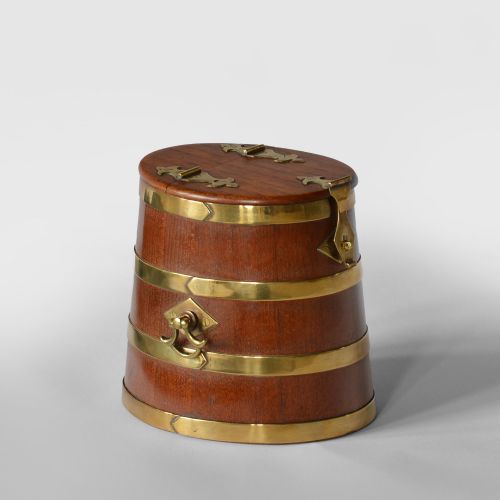

Brass Tea Caddy
A brass tea caddy brings the refined craftsmanship of Georgian, Regency, and Victorian household storage into modern rooms as a striking decorative focal point.
Brass Tea Caddy
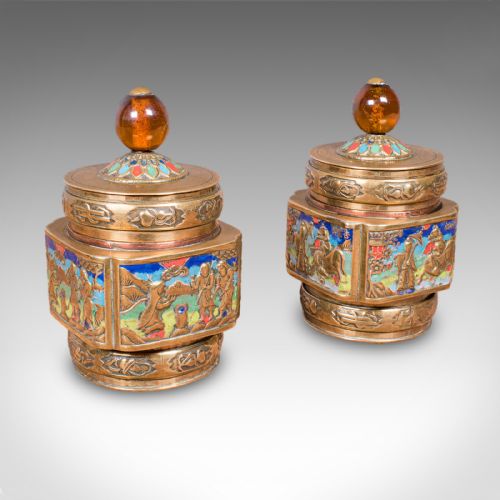
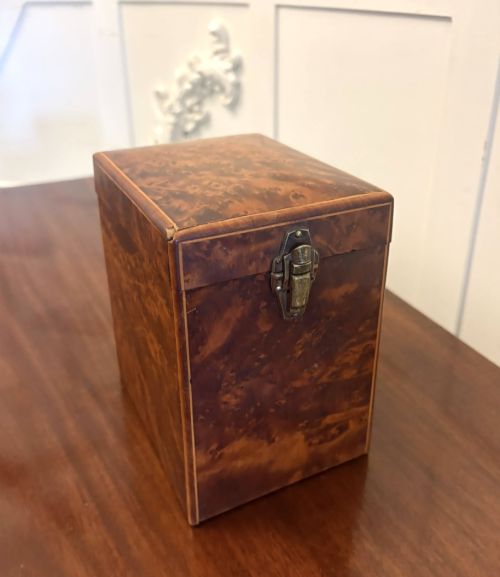
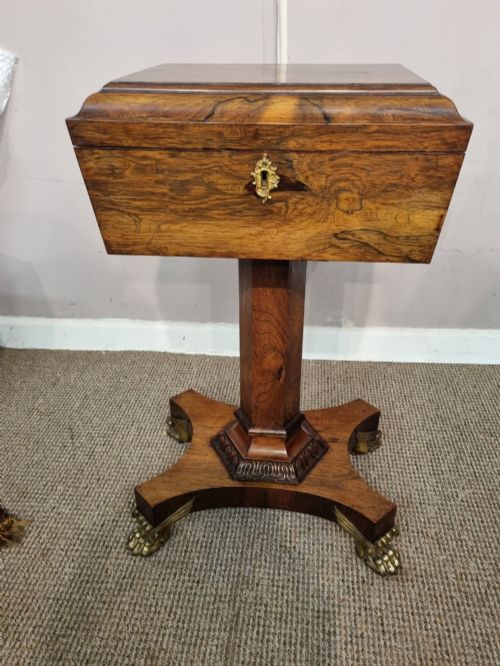
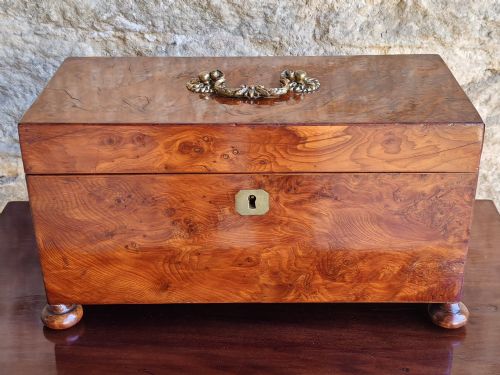
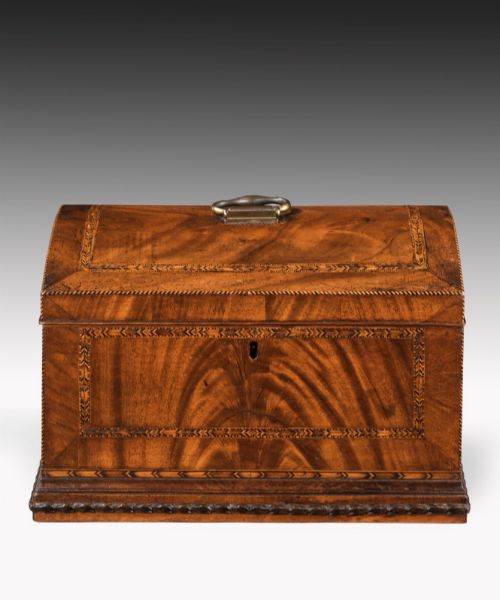
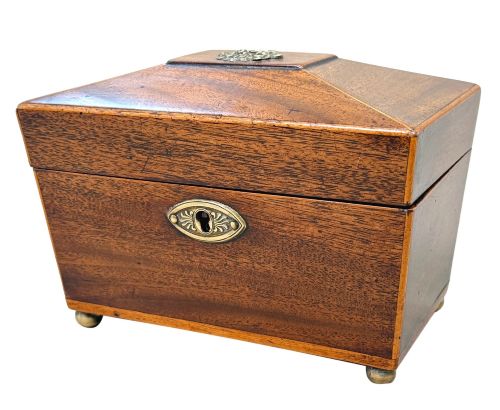
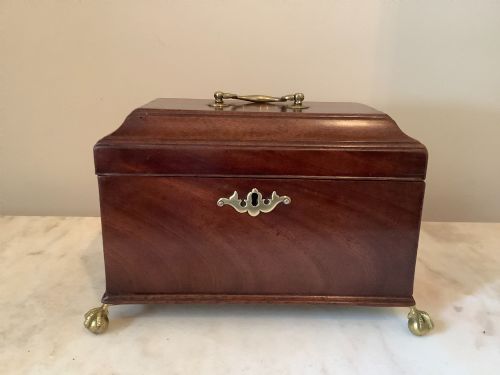
A brass tea caddy is a specialised lidded chest, box, or coffer designed originally to store dried tea leaves when tea was an expensive commodity, typically taking rectangular, sarcophagus, or domed shapes. The examples encountered on this page originate predominantly from the Georgian, Regency, and Victorian periods, often constructed as desktop chests or standing teapoys.
Makers shaped these vessels from dense hardwoods such as mahogany, rosewood, and walnut, frequently applying intricate brass inlay, stringing, or heavy brass mounts. Alongside standard lidded boxes, the selection includes variants with dual internal compartments, secret drawers, and surviving mixing bowls.
The historical record also encompasses related forms like miniature barrels and needlework boxes, though the core of the selection remains dedicated to domestic tea storage. These pieces reflect the evolving social rituals of tea drinking across the eighteenth and nineteenth centuries.
Materials and Technique
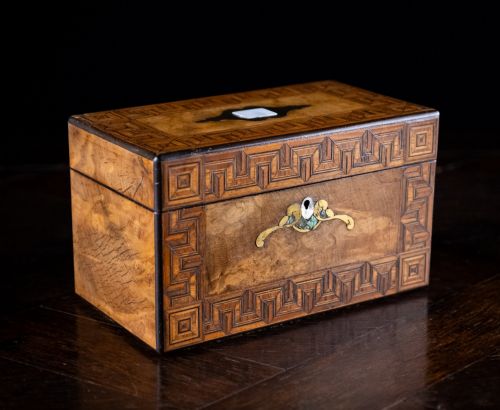
Cabinetmakers utilised figured tropical and native timbers like mahogany, rosewood, burr walnut, and padouk, often building carcasses with solid sides and decorative veneers. Surfaces were then enhanced with meticulous brass inlay, mother-of-pearl details, tortoiseshell, and boxwood stringing.
Metal components such as lion mask handles, escutcheons, hinges, and corner brackets were cast or engraved in brass to reinforce and ornament the wooden structures. Interiors frequently retained fitted wooden canisters, glass mixing bowls, or velvet linings secured by working brass locks.
One extraordinary box commemorates an ox roast with an actual Monmouth ox roast hoof mounted in brass.
Evaluating the Pieces
Distinction in these boxes lies in the precision of the joinery and the complexity of the surface ornamentation, particularly the accuracy of the brass inlay into dense timbers like rosewood or mahogany. Pieces featuring complete internal fittings, original mixing bowls, and working locks command greater appreciation than altered or stripped examples.
The choice of cabinet wood also dictates merit, with highly figured burr walnut, calamander, and select satinwood elevating a piece above standard mahogany or plain walnut constructions.
The Brass Tea Caddy Glossary
- Teapoy
- A small stand or table, frequently fitted with compartments for storing tea, popular during the Regency period. They often stood on a central pillar with tripod legs.
- Sarcophagus shaped
- A box style featuring a stepped, domed lid and sloping sides reminiscent of ancient stone coffins. This silhouette was favoured by Georgian and Regency cabinetmakers for grand tea caddies.
- Escutcheon
- A flat plate of brass surrounding a keyhole that protects the surrounding wood from wear and tear. On quality boxes, these plates are often finely engraved.
- Stringing
- A narrow strip of contrasting wood or metal inlaid flush into the surface of a box to create decorative borders. It requires immense skill to execute smoothly around corners.
- Boulle
- A method of marquetry using brass and tortoiseshell inlaid in contrasting patterns, named after a French royal cabinetmaker. It appears on select nineteenth-century decorative boxes.
Brass Tea Caddy: Frequently Asked Questions
What were brass tea caddies used for?
These caddies served as secure storage containers for precious loose tea leaves when tea was heavily taxed and treated as a luxury item. The interiors were often divided into compartments to keep different tea varieties separate from one another.
Many examples also included a central glass bowl used for blending different teas or washing the leaves before brewing. Their lockable lids ensured that domestic servants or guests did not help themselves to the valuable contents.
How do I date a tea caddy?
Dating relies on examining the timber species, overall architectural shape, and the style of the brass hardware. Georgian and Regency pieces often showcase linear brass stringing and sarcophagus silhouettes, while Victorian examples lean towards heavier brass mounts on burr walnut or coromandel.
Internal construction details, such as hand-cut dovetails and the presence of secondary woods, further help narrow down the decade of production.
How do I care for wooden tea caddies?
Keep the wood conditioned by avoiding direct sunlight and sudden temperature shifts that can cause timber to split or veneer to lift. Occasional light application of appropriate furniture wax maintains the natural lustre of the polished surfaces.
Handle brass mounts carefully and avoid using harsh chemical cleaners on the metalwork or inlaid details to preserve their historical patina.
What is a secret drawer in a tea caddy?
A secret drawer is a concealed compartment hidden behind a movable interior panel or false bottom within the box. Cabinetmakers incorporated these spaces to store house keys, money, or particularly precious personal items.
Discovering one typically requires removing the internal tea canisters or understanding the specific mechanical release hidden within the wooden partitions.