


Asian Enamel Pots
These asian enamel pots bring rich colour and meticulous metalwork into a room, offering both decorative presence and centuries of skilled craft.
Asian Enamel Pots
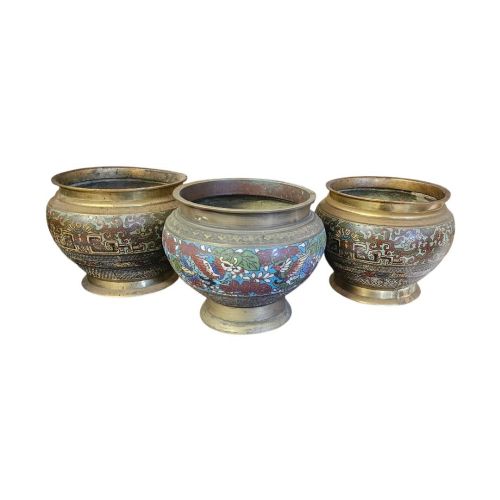
Asian enamel pots encompass a diverse selection of vessels designed for display and botanical use, spanning jardinières, ginger jars, and lidded containers. When exploring this selection, buyers frequently encounter pieces originating from Chinese and Japanese workshops, with forms ranging from large bronze planters to smaller lidded ginger jars.
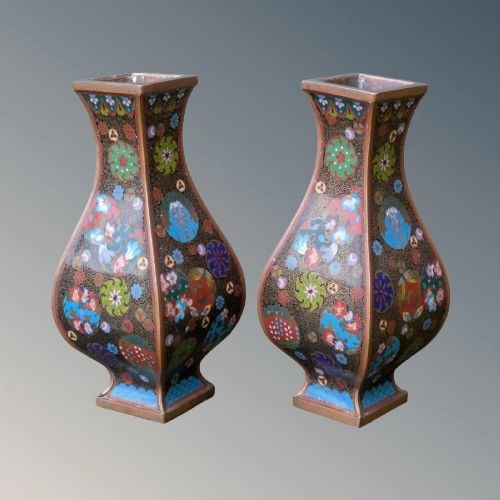
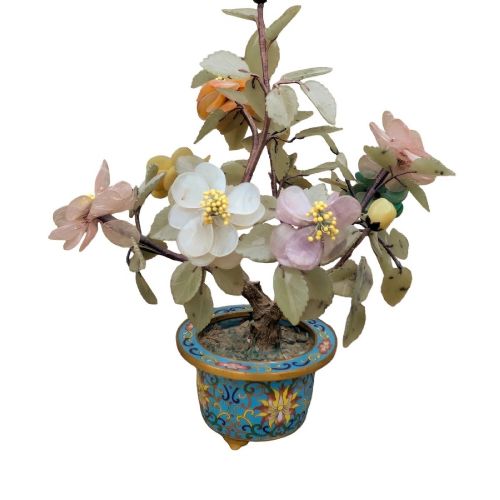
The objects on this page bridge multiple eras, drawing heavily on nineteenth-century production alongside twentieth-century examples. Forms such as bonsai jardinières and decorative vases demonstrate how these vessels served both functional roles in horticulture and purely ornamental purposes within domestic interiors.
Materials and construction
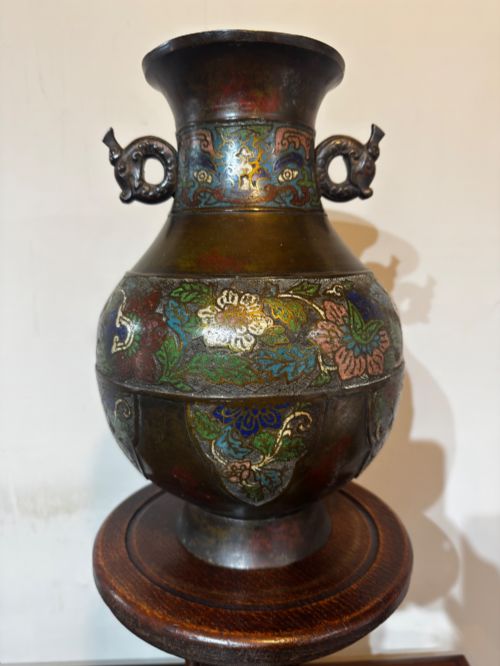
The foundation of these vessels relies on durable metalwork, predominantly bronze, copper, and brass, shaped to form the body of the pot or vase. Artisans then applied enamel techniques, distinguishing pieces through the careful integration of vitreous pastes across metallic surfaces.
Decoration often involved detailed wirework or recessed channels to hold the coloured enamel, sometimes accented with hardstone, jade, or quartz elements. This combination of metal casting and glass-based surface work required precise firing to achieve a smooth, resilient finish.
Several sheep-shaped vessels remind us that nineteenth-century artisans were entirely willing to turn farm animals into stem cups.
Evaluating craftsmanship
Quality in these vessels reveals itself in the discipline of the surface design and the weight of the underlying metal foundation. Finer examples display precise execution in the wire boundaries of cloisonné or the clean definition of champlevé channels, avoiding irregular pooling or pitting in the enamel.
The harmony of the palette and the integration of decorative details, such as applied hardstone or subsidiary mounts, separate standard production from superior output. Balance in form and crispness in cast or hammered metal contours indicate the level of care invested by the maker.
Makuzu Kozan II·Shizan
The Asian Enamel Pots Glossary
- Cloisonné
- A metalwork technique where thin metal wires are soldered to a base to form compartments, which are then filled with enamel paste and fired. This method creates intricate patterned surfaces defined by delicate metallic outlines.
- Champlevé
- A technique in which troughs or cells are carved directly into the thick metal plate and filled with enamel before firing. It leaves the exposed metal partitions thicker and flush with the coloured infill.
- Jardiniere
- An ornamental pot or stand designed to hold a plant or floral arrangement. These vessels often feature waterproof metal or ceramic interiors to protect the decorative exterior.
- Meiji Period
- The era in Japanese history spanning from 1868 to 1912, noted for a surge in decorative arts produced for international export. Work from this period often exhibits extraordinary technical refinement in metal and enamel.
Asian Enamel Pots: Frequently Asked Questions
How do I clean an antique enamel pot?
Dust the surface gently with a soft, dry cloth to prevent accumulation without abrasive friction.
Avoid liquid cleaners or chemical polishes, as moisture can infiltrate hairline fractures in the enamel or discolour exposed metal.
Were these pots used for plants?
Many larger vessels functioned as jardinières to house potted plants, protecting surfaces with their sealed metal interiors.
Others served strictly as decorative jars, koro burners, or lidded containers intended for display rather than horticulture.
What periods do these pieces come from?
The selection includes pieces spanning the eighteenth century through the late nineteenth and early twentieth centuries.
Styles often reflect Qing Dynasty aesthetics or Japanese Meiji period craftsmanship, alongside later twentieth-century interpretations.