

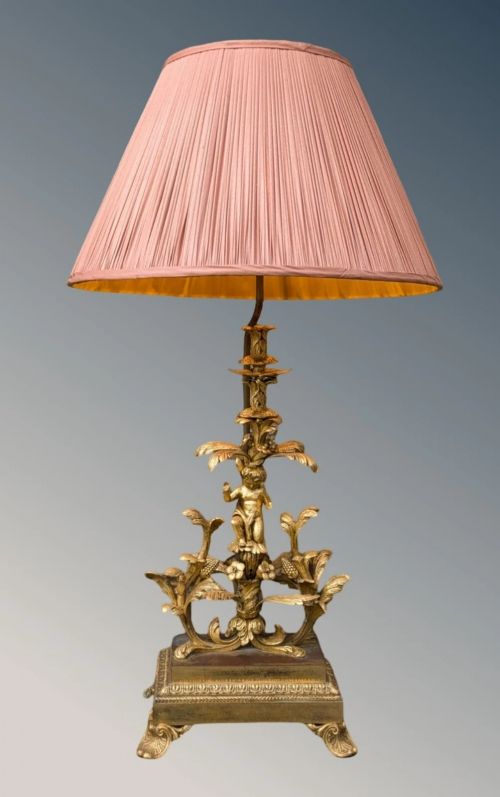
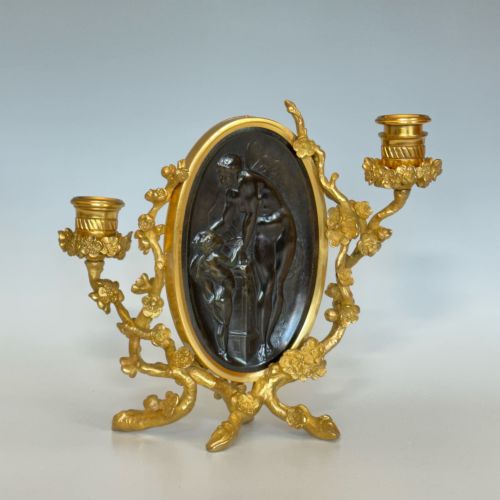
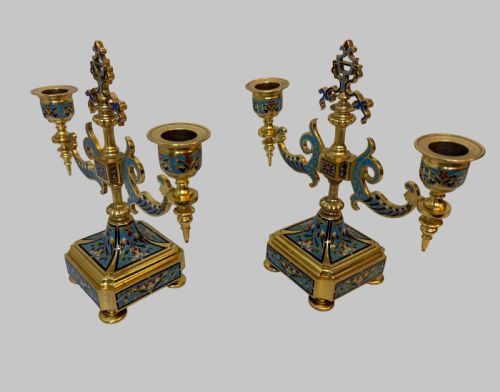


Brass Table Candelabra
Brass table candelabra bring structured illumination and formal presence to a room, ranging from simple domestic lighting to grand French salon pieces.

Brass Table Candelabra
When you search for brass table candelabra, you encounter multi-branched lighting pieces designed for placement on tables, desks and mantelpieces. These items emerge primarily from nineteenth-century workshops, drawing upon stylistic influences such as French Rococo Revival, Empire, Regency, and Victorian aesthetics.
Makers and origins vary widely across these listings, spanning English domestic production alongside continental French and Swedish works. Forms range from compact bouillotte lamps to monumental gilt-bronze candelabra incorporating cherubs, mermen, or classical architectural motifs.
Materials and construction
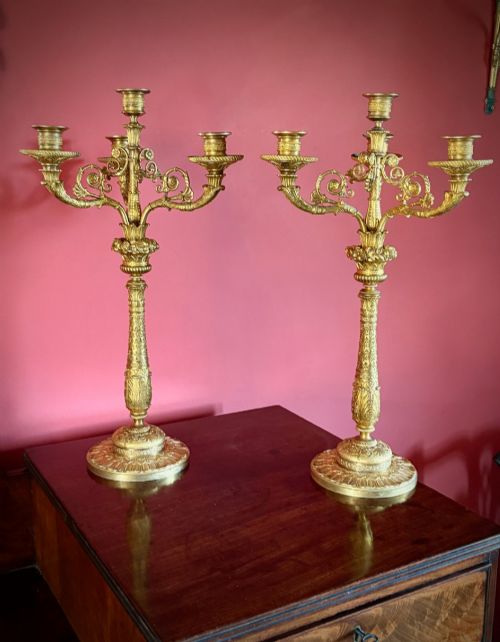
Foundry work relies heavily on cast brass, ormolu, and gilt bronze, providing the structural body and ornate decorative arms for each candelabrum. Artisans chased and gilded these metal surfaces to achieve high lustre and crisp detail in the floral or figural motifs.
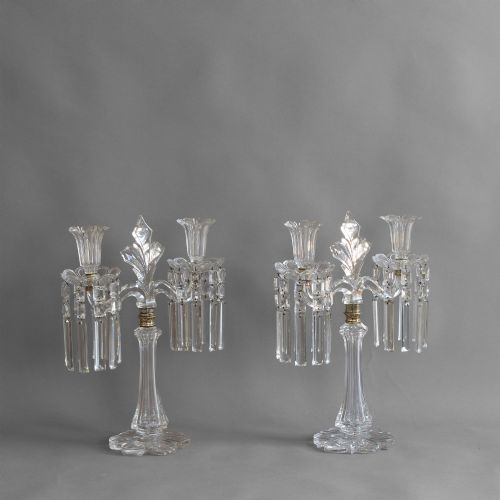
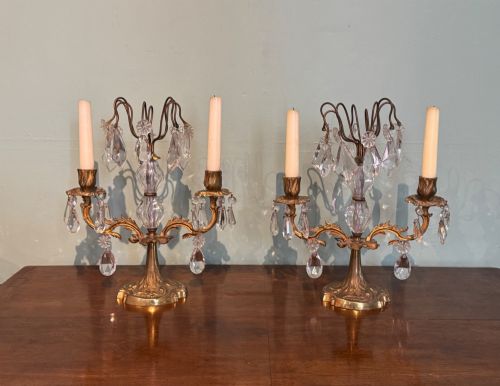
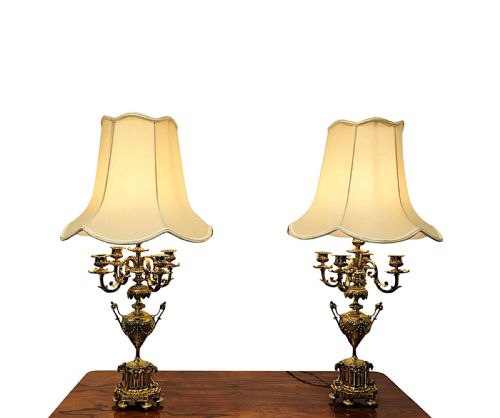
Combinations of cut glass, enamel, and white marble frequently appear alongside the metalwork to add colour, weight, and visual contrast. Fabric shades and crystal lustres or drops are suspended from arms to diffuse the candlelight or electric illumination.
Adjustable mechanical joints appear on specific student and bouillotte designs, allowing users to alter the height and angle of the light source. Many pieces incorporate sockets and wiring from later conversions, merging period metalwork with modern electrical components.
Brass Table Candelabra Retail Price Guide 2026
Typical asking prices for brass table candelabra among the pieces listed under this phrase on Sellingantiques today, from the lower quarter to the upper quarter. They describe what is for sale here now, not the wider market.
Keep an eye out for mischievous mermen holding up the branches, proving that even formal lighting occasionally needs a touch of seaside mythology.
Evaluating craftsmanship and condition
Weight and structural integrity also distinguish the range, as heavier gauge brass and substantial marble plinths provide stability to multi-branched structures. The presence of original matching components, unmolested bripns, and intact crystal drops preserves the integrity of the design.
Thiebaut Freres·Wm. Tonks & Sons
The Brass Table Candelabra Glossary
- Ormolu
- Gilded bronze produced by applying a mercury-gold amalgam to a base metal before heating. This technique creates a distinctive, rich golden finish characteristic of French decorative arts.
- Bouillotte
- A type of adjustable table lamp featuring a central shaft, candle or bulb arms, and a Tole metal shade. It was originally designed for use during card games.
- Girandole
- An ornamental branched candlestick or candelabrum, frequently equipped with a backplate or mirrored surface to reflect light. These pieces often feature hanging glass prisms.
- Champleve
- An enamelling technique where troughs or cells are hollowed out of a metal surface and filled with vitreous enamel. The piece is then fired and polished flush with the metal partitions.
- Lustre
- A table candelabrum or candlestick hung with cut glass drops or prisms. The glass pendants refract candle or ambient light across the room.
Brass Table Candelabra: Frequently Asked Questions
Were these originally electrified?
These pieces were originally designed exclusively for wax candles or oil combustion before the widespread adoption of domestic electricity. Many surviving examples retain their original sconces and drip pans, while others underwent conversion to table lamps during the twentieth century.
When evaluating converted pieces, look for how cleanly the wiring was integrated through the central shaft. Professional conversions preserve the original structural integrity of the metalwork without damaging antique mounts.
How do I identify French Empire style?
French Empire pieces display strict symmetry, classical architectural proportions, and military or mythological motifs inspired by antiquity. Common decorative elements include sphinxes, laurel wreaths, swans, and formal acanthus leaf banding.
The metalwork on these items is typically heavy fire-gilt bronze, contrasting sharply with the lighter, more fluid curves of later Rococo revival designs. Marble bases on Empire works are frequently dark or black, anchoring the neoclassical composition.
What is a bouillotte lamp used for?
A bouillotte lamp served as a specialised task light for card games, reading, and writing in eighteenth and nineteenth-century parlours. The adjustable metal shade could be lowered as the candles burned down, directing light onto the table surface.
These pieces combine a central candlestick or branching arms with a characteristic painted Tole shade. They provide focused, adjustable illumination suitable for desks and side tables.