

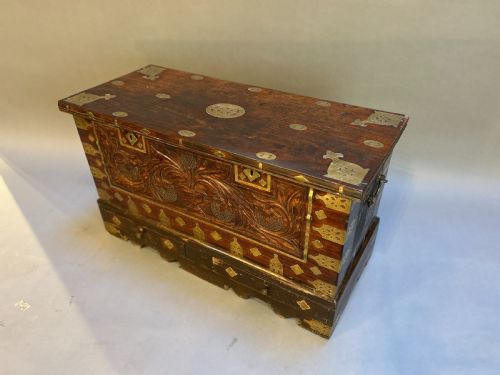
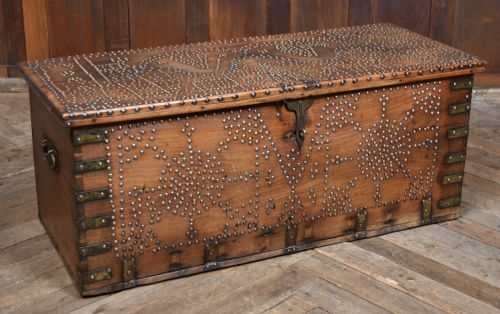
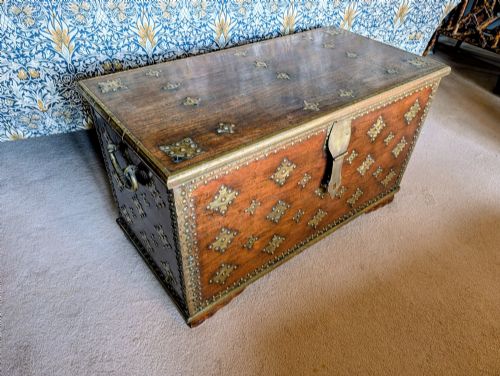
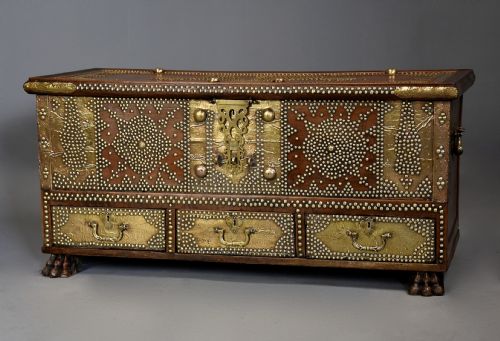

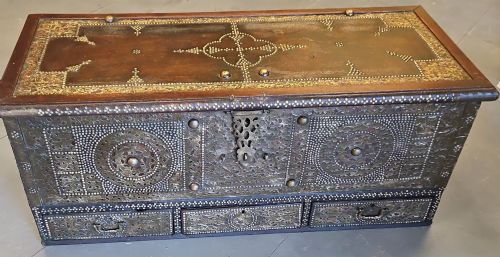


Brass Stud Wooden Coffer
A brass stud wooden coffer brings robust utility and rich global trade history into a room.
Brass Stud Wooden Coffer
A brass stud wooden coffer serves as a sturdy storage box, often encountered here in forms linked to colonial trade and domestic travel. These pieces span centuries, moving from seventeenth-century leather-bound boxes to nineteenth-century Zanzibar chests and Victorian trunks.
The version most frequently met on this page is the nineteenth-century Zanzibar chest, constructed from dense hardwoods like padouk, teak, or rosewood. These storage chests and blanket boxes carry heavy metal mounts and characteristic brass studwork originating from distinct trading routes.
How they were made
Woodworkers utilised durable timbers such as teak, oak, pine, and camphorwood to form the primary structure of each trunk or coffer. Hardwoods provided the necessary strength for long-distance maritime travel and domestic storage.
Metalwork defined the exterior decoration and structural reinforcement, employing brass studs, iron bands, and copper fittings. Craftsmen drove these studs into leather, hide, or directly into the wooden panels in intricate geometric patterns.
Brass Stud Wooden Coffer Retail Price Guide 2026
Typical asking prices for brass stud wooden coffer among the pieces listed under this phrase on Sellingantiques today, from the lower quarter to the upper quarter. They describe what is for sale here now, not the wider market.
Listings feature items spanning the seventeenth through to the twentieth century, incorporating materials like teak, padouk, leather, and iron.
What varies in quality
The density and selection of the timber dictate the initial calibre of a coffer, with exotic hardwoods like padouk and teak representing superior construction compared to simpler pine kists. Rich grain patterns and heavy, stable timber frames elevate the standing of a piece.
The intricacy and preservation of the metal ornamentation distinguish finer examples from standard utility boxes. Dense brass studding, elaborate metal binding, and complete original hardware indicate higher workshop standards.
Seabrook of St Pauls
The Brass Stud Wooden Coffer Glossary
- Zanzibar chest
- A heavy trading chest originating from East Africa and the Middle East, typically fashioned from hardwood with extensive brass stud decoration and metal straps.
- Coffer
- A large wooden box used for holding valuables, clothes, or documents, usually featuring a hinged lid and reinforced construction.
- Padouk
- A heavy, durable tropical hardwood with a reddish hue, frequently utilised in nineteenth-century maritime furniture and storage chests.
- Kist
- A traditional regional term for a chest or box, often applied to vernacular pine or oak storage pieces.
Brass Stud Wooden Coffer: Frequently Asked Questions
What is a brass stud wooden coffer used for?
These pieces function primarily as practical storage chests for blankets, linens, and household goods. Their robust construction allows them to serve easily as coffee tables or statement storage units in modern rooms.
Historically, they travelled across trade routes to hold valuables and personal belongings. Today, they bring both surface utility and rich texture to an interior.
How do I date a wooden coffer?
Dating relies on examining the timber species, construction joints, and the style of metal hardware attached. Seventeenth-century examples often feature simple leather bindings, while nineteenth-century pieces frequently display dense brass studwork.
Reference points like recorded maker labels or distinct regional traits help narrow down the period. Comparing the lock mechanisms and hinges also provides clear clues to the age of the box.
Where did Zanzibar chests originate?
These chests emerged from maritime trade networks connecting the Middle East, India, and East Africa. Local workshops built them using imported hardwoods and durable metal fittings to withstand ocean voyages.
Traders and merchants utilised them as travel trunks before they found their way into domestic interiors. Their design reflects a blend of diverse cultural influences from the Indian Ocean region.
How do I care for antique hardwood furniture?
Maintain the timber by keeping the box away from direct heat sources and sudden humidity shifts. Regular dusting with a dry cloth preserves the polished surface of the wood.
Avoid harsh chemical cleaners on the brass studs and metal straps to protect the original patina. Applying a light coat of appropriate wax periodically helps nourish the hardwood.