


Brass Strapped Oak Barrel
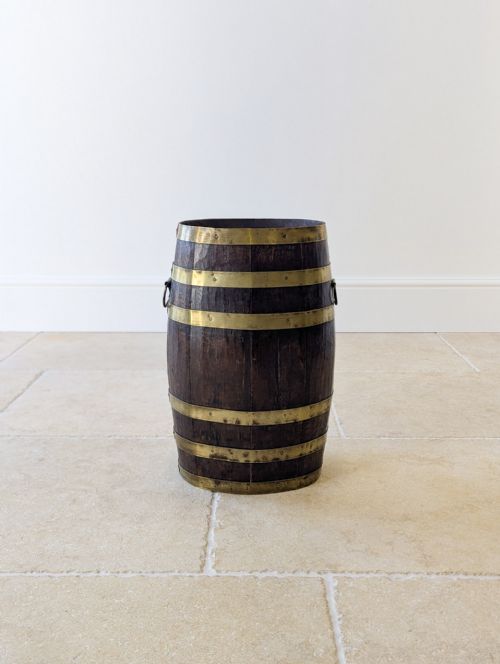
A brass strapped oak barrel brings sturdy coopered construction and warm timber tones into a hallway or study.
Brass Strapped Oak Barrel
When you search for a brass strapped oak barrel, you encounter robust coopered vessels designed for practical service and adapted over generations for domestic use. The pieces on this page span several distinct forms, crossing from utilitarian storage containers into decorative hallway furniture.
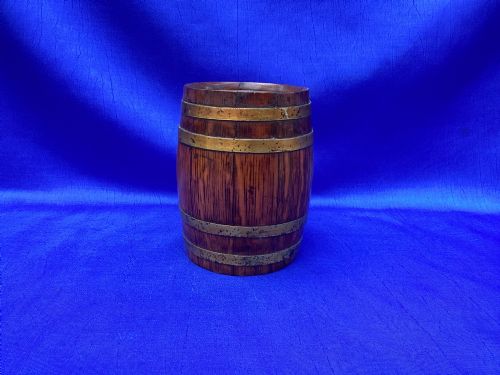
The most common examples you meet are stick and umbrella stands, shaped into oval or round barrel forms fitted with carrying loops or umbrella rings. Alongside these, the selection includes smaller money boxes, bottle storage barrels, and butter barrels originating from English and Dutch workshops.
The periods represented stretch from the early nineteenth century through the Victorian and Edwardian eras into the mid-century. While earlier items often show the deeper patination of Georgian or early Victorian craftsmanship, Edwardian examples maintain the same traditional cooperage methods.
How they were made
Makers constructed these pieces using individual staves of solid oak or hardwood, shaped and fitted together side by side to form a watertight or structurally sound cylinder. Cooperage required precise woodworking angles so that the tapered staves locked tightly when squeezed by metalwork.
Heavy brass straps or bands, sometimes referred to as bindings, were heated and driven onto the wooden staves to hold the barrel firmly in place as the timber expanded and contracted. Additional materials such as copper appear on selected mounts, while interior fittings on stick stands often include metal loops or bases.
A butter barrel once used for dairy provisions now holds your wet umbrellas by the front door.
What varies in quality
The distinction between standard utility items and finer examples lies in the quality of the timber selection and the precision of the cooperage. Tighter stave joints and more substantial gauge brass bindings denote superior workmanship intended to endure heavy domestic service.
Proportion and form also divide the range, with oval umbrella stands requiring greater skill from the maker than simple round casks. Retaining original fittings such as interior loops and mounting brackets elevates the character of a piece.
The Brass Strapped Oak Barrel Glossary
- Coopered
- Made by a cooper using curved wooden staves bound together with metal hoops. This traditional technique formed barrels, buckets, and large storage casks.
- Stave
- One of the narrow vertical strips of oak or hardwood that form the sides of a barrel. Each piece is bevelled to fit flush against its neighbours.
- Brass bound
- Fitted with exterior metal bands made of brass that secure the wooden staves. These bands provide structural tension and decorative contrast against the dark timber.
- Stick stand
- A piece of hallway furniture designed to hold walking sticks and umbrellas. Many surviving examples utilise converted barrels fitted with interior divider loops.
Brass Strapped Oak Barrel: Frequently Asked Questions
What were brass strapped oak barrels used for?
These vessels originally served various holding and storage duties in homes and commercial settings, ranging from containing dry goods to storing bottled beverages like Guinness. Over time, many larger casks were adapted into hallway umbrella and stick stands.
Smaller examples were also produced specifically as money boxes or decorative butter barrels. Their durable construction allowed them to withstand heavy daily handling in busy household environments.
How do I date a coopered barrel?
Dating relies on examining the timber grain, the method of construction, and the style of the brass bindings. Earlier nineteenth-century examples often exhibit deeper patination on the oak and heavier hand-forged or cast metal components.
Later Victorian and Edwardian pieces tend to show more standardised manufacturing techniques while retaining traditional coopered assembly. Comparing the specific object type, such as oval stick stands versus round casks, also helps narrow the period.
Are these barrels waterproof?
While original coopered barrels were built to hold liquids, surviving antique examples may have dried out over the decades. The natural movement of the oak staves means that modern use as a planter or water container often requires careful checking.
For most domestic purposes today, such as holding umbrellas or walking sticks, the structural integrity remains sound regardless of whether the joints hold water. Using a modern interior liner is recommended if storing wet items.
How do I clean and care for the brass and oak?
Maintenance involves dusting the oak timber regularly and occasionally applying a suitable wax to nourish the grain. Avoid harsh chemical cleaners that can strip the historic patination accumulated over the centuries.
The brass straps can be left with their natural aged tarnish or gently polished with a mild brass cleaner depending on personal preference. Care should be taken not to let cleaning agents stain the surrounding wood.