


Coopered Oak Cane Stand
These coopered oak cane stands are sturdy hall furnishings made from timber staves and metal bands, bringing practical country house character to any entrance.
Coopered Oak Cane Stand
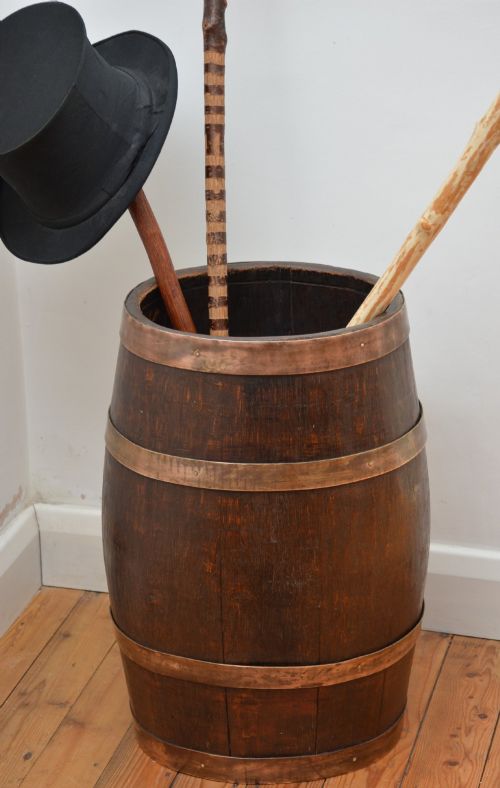
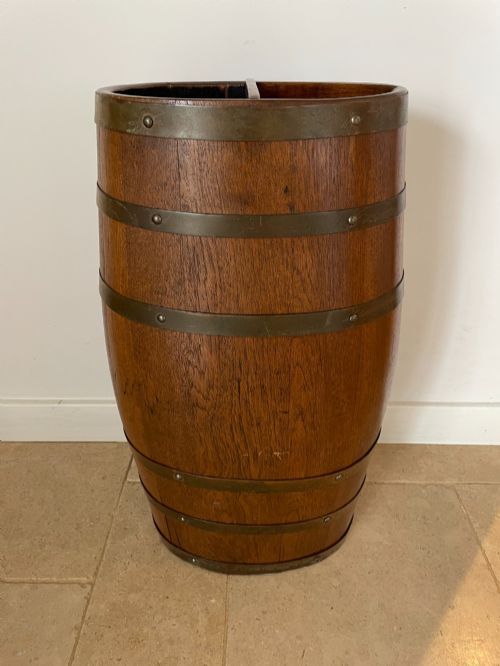
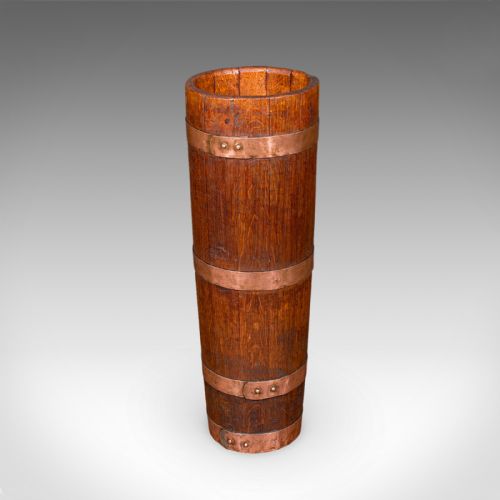
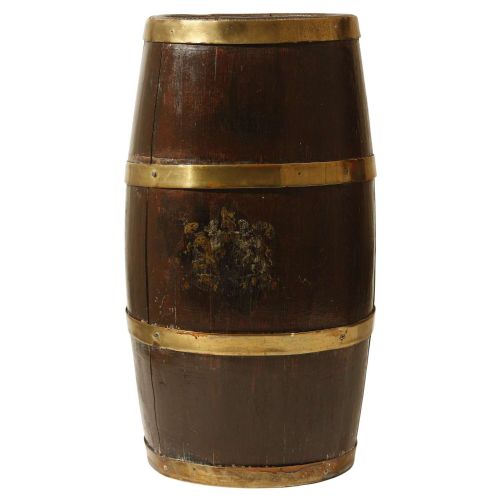
A coopered oak cane stand is a traditional hallway piece designed to hold walking sticks, canes, and umbrellas neatly in an upright position. Most examples found here take the form of miniature wooden barrels or oval tubs, drawing on time-honoured coopering methods.
The pieces on this page span the Victorian and Edwardian eras through to the early twentieth century, reflecting the domestic habits of country houses and town residences alike. Makers constructed these stands primarily as utilitarian items for the hallway, where damp umbrellas and heavy walking sticks required robust storage.
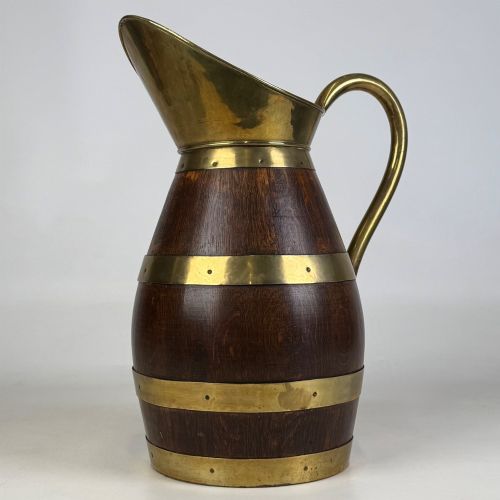
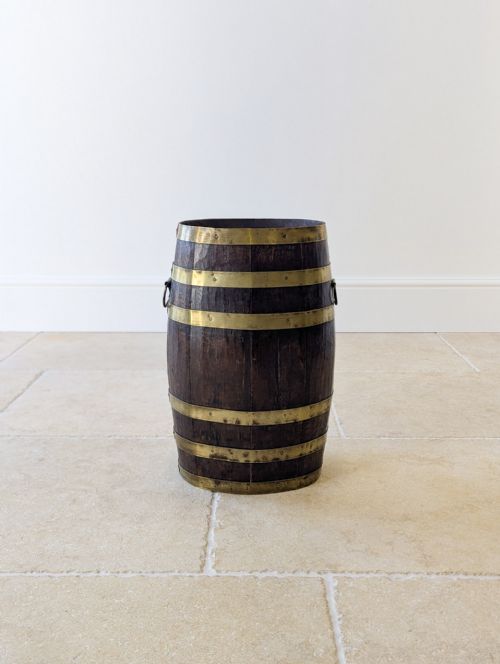
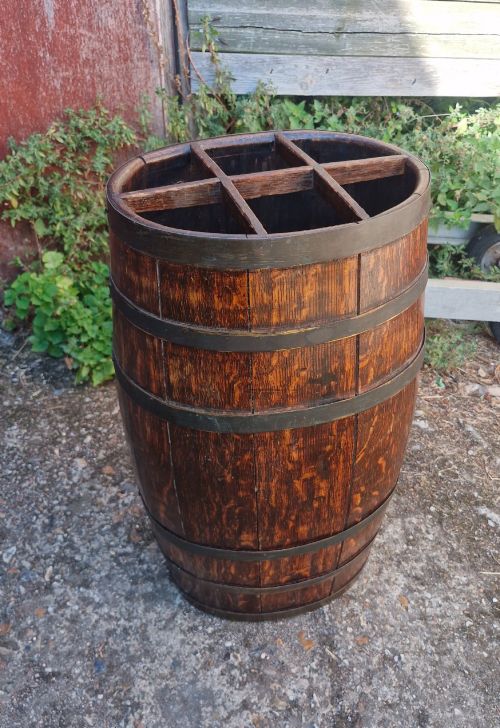
Forms vary from classic cylindrical oak barrels with vertical staves to oval umbrella stands fitted with metal loops or handles. Traditional English and English Country styles dominate the selection, often incorporating decorative brass braces or bands that echo nautical or brewing traditions.
How they were made
Craftsmen built these stands using solid oak staves shaped to form a tight circular or oval body, relying on the traditional skills of the cooper. Each wooden stave fits closely against the next to create a watertight or durable vessel without the need for modern adhesives.
Metal components play a structural and decorative role, with brass, copper, and iron used to bind the oak staves securely in place. Brass bands and braces encircle the barrels, sometimes accompanied by applied details such as metal coats of arms or umbrella loops.
Listings feature oak as the primary timber, complemented by brass, copper, and iron metalwork across Victorian and Edwardian periods.
What varies in quality
The standard of the coopering work dictates the structural integrity of each stand, with tightly fitted joints and well-balanced staves representing superior construction. Thicker oak timber and substantial metal bands indicate a more durable object intended for heavy daily use.
Refinement in the metalwork and hardware adds distinction, particularly where cast brass braces or decorative loops complement the grain of the wood. Original patination on both the oak and the metal surfaces contributes to the visual depth of the piece.
The Coopered Oak Cane Stand Glossary
- Coopered
- Constructed from wooden staves joined vertically and bound by hoops, following the traditional method of barrel-making. This technique ensures the vessel maintains its shape under pressure.
- Stave
- One of the narrow vertical strips of oak that form the sides of a barrel or stick stand. Staves are bevelled on the edges to fit tightly together.
- Brace
- A metal strap or band, usually made of brass or iron, fitted around the exterior of a wooden stand to hold the staves firmly in alignment. These braces often feature decorative riveting.
- Umbrella loop
- A metal divider or ring attached to the top of a stick stand to keep individual umbrellas and canes separated and upright. It prevents wet items from leaning haphazardly.
- Patina
- The surface sheen and colour developed on wood and metal over decades of handling and exposure to the environment. A rich patina indicates age and natural wear.
Coopered Oak Cane Stand: Frequently Asked Questions
How do I clean a coopered oak stand?
Dust the oak regularly with a dry cloth and apply a traditional beeswax to nourish the timber when needed. Avoid using harsh chemical cleaners that can strip the historic surface.
Keep the metal bands dry to prevent tarnish, using a soft cloth to buff brass components gently without disturbing the surrounding wood.
Are these stands suitable for daily use?
These pieces were originally built for practical hallway service and remain robust enough to hold modern umbrellas and walking sticks. The solid oak construction handles daily retrieval and placement of canes without difficulty.
Place a suitable liner inside the base if storing very wet umbrellas to protect the historic timber from prolonged moisture exposure.
How can I tell Victorian stands from later ones?
Early Victorian and mid-nineteenth-century examples often display heavier oak staves and hand-beaten or cast brass work with deeper patination. The construction methods reflect traditional coopering shops operating before mid-twentieth-century standardisation.
Edwardian and 1920s pieces may show slightly lighter framing and brighter brass mounts, though traditional barrel forms remain consistent across periods.
What is the difference between an umbrella and a stick stand?
The terms are frequently used interchangeably in historical listings, but stick stands generally cater to slimmer walking canes. Umbrella stands often include interior metal loops or larger base circumferences to accommodate wider canopies.
Both forms serve the same primary function of organising entryway clutter in a traditional hallway setting.