



Victorian Coopered Oak Stand
A victorian coopered oak stand brings honest utility to a hallway, holding wet walking gear and umbrellas with stout country character.
Victorian Coopered Oak Stand
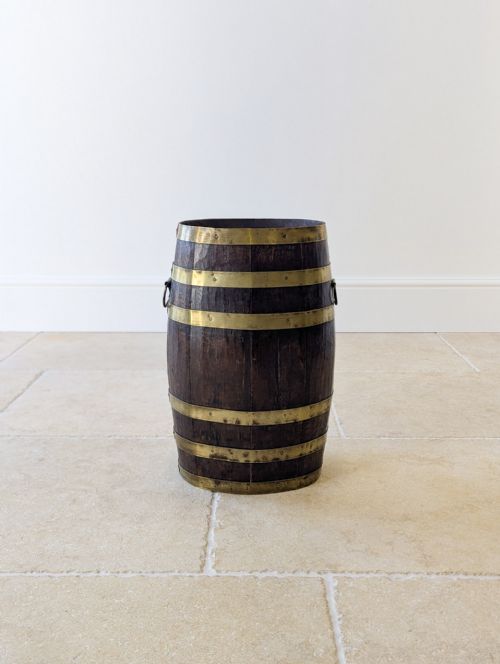
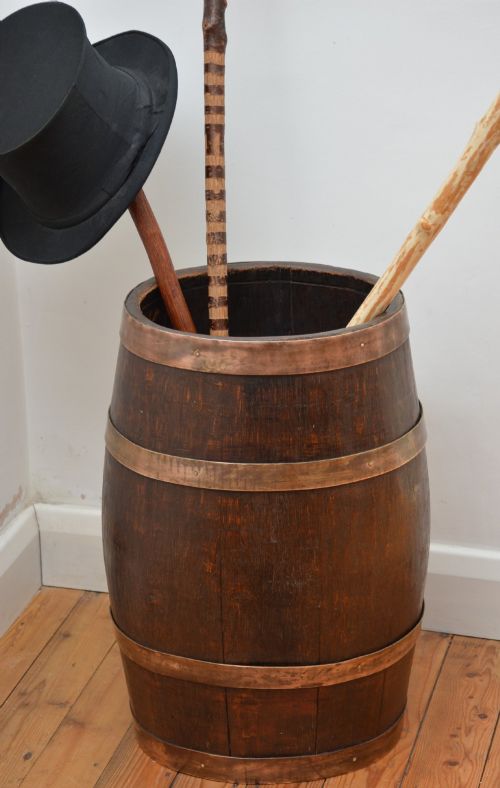
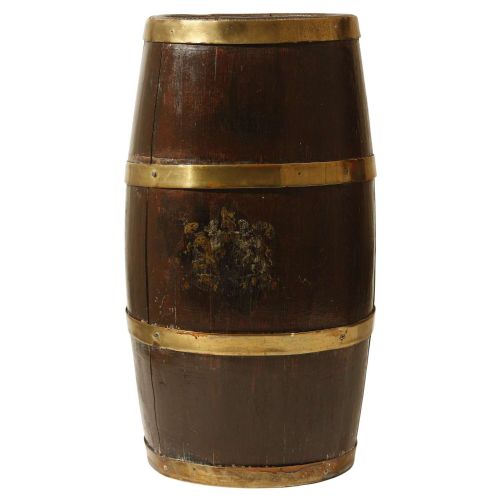
A victorian coopered oak stand takes the form of a barrel, cask or oval vessel designed specifically to hold sticks and umbrellas in a hallway or boot room. These robust items date from the nineteenth century, with mid-Victorian examples appearing frequently alongside later pieces from around nineteen ten.
Most pieces function as umbrella stands or stick stands, often featuring fitted interior loops or exterior brass braces to keep wet canes orderly. The English country house aesthetic dominates, pairing sturdy timber staves with functional metal hardware for daily domestic use.
How they were made
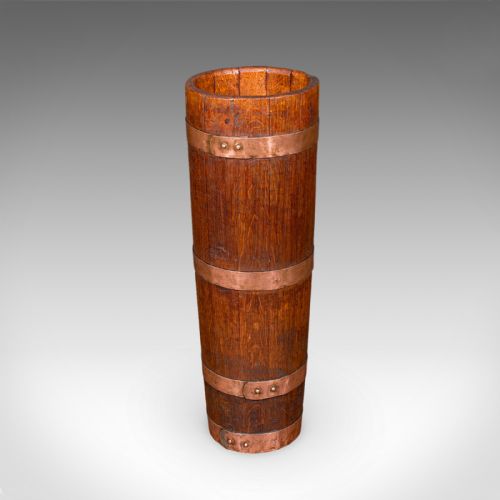
Staves of solid oak form the body of each vessel, shaped and fitted side by side by traditional coopers to create a watertight or self-supporting cylinder. This construction method relies on tight joints rather than glue, allowing the timber to expand and contract naturally.
Metal bands secure the wooden staves in place, utilising brass or iron hoops tightened around the circumference. These metal braces provide structural strength while adding a distinct decorative contrast to the warm grain of the oak.
Early nineteenth-century coopers occasionally repurposed whiskey casks into hallway stick stands, leaving a faint hint of spirit locked deep inside the dry oak staves.
What varies in quality
The refinement of the cooper's work distinguishes superior examples, seen in the precise tapering of individual oak staves and the clean fit of the metal hoops. Thicker timber and heavier brass mounts indicate a sturdier vessel built for heavy country house use.
Proportion and scale also separate standard items from larger hall pieces, where an oval section or integrated umbrella loops require greater skill to construct properly. Original surfaces with honest patination carry more authority than heavily restored timber.
The Victorian Coopered Oak Stand Glossary
- Coopered
- Made by a cooper using curved wooden staves bound together with metal hoops to form a hollow vessel. This traditional technique is typically associated with barrels, casks and stick stands.
- Stave
- One of the narrow strips of oak that form the sides of a barrel or stand. Each piece is bevelled to fit tightly against its neighbours.
- Umbrella loop
- A metal divider or ring fitted to the top of a stand to keep walking sticks and umbrellas separated. It prevents wet items from tangling together inside the vessel.
- Brass bound
- Fitted with decorative or structural bands of brass around the wooden body. This addition secures the staves while providing a bright contrast to the dark oak.
Victorian Coopered Oak Stand: Frequently Asked Questions
How do I clean a coopered oak stand?
Wipe the oak gently with a dry or slightly damp cloth to remove dust without harming the aged surface. Avoid soaking the wood or using harsh modern cleaners that strip the natural oils from the staves.
Polish the brass hoops occasionally with a soft cloth if you prefer a brighter shine, taking care not to smear polish onto the surrounding timber.
Can I use these stands for modern umbrellas?
Most victorian coopered oak stand examples easily accommodate modern umbrellas and walking sticks within their traditional barrel or oval shapes. The interior depth handles standard shaft lengths securely.
Place a small ceramic or metal tray inside the base if you wish to catch drips from wet fabric and protect the internal oak floor from standing water.
Are iron hoops older than brass ones?
Iron and brass appeared concurrently throughout the nineteenth century depending on the intended room and budget of the household. Iron often appears on utilitarian items, while brass suited more formal hallway settings.
Examine the overall finish and build quality rather than the metal type alone when assessing the period of a particular piece.
Where were these stands placed originally?
Country houses and large town residences positioned these vessels in entrance halls, boot rooms and porticos for guests to deposit wet gear upon arrival. Their sturdy construction withstood heavy daily use by family and visitors.
Today they serve the same practical purpose in domestic hallways while adding historic character to an interior entrance space.