


Brass Stem Candle Stands
These brass stem candle stands bring period lighting to a room, ranging from simple Georgian forms to decorative Victorian and Arts and Crafts examples.
Brass Stem Candle Stands
Brass stem candle stands are practical lighting devices designed to elevate candles securely on tables or altars. When you search for brass stem candle stands, you encounter various heights and silhouettes spanning the eighteenth century through to the early twentieth century.
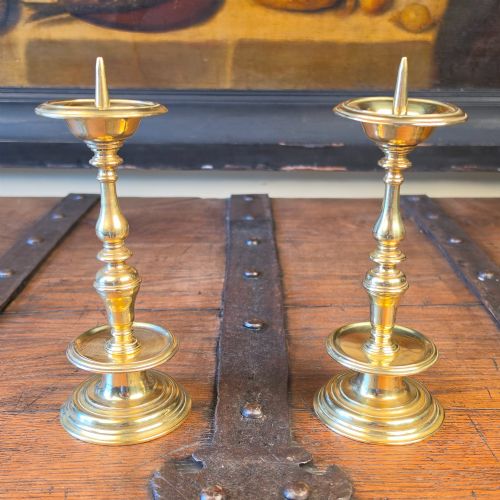
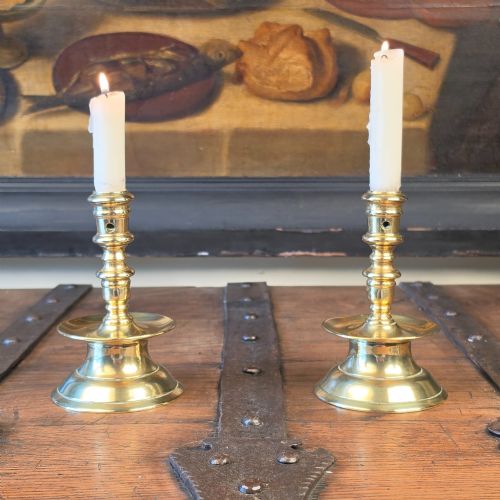
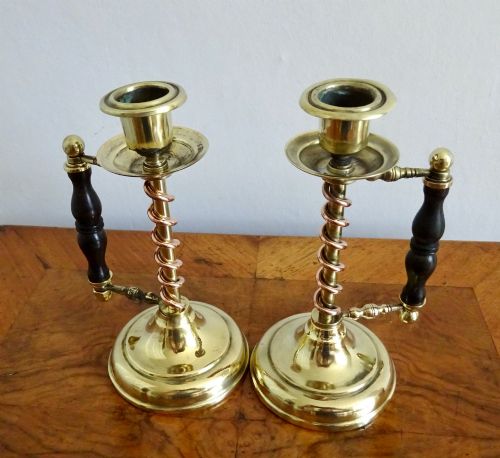
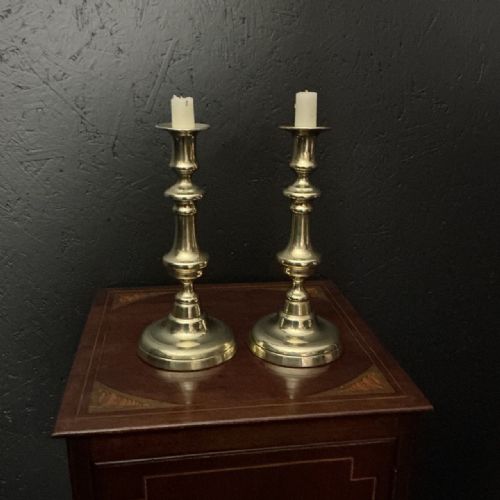
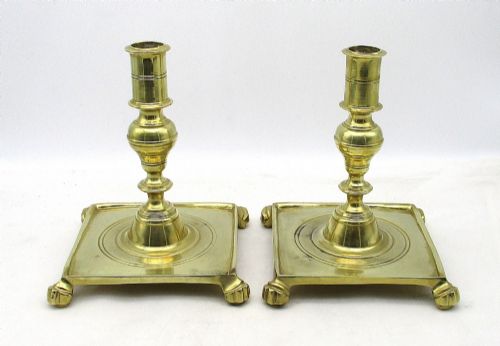
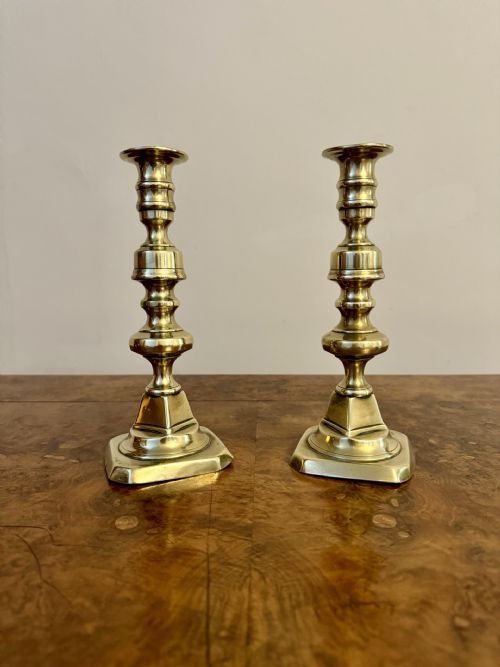
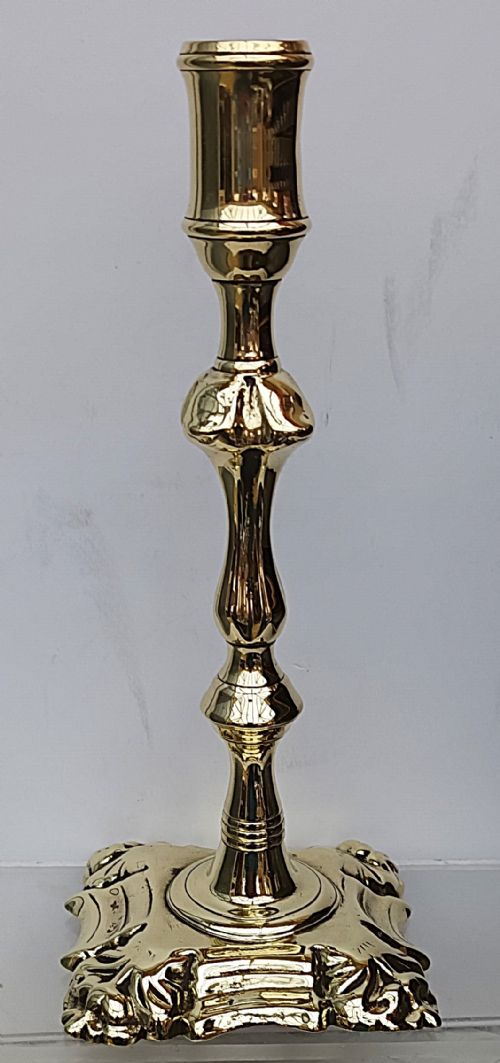
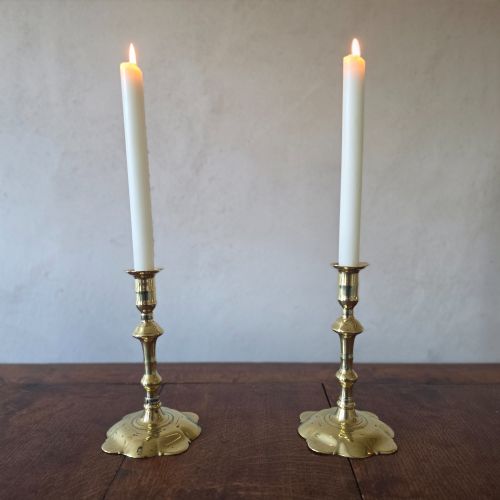
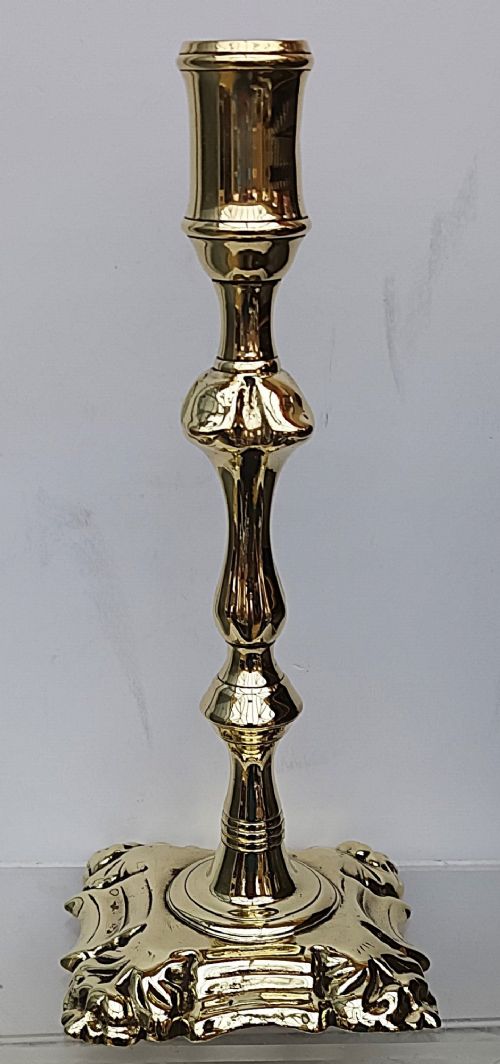
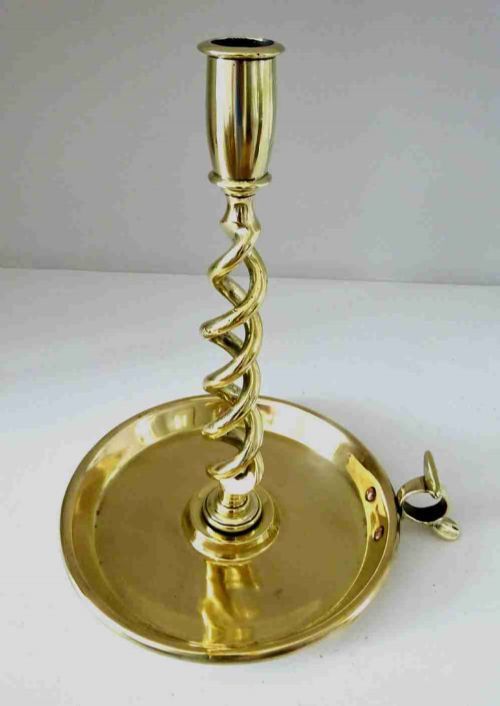
The selections on this page are predominantly pairs, featuring baluster columns, barley twists, or hexagonal bases. Examples from the Georgian and Victorian periods sit alongside Arts and Crafts and ecclesiastical designs.
How they were made
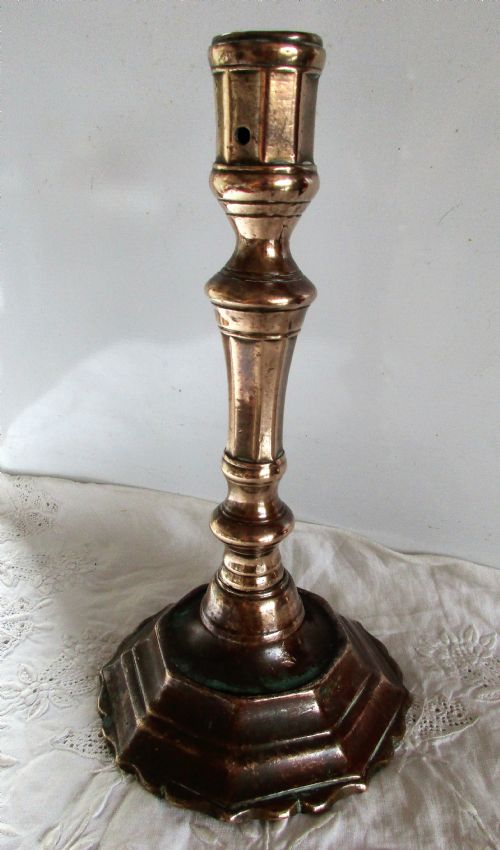
Maker workshops utilised cast brass and sheet brass, frequently combining the metal with copper, bronze, wood, or mahogany. Components were cast in sections and joined, or spun and turned on lathes to create slender stems and stable feet.
Decoration relied on surface finishing, turning techniques, and mixed metals rather than applied ornament. The integration of copper accents or wooden plinths added weight and visual contrast to the metal stems.
Listings span periods from the 18th century through to the 1930s, incorporating brass, copper, bronze, and mahogany.
What varies in quality
Quality rests in the precision of the casting and the crispness of the turned details on the stem. Finer pieces demonstrate careful finishing at the joints and substantial weight in the base.
Proportion and balance distinguish standard production items from finer workshop examples. The integrity of the original construction and the preservation of surface texture reveal the skill of the maker.
Dr Christopher Dresser·T Thomason & Co
The Brass Stem Candle Stands Glossary
- Baluster
- A moulded column shape with a swollen lower portion, commonly found supporting the drip pan on eighteenth and nineteenth-century stems.
- Barley twist
- A spiral form carved or turned into the stem of the stand, creating movement along the vertical column.
- Petal base
- A moulded foot shaped like overlapping flower petals, frequently seen on early eighteenth-century examples.
- Ecclesiastical
- Design styles associated with churches and chapels, often featuring heavier construction and specific liturgical ornamentation.
Brass Stem Candle Stands: Frequently Asked Questions
How do I date a brass candlestick?
Dating relies on observing base shapes, manufacturing marks, and assembly methods. Earlier pieces often feature multi-part cast construction, while later items incorporate turned twists or mixed metals.
Changes in styling from Georgian plainness to Victorian ornamentation or Arts and Crafts simplicity provide clear chronological markers.
Are these candle stands safe to use?
Most antique stands accommodate standard taper candles securely. Checking that the socket and drip pan remain stable ensures safe domestic use.
Using fitted candles prevents dripping and protects the historic metal surface from heat damage.
Why are pairs more common?
Mantelpieces and dining tables traditionally required symmetrical lighting arrangements. Workshops produced matching pairs to meet this domestic demand for balanced interior display.
Single survivors do occur, but paired sets remained standard for formal rooms.
How should I clean antique brass?
Dusting with a dry cloth preserves the aged patina that collectors value. Aggressive metal polishes remove surface history and the subtle tones developed over centuries.
Gentle cleaning maintains the integrity of the original metal finish without altering its appearance.