





Brass Skeleton Timepiece
A brass skeleton timepiece strips away the heavy wooden case to expose the intricate gear train and ticking heart of the mechanism beneath.
Brass Skeleton Timepiece
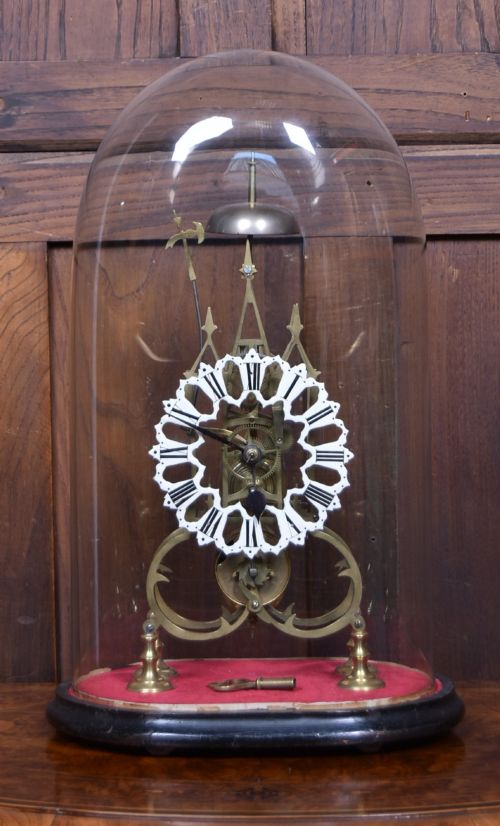
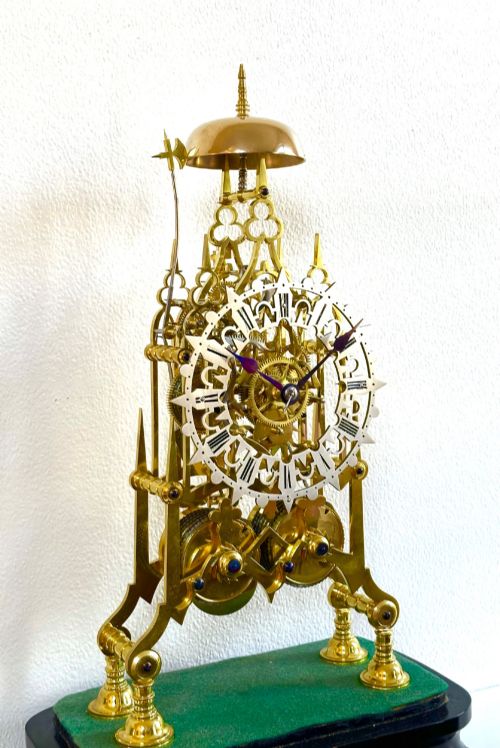
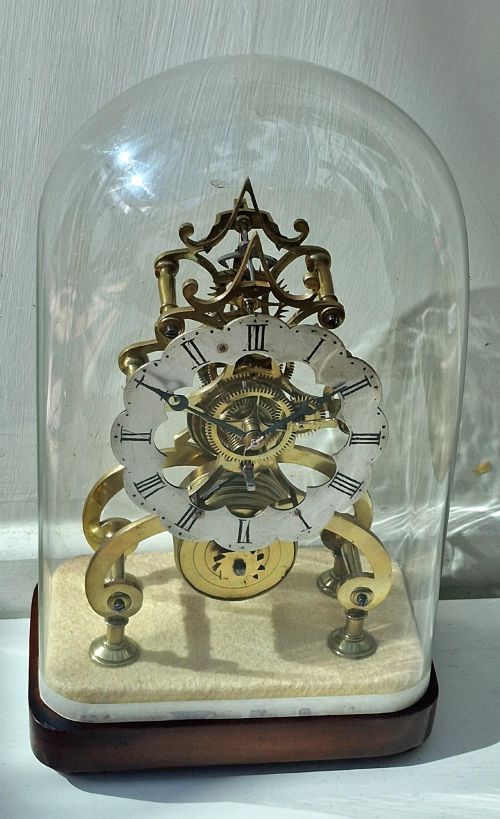
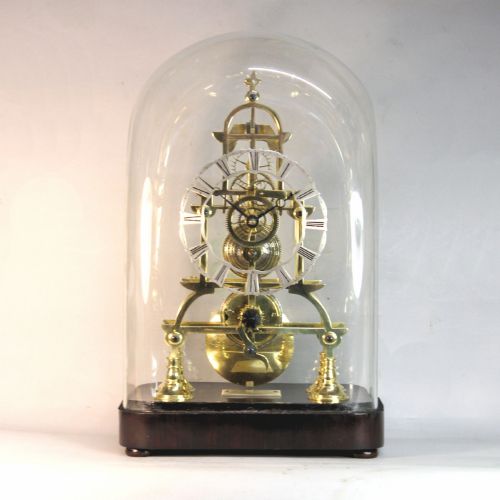
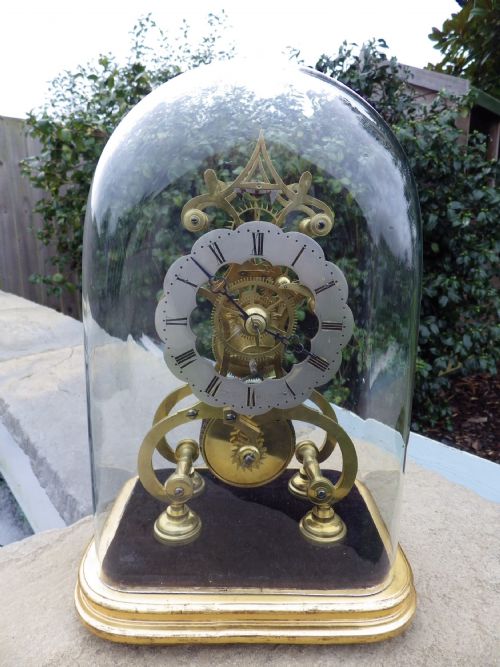
A brass skeleton timepiece is a clock designed with an open frame that reveals the movement from every angle. When you search for a brass skeleton timepiece, you encounter delicate English and French examples enclosed within glass domes or fitted into mantel clock housings.
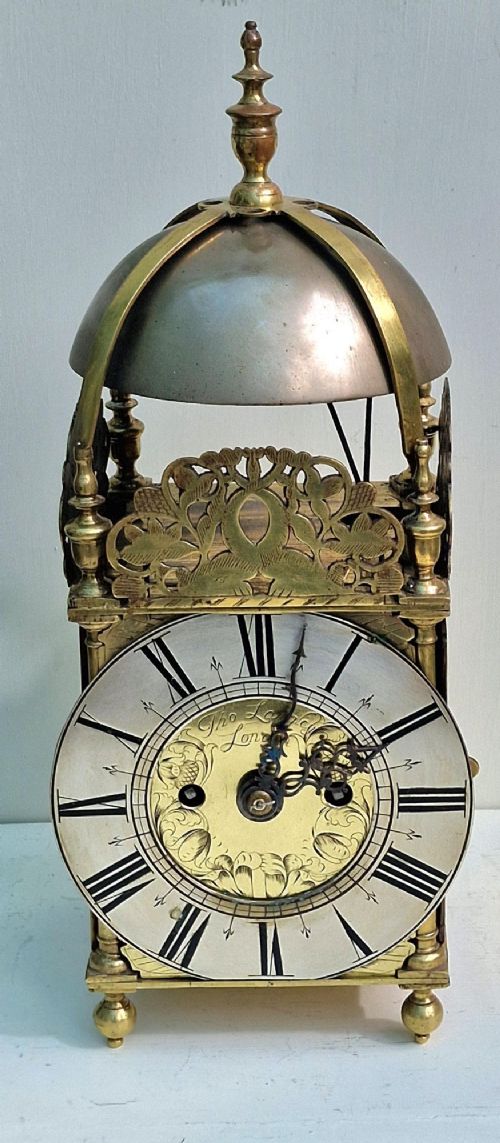
The pieces listed here span several distinct periods, with the Victorian era providing the majority of the traditional brass designs. You will also find earlier lantern clocks, later Art Deco electric models, and Mid-Century Swiss variations that adapt the open framework for different interiors.
How they were made
Makers constructed the movement plates entirely from brass, cutting away the metal until only a skeletal framework remained to support the steel wheels and pinions. Many examples incorporate double fusee movements to maintain even tension on the chain as the mainspring unwinds.
Enclosed protection is a defining characteristic of the construction, with delicate glass domes resting upon wooden, ebonised, or marble bases to keep dust away from the exposed gears. Dial faces are frequently finished in white enamel with delicate numerals, while bases often feature adjustable feet for levelling.
Brass Skeleton Timepiece Retail Price Guide 2026
Typical asking prices for brass skeleton timepiece among the pieces listed under this phrase on Sellingantiques today, from the lower quarter to the upper quarter. They describe what is for sale here now, not the wider market.
Some models hide tiny ships wheels inside their four-glass frames, proving that even precision timekeeping appreciates a nautical touch.
What varies in quality
Quality in these timepieces rests upon the precision of the wheel-work and the crispness of the brass cutting. Finer examples display six-spoke wheel work and hand-engraved plates rather than plain stamped brass components.
The presence of original components such as the glass dome and matching base alters the overall integrity of the piece. Superior specimens retain their original motion work, enamel dials free from hairlines, and complicated striking or alarm mechanisms.
Thomas Langley·Richard Winter of Chieveley·Maurice & Marcel Moulin Favre-Bulle
The Brass Skeleton Timepiece Glossary
- Fusee
- A conical pulley used to maintain equal power as the mainspring unwinds. This device ensures consistent force is delivered to the gear train throughout the winding cycle.
- Skeleton clock
- A clock with open plates that expose the internal mechanism to view. The design turns the working parts themselves into the visual face of the clock.
- Double fusee
- A movement utilising two separate fusees to power the timekeeping train and the striking train independently. This arrangement provides stable power to both systems without interference.
- Glass dome
- A blown glass cover designed to protect delicate exposed movements from dust and accidental damage. These covers typically sit directly upon a fitted wooden or marble base.
Brass Skeleton Timepiece: Frequently Asked Questions
Why are they kept under glass domes?
The open framework leaves every pivot, wheel, and pinion completely unprotected from airborne dust and atmospheric moisture. A glass dome acts as a clear barrier that preserves the polished brass surfaces without hiding the mechanism from view.
Most traditional examples were supplied with these domes to ensure the delicate escapement functioned smoothly between professional cleanings. Removing the cover requires careful lifting using both hands to clear the tall brass finials.
How do French and English skeleton clocks differ?
English examples often feature robust brass plate designs and fusee movements built for extended running times. They frequently sit on heavy marble or ebonised wooden bases beneath tall oval or round glass shades.
French variations frequently incorporate four glass mantel designs or delicate miniature travel movements with passing strikes or pull alarms. The stylistic flourishes lean towards decorative gilt-brass framing and lighter overall proportions.
Can I leave a skeleton clock running continuously?
Regular running is generally beneficial for mechanical clocks, provided the movement has been recently cleaned and oiled by a professional conservator. Continuous operation distributes the lubricants evenly across the steel pivots and brass bushings.
If the clock is transported or left idle for extended periods, let the power run down completely before moving it. Ensure the timepiece rests on a stable, level surface to keep the pendulum or balance wheel beating evenly.