






Brass Shaving Stand
A brass shaving stand offers practical elegance, combining adjustable mirrors and sturdy stands for daily grooming.
Brass Shaving Stand
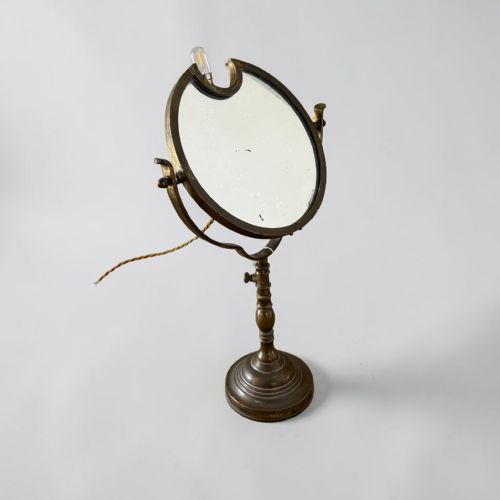
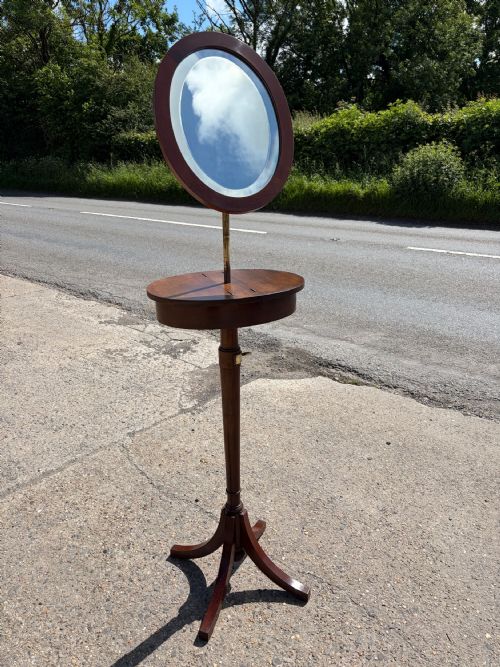
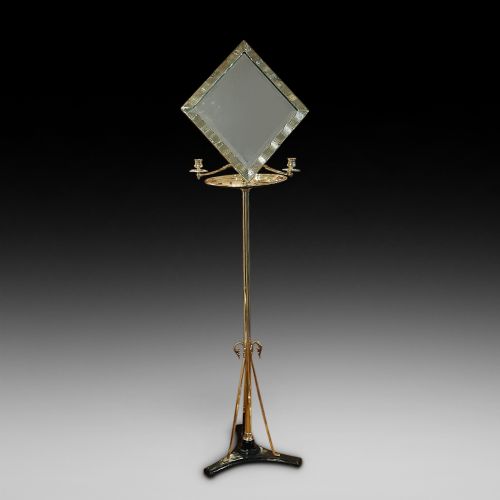
A brass shaving stand is a piece of furniture designed for grooming, featuring an adjustable mirror mounted on a supporting stand. These items appear across several distinct periods, including the Regency era, the Victorian period, and the early 20th century.
The most common versions found here combine a brass frame or mirror housing with timber stands, particularly mahogany or walnut. They serve as functional dressing accessories that double as decorative items for a bedroom or bathroom.
How they were made
Makers utilised cast brass for frames, fittings, and telescopic stems, pairing the metal with turned or polished hardwoods. Mahogany, walnut, and oak form the primary structural bases, offering a stable footing for the adjustable mirror above.
Telescopic mechanisms and pivot joints allow the mirror height and angle to shift smoothly. Glass mirrors are set within brass surrounds, sometimes supported by cast iron weighted bases or tripod legs for added stability.
Brass Shaving Stand Retail Price Guide 2026
Typical asking prices for brass shaving stand among the pieces listed under this phrase on Sellingantiques today, from the lower quarter to the upper quarter. They describe what is for sale here now, not the wider market.
Listings feature pieces spanning from the Regency period through to the 1920s, utilising brass, mahogany, walnut, and oak.
What varies in quality
Quality rests in the precision of the telescopic mechanism and the weight of the brass components. Finer examples exhibit robust construction with seamless height adjustment and substantial timber bases.
Design sophistication also distinguishes the pieces, from simple table mirrors to complex stands with combined storage or optical adjustments. The integration of secondary materials like mirror glass and cast iron reveals the maker's attention to detail.
Thomas Rubergall of London
The Brass Shaving Stand Glossary
- Telescopic
- A mechanism allowing vertical height adjustment through a sliding stem. This feature lets the user raise or lower the mirror to a comfortable viewing position.
- Tripod base
- A three-legged support structure providing balance on uneven surfaces. These bases frequently appear on standing shaving mirrors from the nineteenth century.
- Dressing mirror
- A tabletop or free-standing glass used for personal grooming and toilet. They often include tilting frames to adjust the reflection angle.
- Regency
- A British design period spanning the early nineteenth century. Pieces from this era display classical restraint and refined proportions.
Brass Shaving Stand: Frequently Asked Questions
What is a brass shaving stand?
A brass shaving stand is an adjustable mirror mounted on a support structure, designed for personal grooming. They combine metalwork with wooden bases.
These pieces date from the Regency era through to the early twentieth century and serve both functional and decorative purposes.
How do telescopic stands work?
Telescopic stands use a sliding metal stem that secures at various heights using a thumb screw or friction fit. This allows the user to raise or lower the mirror.
The mechanism provides flexibility for standing or sitting use during grooming routines.
What woods are used with brass?
Mahogany and walnut are the most common timbers paired with brass in these stands. Oak also appears on certain pieces from the Edwardian period.
These hardwoods provide the necessary weight and stability to support the adjustable mirror framework.
How do I date a shaving stand?
Dating relies on the prevailing style, the timber species, and the construction methods of the base and mirror frame. Regency pieces show classical lines, while Victorian examples often feature mahogany and telescopic tripod bases.
Later Edwardian and 1920s versions incorporate simpler oak or brass configurations typical of early twentieth-century manufacturing.