
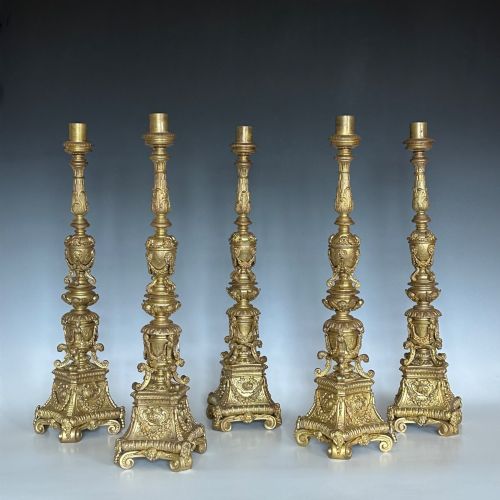
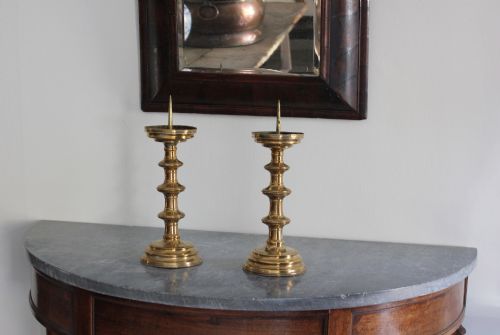


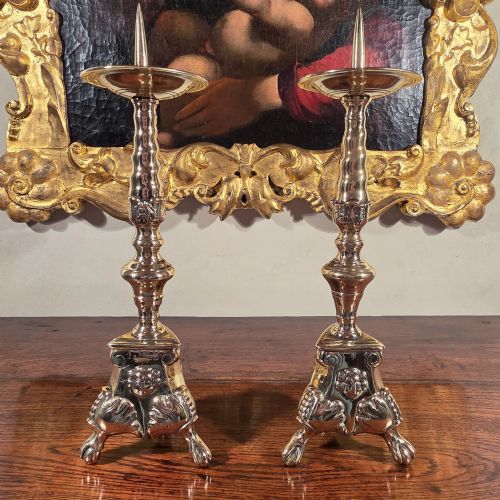


Brass Pricket Candlesticks
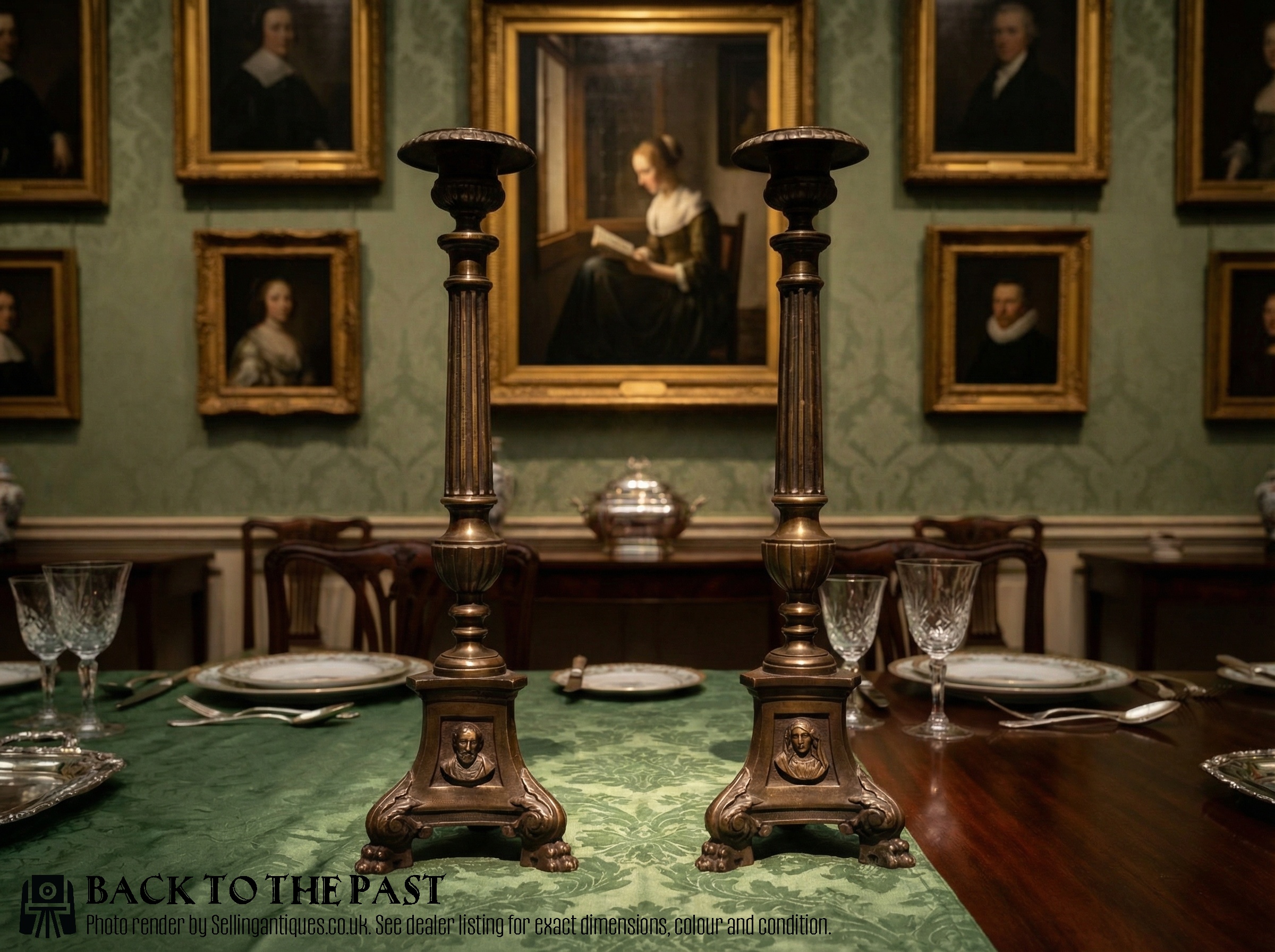
These brass pricket candlesticks are altar lights and heavy floor standards that bring architectural presence and centuries of metalwork history into a modern interior.
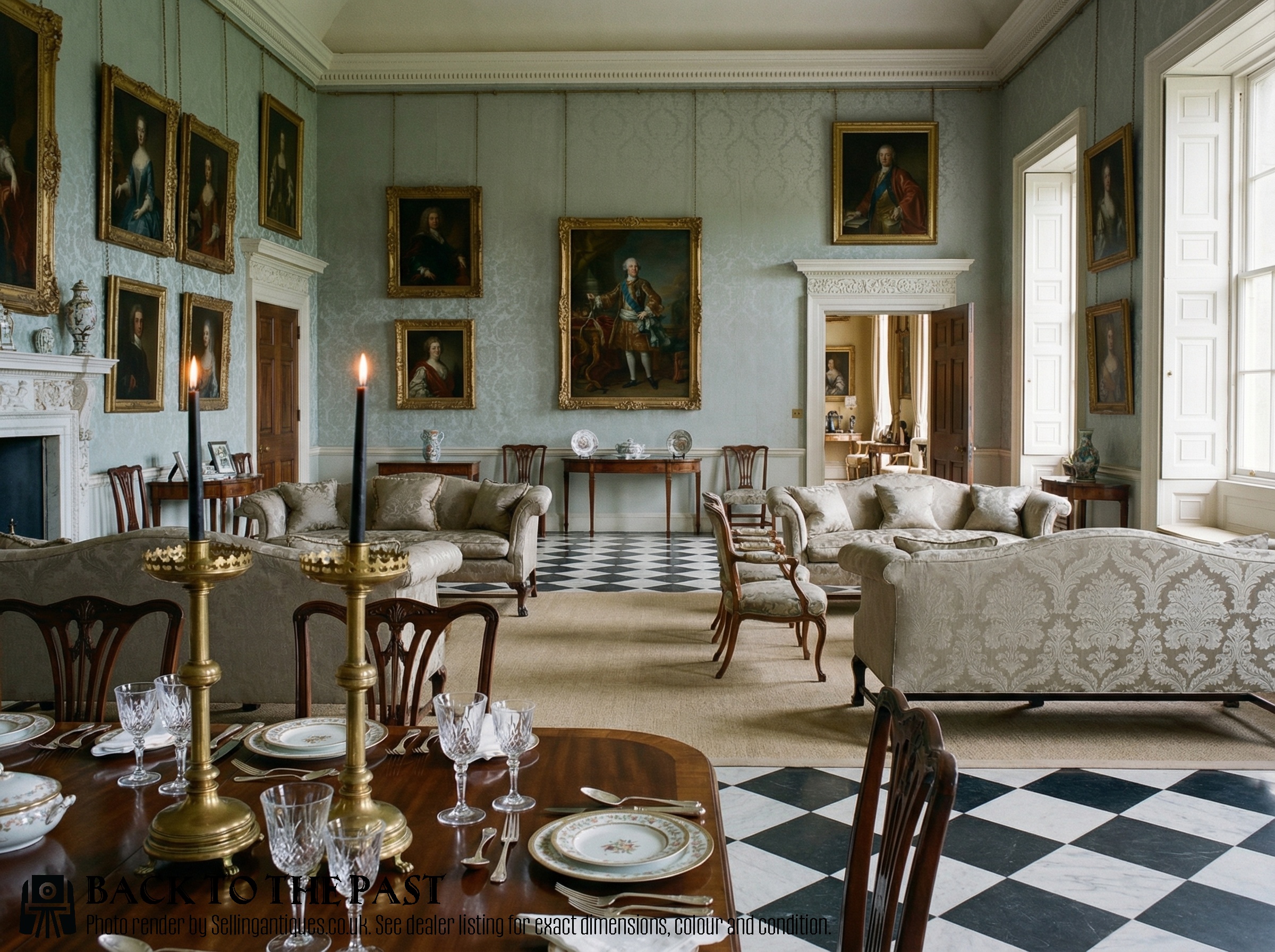
Brass Pricket Candlesticks
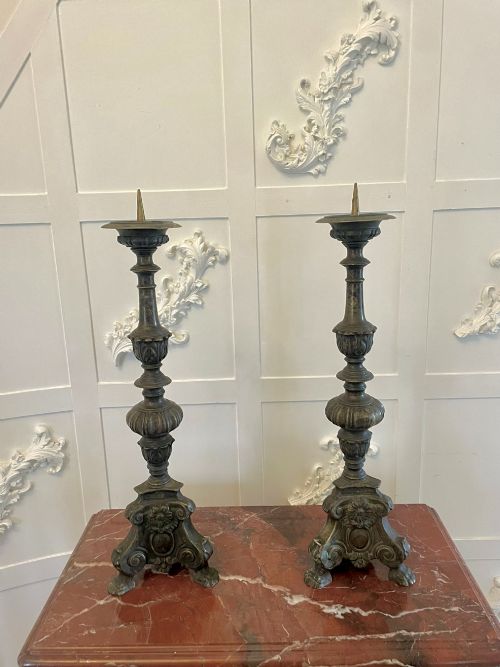
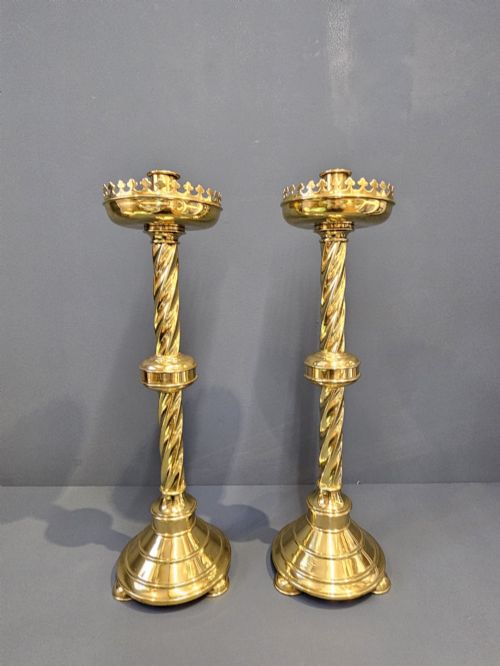
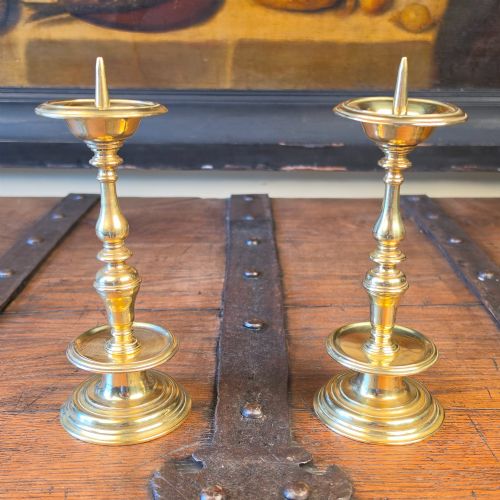
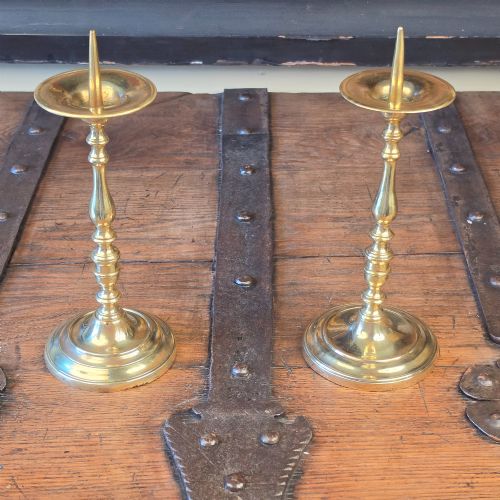
Brass pricket candlesticks are upright candle holders featuring a central metal spike, known as a pricket, which secures the base of a wax taper rather than sitting inside a traditional socket. The selection spans from sixteenth century pillar forms and seventeenth century Low Countries examples to nineteenth century ecclesiastical revivals and twentieth century Amsterdam School designs.
Buyers frequently encounter nineteenth century Victorian church candlesticks alongside earlier continental altar pieces and occasional floor standing candle holders. These objects originate primarily from ecclesiastical settings across England, France, Italy, and the Netherlands, reflecting centuries of liturgical metalworking traditions.
The category encompasses paired sets, monumental single pillars, and occasional conversions into table lamps, offering various scales suitable for mantelpieces, sideboards, and architectural spaces.
Materials and Construction
The primary material is cast and turned brass, often supplemented by bronze, copper alloy, and wrought iron components. Founders utilised sand casting and multi-part construction methods, joining heavily turned shafts to stepped or triform bases.
Surface treatments range from polished brass and patinated bronze to gilt finishes and applied ormolu, while individual pieces incorporate turned wood or iron structural elements to achieve substantial height and stability.
Brass Pricket Candlesticks Retail Price Guide 2026
Typical asking prices for brass pricket candlesticks among the pieces listed under this phrase on Sellingantiques today, from the lower quarter to the upper quarter. They describe what is for sale here now, not the wider market.
Several heavy floor standards carry centuries of accumulated church wax deep within their drip pans.
Assessing Quality and Character
Quality rests in the crispness of the turning, the weight of the cast metal components, and the integrity of the original components rather than later replacements. Early sixteenth and seventeenth century examples command attention through the density of their metal and the honesty of their hand-formed prickets and bases.
Later nineteenth century Gothic Revival and Amsterdam School pieces depend upon architectural proportion, balanced patination, and the complexity of their cast ornamentation. The presence of matching sets and original mounting pins further distinguishes superior examples from standard utility pieces.
The Brass Pricket Candlesticks Glossary
- Pricket
- A sharp metal spike projecting upwards from the drip pan to impale and support a candle. This form predates the standard socket candlestick.
- Ecclesiastical
- Relating to the Christian Church or clergy, describing items originally designed for use in chapels, cathedrals, and abbeys. These pieces are typically larger and heavier than domestic lighting.
- Ormolu
- Finely ground high-carat gold applied to a bronze base, providing a rich, golden decorative surface. It appears on finer altar candlesticks from continental workshops.
- Amsterdam School
- An early twentieth century architectural and design movement characterised by expressive forms, traditional craftsmanship, and textured metal surfaces. Works in this style often combine brass with wrought iron.
- Triform base
- A three-sided foot design commonly utilised on heavy candlesticks and floor standards to ensure stability on uneven stone floors.
Brass Pricket Candlesticks: Frequently Asked Questions
How do I secure a candle onto a pricket?
The base of the candle is pressed directly down onto the sharp metal spike, which holds the taper firmly in place. Many period examples include a drip pan situated just below the spike to catch melting wax.
Modern tapers may require a slight widening at the base to seat securely onto historical spikes without splitting the wax.
How can I tell a sixteenth century piece from a nineteenth century revival?
Early pieces from the sixteenth and seventeenth centuries exhibit hand-finished surfaces, heavier casting irregularities, and simpler, robust pillar forms. Nineteenth century revival pieces often display machine-tooled precision and more elaborate Gothic ornamentation.
Examining the wear patterns around the base and the attachment methods of the pricket helps clarify the manufacturing era.
Can these candlesticks be converted safely to lamps?
Some historical examples have been fitted for electricity, often utilising the central channel or adding discreet wiring alongside the shaft. This conversion preserves the decorative presence of the metalwork while adapting it for modern illumination.
Reversible wiring methods are preferred to maintain the underlying structural integrity of the antique metal.