

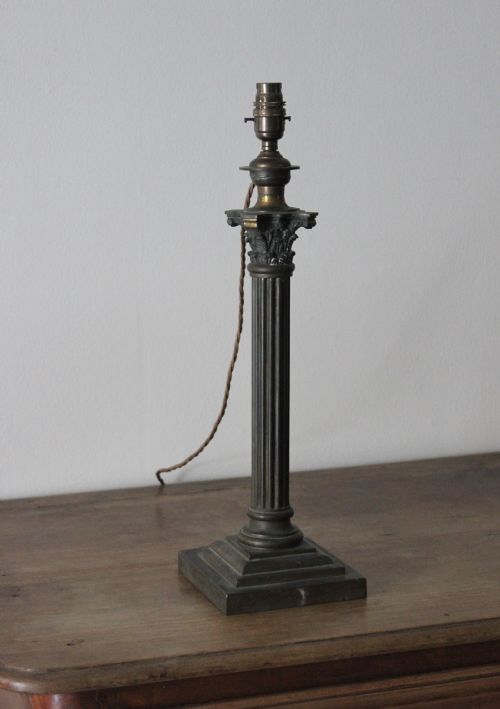
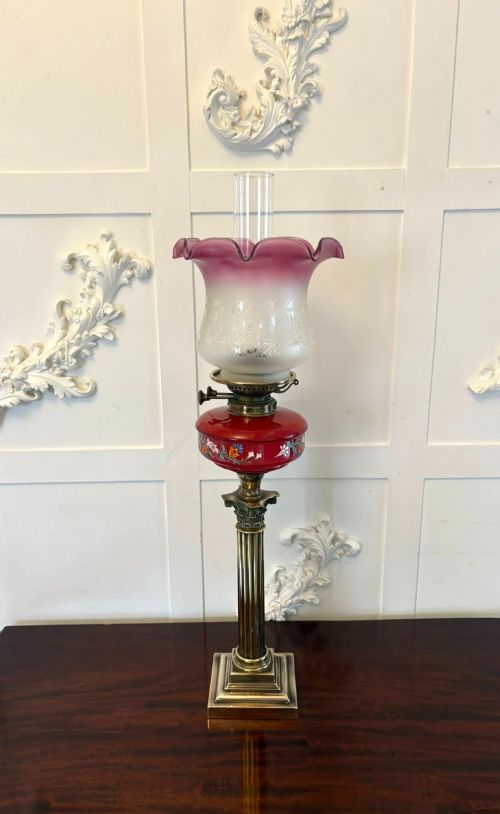
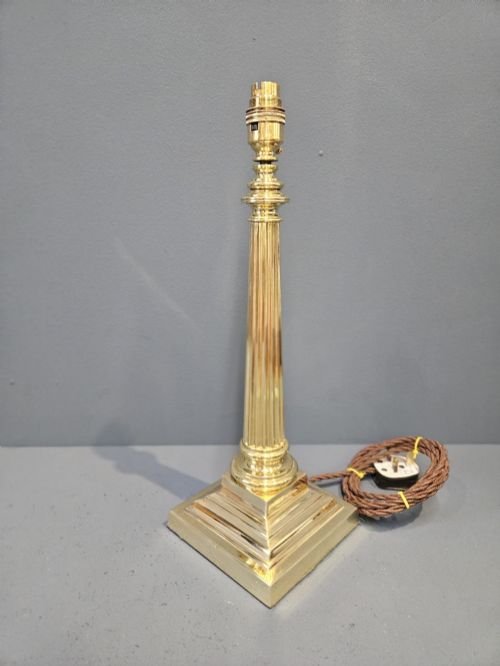
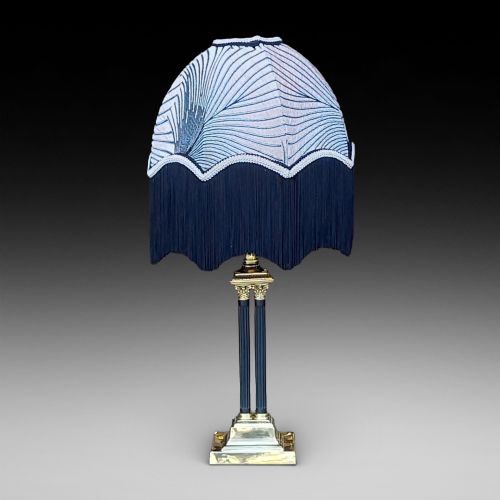
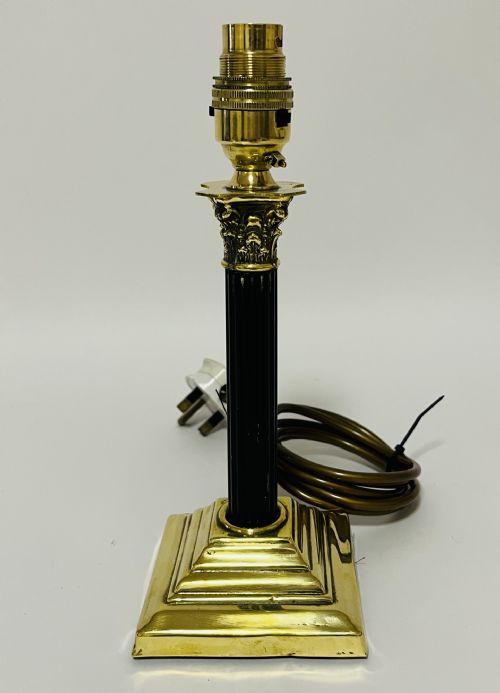
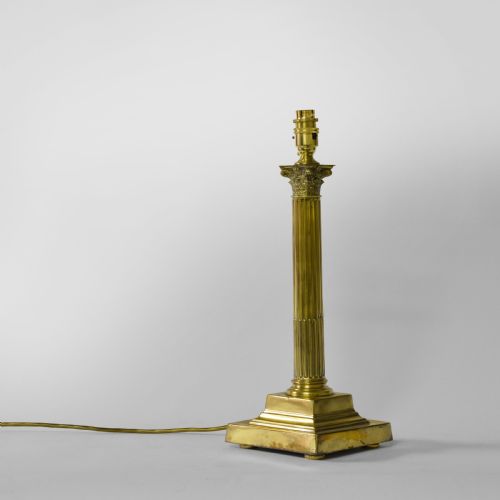


Brass Pillar Table Lamp
These brass pillar table lamps bring classical dignity and heavy metal weight to a desk, standing on column shafts from the nineteenth and early twentieth centuries.
Brass Pillar Table Lamp
When you search for a brass pillar table lamp, you encounter lighting engineered around classical architectural forms like the reeded or Corinthian column. These pieces emerge predominantly from the Victorian, Edwardian, and early twentieth-century eras, reflecting enduring Neoclassical tastes.
You are most likely to meet examples cast in solid brass, sometimes paired with bronze, ormolu, or mounted on mahogany bases. The design adapts ancient temple architecture into domestic illumination, frequently surviving as matched pairs or single desk columns.
The architectural vocabulary defines the category, moving from simple fluted shafts to elaborate capitals with acanthus leaves. Makers utilised durable metals to create sturdy bases that could support fabric shades and modern wiring without tipping.
How they were made
Foundry work relied on casting brass and bronze into structural column sections, capitals, and weighted stepped bases. Artisans turned and finished metal surfaces to achieve patinated or polished finishes, occasionally combining brass with cast glass or rich mahogany timber.
Wiring methods evolved over the decades, transitioning from early setups to modern braided fabric flex during later restorations. Components were threaded together securely to ensure the upright pillar held the lamp holder safely aloft.
Brass Pillar Table Lamp Retail Price Guide 2026
Typical asking prices for brass pillar table lamp among the pieces listed under this phrase on Sellingantiques today, from the lower quarter to the upper quarter. They describe what is for sale here now, not the wider market.
Listings feature items spanning the Victorian era through the 1930s, utilising brass, bronze, ormolu, glass, and mahogany.
What varies in quality
The crispness of the casting separates standard production from finer work, particularly in the detailed carving of Corinthian capitals and acanthus leaves. Superior examples display deep relief work and substantial metal weight rather than hollow, thin components.
Materials also dictate the tier of the piece, with heavier cast brass, patinated bronze, ormolu highlights, and dense mahogany bases commanding greater presence. The integrity of the structural joinery ensures the tall column stands perfectly plumb.
The Brass Pillar Table Lamp Glossary
- Corinthian column
- An architectural order featuring an ornate capital decorated with rows of acanthus leaves. This motif appears frequently on the tops of tall metal lamp bases.
- Reeded column
- A pillar decorated with parallel convex mouldings running vertically up the shaft. This technique adds texture and visual lightness to heavy metal cylinders.
- Ormolu
- Finely ground high-carat gold mercury-gilded onto bronze or brass. This decorative treatment provides a rich, warm metallic finish on select classical columns.
- Braided fabric flex
- A flexible electrical cable covered in woven textile thread. This traditional cord finish is often selected when rewiring older lamps to maintain period character.
- Patinated brass
- Metal surfaces showing a natural, darkened ageing process acquired over decades of exposure to air and handling. Collectors often prize this muted chemical coloration over bright polished metal.
Brass Pillar Table Lamp: Frequently Asked Questions
How do I date a brass pillar table lamp?
Dating relies on examining the casting techniques, the style of the classical capital, and associated materials like mahogany or braided fabric flex. Victorian and Edwardian examples often exhibit heavier metal construction and distinct patination compared to later decades.
Archival pieces show that column designs span from the early nineteenth century through the 1930s. Checking for older wiring remnants or manufacturing stamps helps narrow down the period of production.
Are these lamps stable enough for daily use?
Most of these designs incorporate heavy cast brass or loaded bases specifically engineered to support tall columns safely on desks and tables. Their substantial weight prevents accidental tipping during everyday placement.
Many surviving examples have been professionally rewired and tested to ensure they meet modern electrical standards. Pairing them with appropriately proportioned fabric shades maintains the balance of the piece.
What is a Corinthian column lamp?
A Corinthian column lamp mimics the ancient Greek architectural style, featuring an elaborate capital adorned with carved acanthus leaves at the top of the shaft. This classical form became extremely popular during the Victorian period for formal interiors.
Makers cast these capitals in brass or bronze to create an ornate focal point beneath the lamp holder. They represent the most common decorative variation found within this category.
Do these lamps come in pairs?
Matched pairs appear regularly among nineteenth and early twentieth-century listings, often originating from grand rooms where symmetrical lighting was required. Single desk columns are equally common for smaller spaces.
Pairs offer versatility for mantelpieces or twin bedside tables, sharing identical column heights and capital designs. Inspecting the casting details helps confirm whether two individual lamps were originally manufactured together.