


Brass Pestle and Mortar
These heavy metal implements provide the historic means to grind spices and medicines, sought for their robust utility and patinated metal surfaces.
Brass Pestle and Mortar
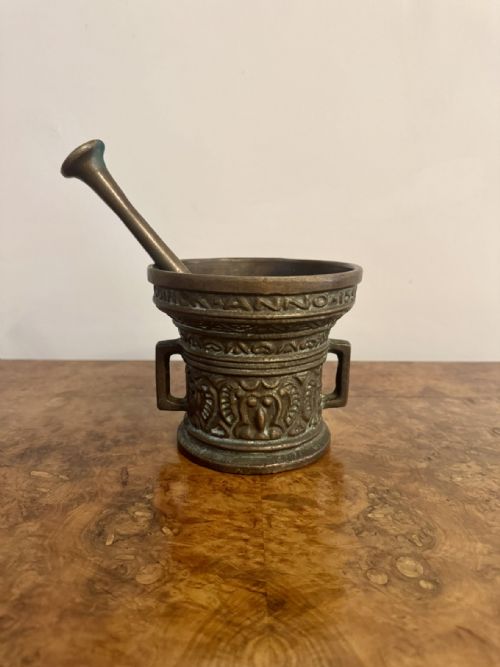
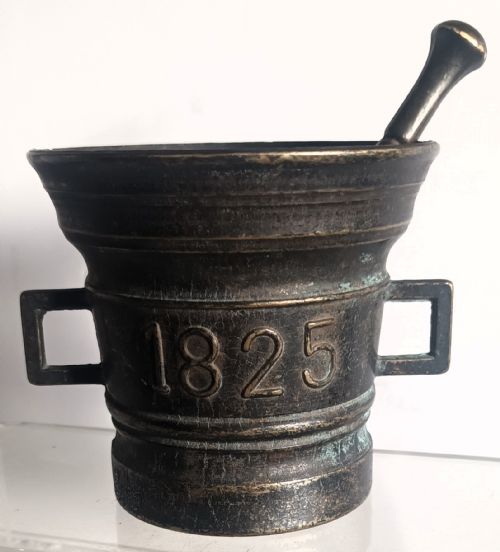
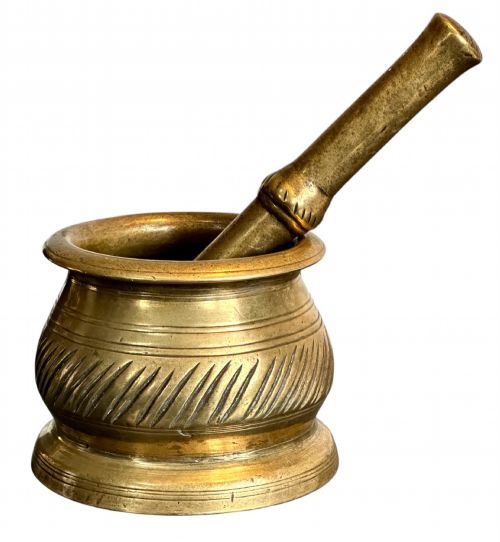
A brass pestle and mortar set combines a heavy grinding bowl with a matching handheld club, built for domestic kitchen tasks, apothecary work, and chemical preparation. The examples found here span from the seventeenth century through the Victorian era, reflecting centuries of kitchen and apothecary tradition.
The dominant forms on this page include robust English and continental kitchen grinders alongside striking trade signs shaped like the implement itself. Buyers frequently encounter Georgian and nineteenth-century pieces alongside older seventeenth-century designs bearing Tudor rose motifs or gothic revival detailing.
Materials and construction
Metalworkers cast these pieces primarily in bronze, brass, bell metal, and cast brass using traditional foundry methods. This casting process produced thick, heavy vessel walls capable of withstanding the repeated impact and friction of heavy pestles.
Certain items incorporate wrought iron or gilded metal elements, while surface decoration ranges from plain utilitarian finishes to decorated bands and cast Tudor rose emblems. The resulting metalware displays varied patination built up through centuries of handling and use.
Several mortars arrive bearing centuries of stubborn dried apothecary powder still clinging stubbornly to their heavy bases.
Assessing quality and character
Quality rests in the proportional balance, the weight of the metal, and the crispness of any cast ornamentation. Finer examples display harmonious wall thickness and deliberate decorative touches rather than crude, hasty casting.
The depth of the natural patination and the integrity of the matching pestle separate standard utilitarian survivals from more desirable collector pieces. Original matching pairs demonstrate a superior level of historical completeness compared to assembled sets.
The Brass Pestle and Mortar Glossary
- Pestle
- The heavy handheld tool used with a striking or grinding motion inside the mortar bowl. It is shaped to match the interior contour of the vessel.
- Bell metal
- An alloy of copper and tin traditionally used for casting bells, known for its resonant qualities and durability. It appears frequently in early mortar production.
- Apothecary
- A practitioner who prepared and sold medicines and drugs. Many surviving mortars served this medical trade before entering domestic use.
- Trade sign
- A large sculptural object displayed outside a shop to advertise a trade. Nineteenth-century examples take the form of an oversized pestle and mortar.
Brass Pestle and Mortar: Frequently Asked Questions
What were brass pestles and mortars used for?
Historic households and apothecaries utilised these vessels to grind dried herbs, spices, medical ingredients, and pigments into fine powders. The thick metal construction provided the necessary resistance to crush hard substances without damaging the bowl.
Over time, many transitioned from active workspaces into decorative household objects or garden planters, retaining their substantial presence and utility.
How do I date an antique mortar?
Dating relies on examining the casting style, decorative motifs, and alloy composition. Seventeenth-century examples often display gothic arches, Tudor roses, or flared rims, while Georgian and Victorian pieces show simpler utilitarian lines or specific chemist markings.
Comparing the form and metal patination against documented examples helps establish the likely period of manufacture.
Are the pestles original to the mortars?
Many pestles remain with their original mortars, though some sets are assembled from pieces of similar age and metal composition. Matching wear patterns and consistent alloy colouration help indicate whether the pestle and bowl belong together.
Even when gathered later, a well-matched pair maintains the correct functional balance and visual harmony.
How do I clean an antique brass mortar?
Cleaning should be limited to dusting and gentle wiping with a dry or slightly damp cloth to preserve the historic patination. Harsh chemical polishes strip away the aged surface character that collectors value.
Maintaining the natural dark tones protects the metal and highlights any cast decorative details.