



Brass Paw Feet Desk
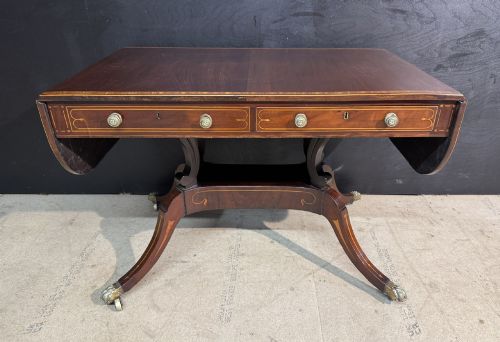
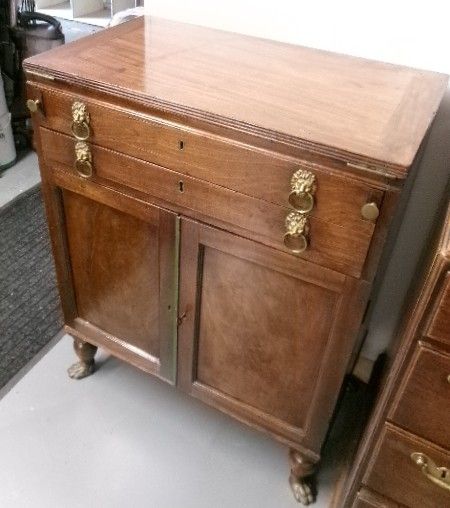
These brass paw feet desk examples bring together Georgian and Regency timberwork with cast mounts, offering a solid surface for writing.
Brass Paw Feet Desk
When you search for brass paw feet desk variations, you encounter writing tables, sofa tables, and reading tables spanning the Georgian and Regency periods. Mahogany and rosewood form the primary bodies of these pieces, often enriched with brass mounts or delicate wood inlay.
The desks and writing tables on this page reflect formal late eighteenth and early nineteenth century cabinet making. Alongside actual writing desks, you frequently meet sofa tables and centre tables that share the characteristic animal paw supports.
Most items originate from English or French workshops, showing the widespread popularity of classical motifs across the Regency, George III, and French Empire styles. These forms range from compact reading tables to twin pedestal writing desks.
Materials and construction
Cabinet makers utilised dense timbers such as mahogany and rosewood, selecting boards with rich grain patterns for the main surfaces and drop leaves. Wood inlay and brass stringing frequently accent the perimeters of the tops.
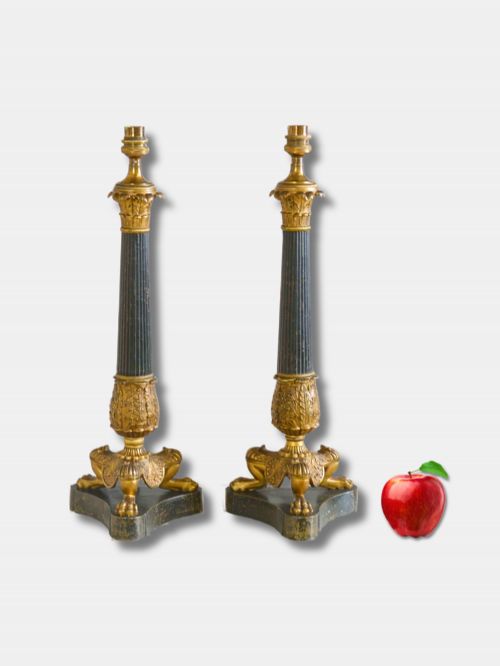
Cast brass, ormolu, and patinated bronze form the distinct paw feet and mountings that anchor each leg. These metal elements are secured to the timber bases with traditional fixings, providing both weight and decorative contrast.
Object forms on this page include sofa tables, writing desks, card tables, reading tables, and column lamps.
Assessing quality in design and finish
The refinement of the cast brass or ormolu paw feet dictates much of the visual success of the piece, separating crisp, detailed chasing from softer, simpler casting. Timber selection also plays a major role, with well-figured mahogany and rosewood displaying deeper natural lustre.
Construction methods reveal the maker's hand through tight joinery in the drawers and precise execution of any wood inlay. Pieces that retain their original patination and matching brass mounts command greater appreciation from collectors.
The Brass Paw Feet Desk Glossary
- Sofa table
- A rectangular library or writing table designed to stand in front of a sofa, typically featuring drop leaves at either end. These tables often incorporate double pedestals or end supports.
- Ormolu
- Gilt bronze produced by applying a finely ground gold-mercury amalgam to a bronze object, common in French Empire and Regency decorative work. This technique creates a durable golden finish.
- Drop leaf
- A hinged flap on the side or end of a table that can be raised to extend the surface area. It rests on pivoting wooden brackets known as fly brackets.
- Wood inlay
- Pieces of contrasting timber fitted into recessed pockets in the carcase wood to form decorative patterns. This method enhances flat surfaces like table tops.
- Centre table
- A freestanding table designed to be viewed from all sides, often placed in the middle of a room. Regency examples frequently feature elaborate column or pedestal bases.
Brass Paw Feet Desk: Frequently Asked Questions
How do I spot a genuine Regency desk?
Look for construction details such as hand-cut dovetails in the drawer linings and native secondary timbers like oak or pine. The presence of period brass mounts and original patination helps confirm authenticity.
Examine the overall proportions and the crispness of any reeded legs or brass inlay. Regency pieces display a strict adherence to classical symmetry and restrained ornament.
Where should I place a sofa table?
Sofa tables function well behind a sofa, against a wall, or freestanding in the middle of a room with the leaves down. Their finished backs make them suitable for central room placement.
Ensure the space allows the drop leaves to be raised if you intend to use the surface for writing or display. Keep them away from direct heat sources to protect the polished timber.
How do I care for rosewood surfaces?
Dust the timber regularly with a soft, dry cloth to prevent abrasive particles from scratching the polish. Avoid using modern silicone sprays or household polishes that can damage the antique finish.
Apply a traditional beeswax sparingly if the wood appears dry, buffing it gently to maintain the natural sheen. Protect the surface from moisture and direct sunlight.
What distinguishes Georgian from Regency furniture?
Georgian furniture, particularly from the George III period, often employs heavier proportions and rich mahogany with carved details. The style draws heavily on Chippendale, Hepplewhite, and Sheraton design books.
Regency design shifts towards lighter, archeological forms inspired by ancient Greece, Rome, and Egypt. Brass inlay, rosewood, and gilt bronze mounts become much more prominent during this later era.