




1790 Mahogany Furniture
These 1790 mahogany furniture pieces bring the warmth and proportion of the Georgian era directly into daily rooms.
1790 Mahogany Furniture
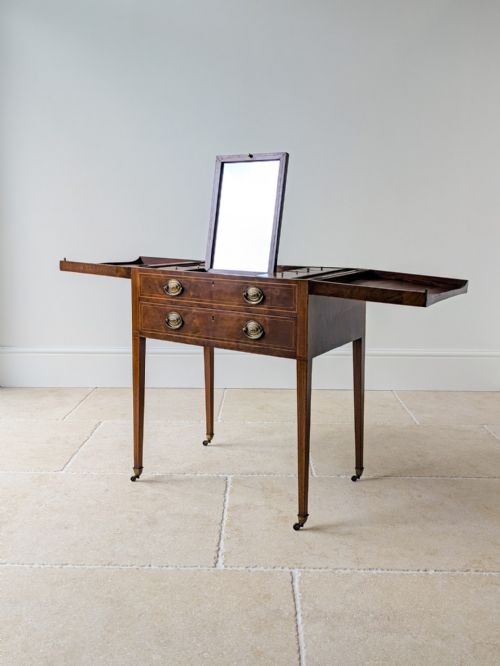
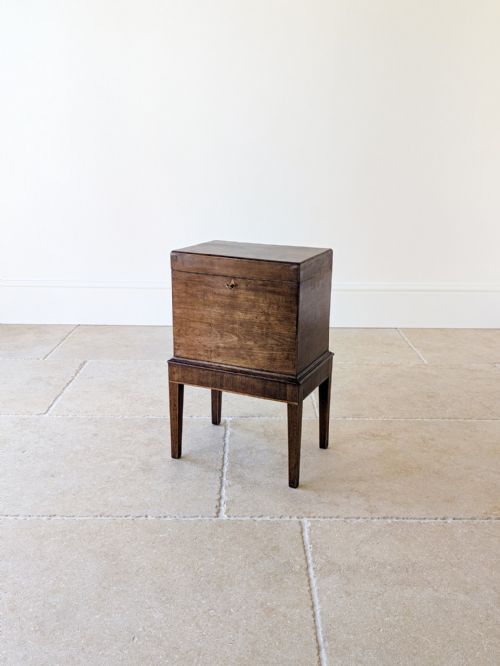
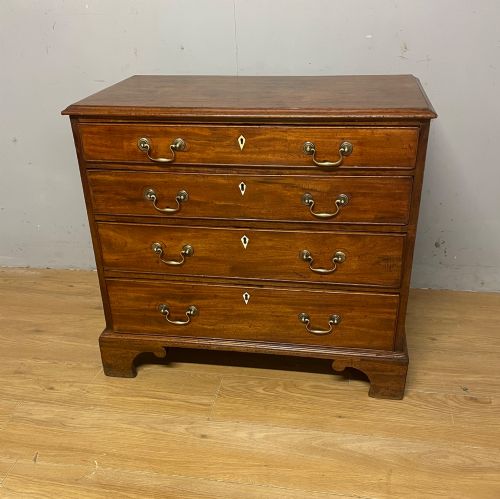
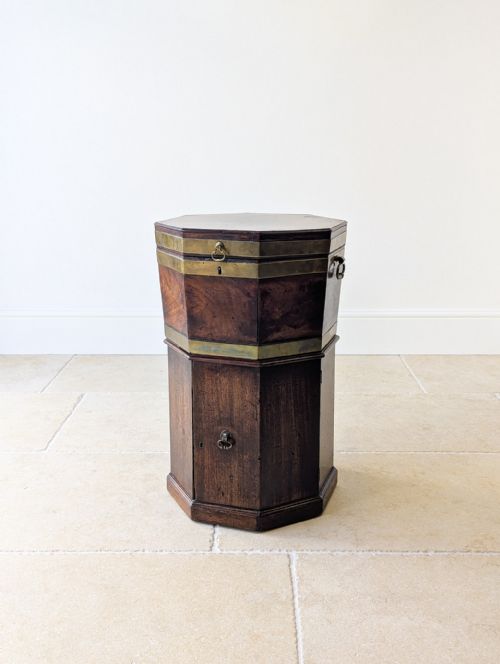
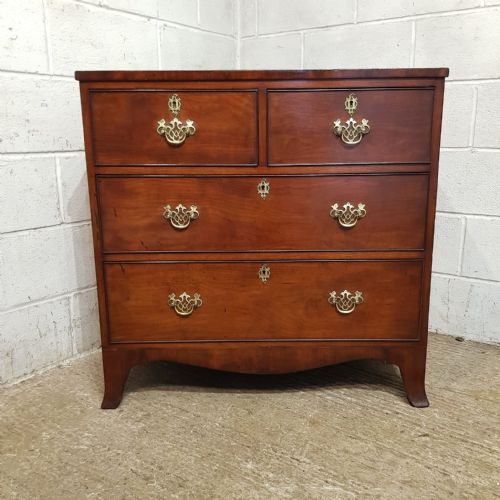
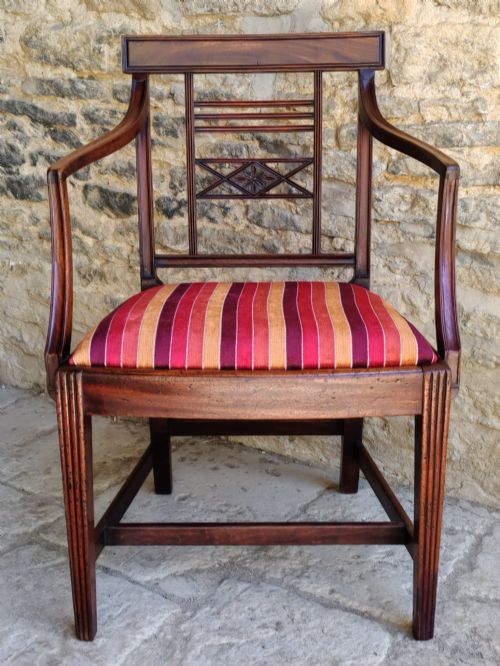
When you search for 1790 mahogany furniture, you encounter items from the Georgian and George III periods built around the turn of the nineteenth century. The selection on this page centres on practical domestic forms such as dining chairs, chests of drawers, cellarets, writing desks, and sideboards.
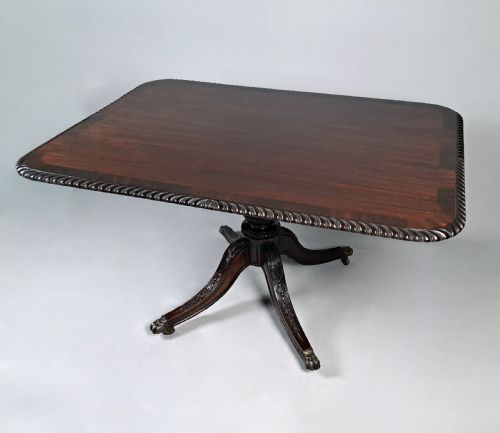
You are most likely to meet dining chairs, chests of drawers in three or four heights, and occasional tables originating from Georgian workshops. These pieces span the late eighteenth century and into the broader 1800 period, reflecting the classical tastes of the era.
How they were made
Cabinetmakers constructed these items using solid mahogany and wood veneer, frequently enhancing structural corners and decorative edges with brass mountings, paw feet, and bone details. Upholstery materials and damask fabrics complete the seating forms recorded in the listings.
Joinery techniques from the Georgian period prioritised stability and refined proportion, visible in the turning of cabriole legs, the shaping of serpentine fronts, and the fitting of folding mechanisms on campaign tables and display stands.
Materials recorded on this page range from solid mahogany and wood veneer to bone, brass, and damask upholstery fabric.
What varies in quality
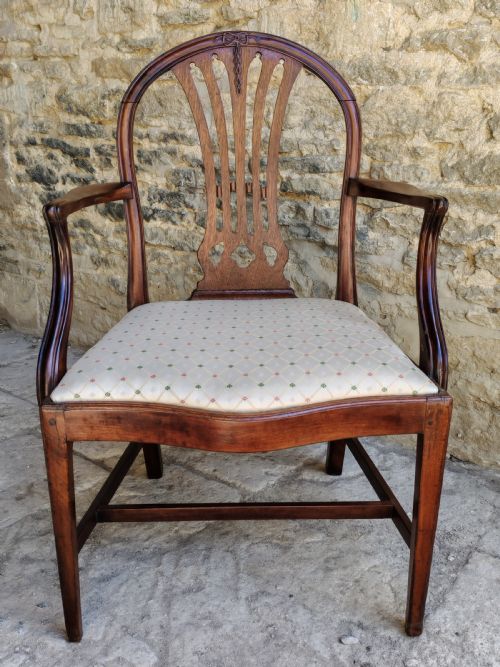
The degree of figuring in the mahogany grain separates standard utility items from finer cabinet work, alongside the crispness of carved details on Hepplewhite armchairs and dining tables. Timber selection dictates the depth of surface patination over centuries of use.
The integrity of secondary woods, the retention of original brass hardware, and the precision of drawer construction further distinguish the pieces at the higher end of the range from simpler country house examples.
Gillows
The 1790 Mahogany Furniture Glossary
- Cellaret
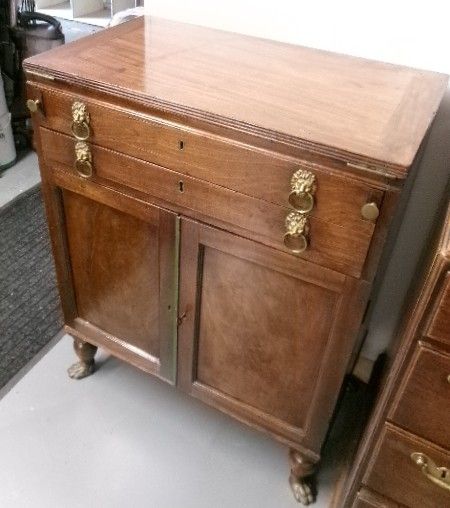
- A lockable container used for storing wine and bottles, often bound in brass and fitted for floor placement beneath sideboards.
- Hepplewhite
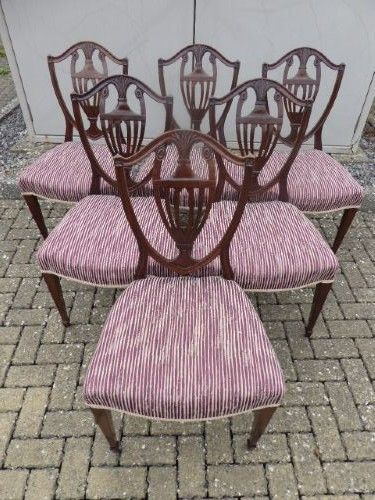
- A classical style of furniture popular in the eighteenth century, characterised by shield-back chairs, tapered legs, and delicate proportions.
- Serpentine
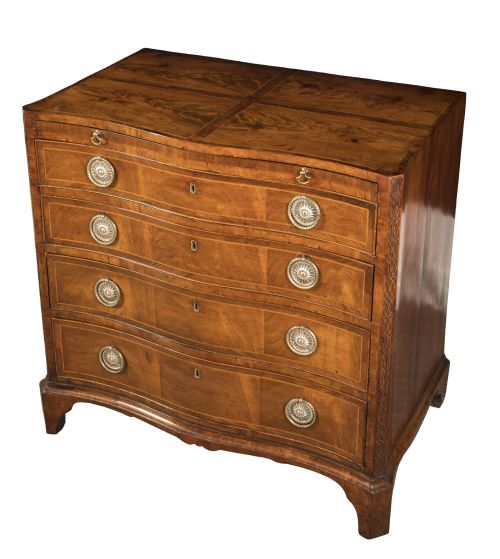
- A curved shape featuring a convex centre flanked by concave ends, commonly seen on the fronts of chests of drawers and sideboards.
- Carver
- An armchair designed with open sides, traditionally placed at the head of a dining table for the host.
- Tallboy
- A tall chest of drawers made in two stacked sections, providing substantial storage capacity within a compact floor footprint.
1790 Mahogany Furniture: Frequently Asked Questions
What defines a cellaret?
A cellaret is a specialised container built to hold wine bottles near the dining table, often reinforced with brass bands for strength.
These pieces typically sit directly on the floor or on short stands, combining secure storage with substantial decorative presence.
How do I identify Hepplewhite chairs?
Hepplewhite dining chairs are recognised by their characteristic shield or heart-shaped backs and straight, tapered legs.
They display lighter proportions than earlier heavy walnut or oak seating, reflecting the refined neoclassical taste of the late eighteenth century.
Where were bowfront sideboards used?
Bowfront sideboards served as both serving surfaces and storage units within Georgian dining rooms.
Their curved facades allowed easier movement around crowded rooms while providing deep drawers and cupboards for linen and cutlery.
How should I care for mahogany?
Mahogany furniture requires stable indoor humidity away from direct heat sources to prevent timber movement and veneer lifting.
Routine dusting with a dry cloth maintains the surface finish without the need for heavy modern polishes.