


Brass Open Bookcase
A brass open bookcase brings warmth and structure to a room, combining accessible shelving with the quiet gleam of metal mounts and inlay.
Brass Open Bookcase
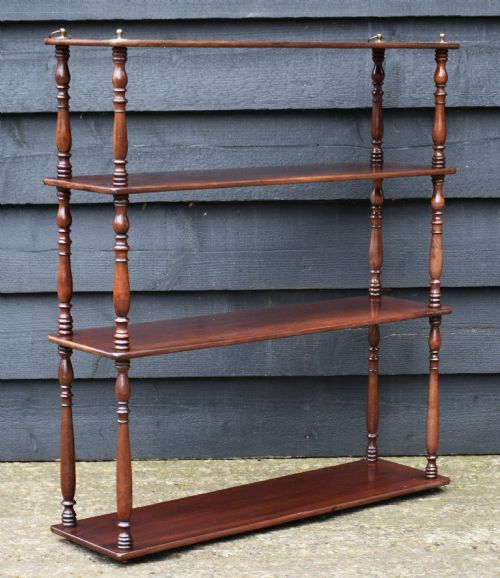
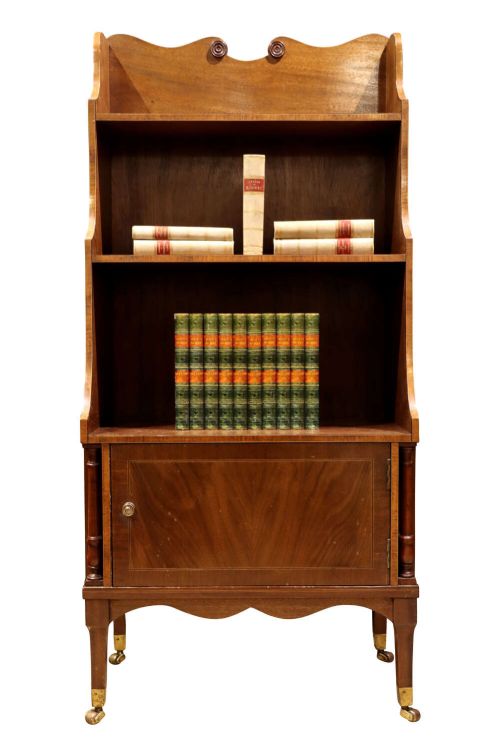
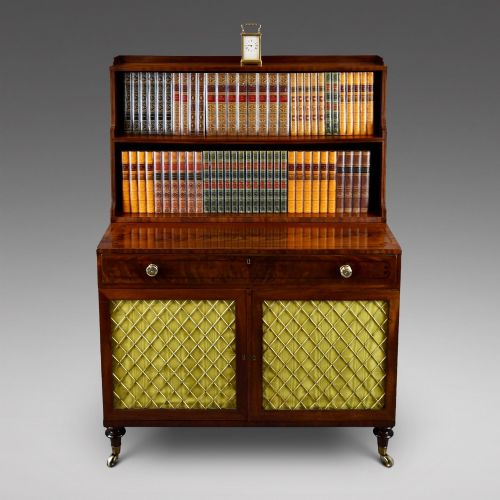
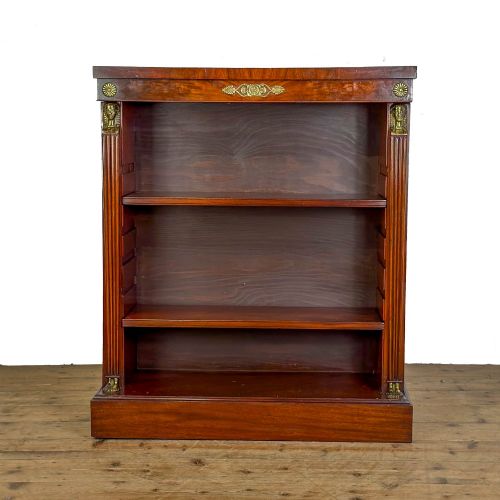
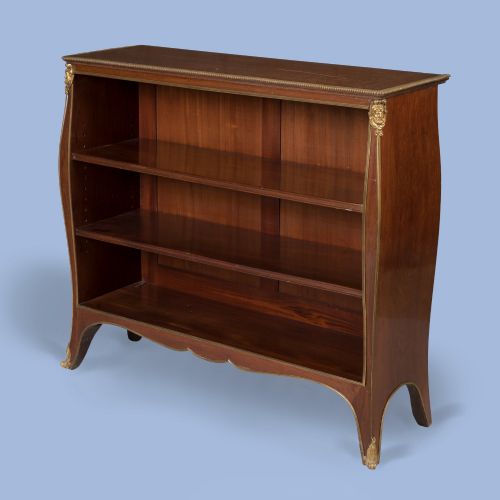
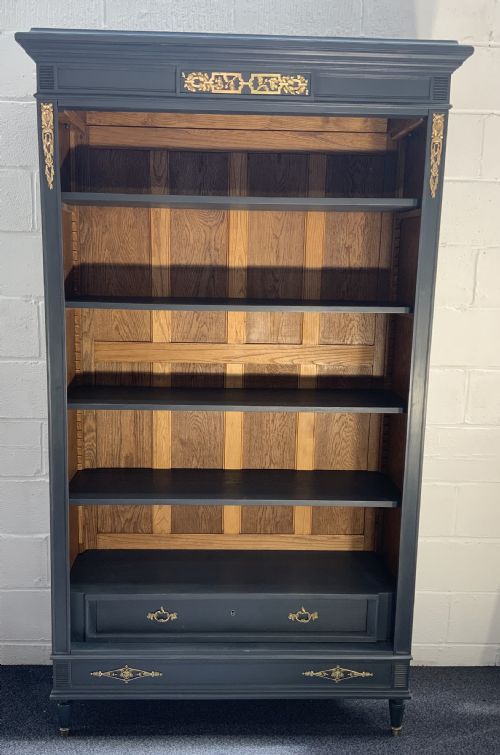
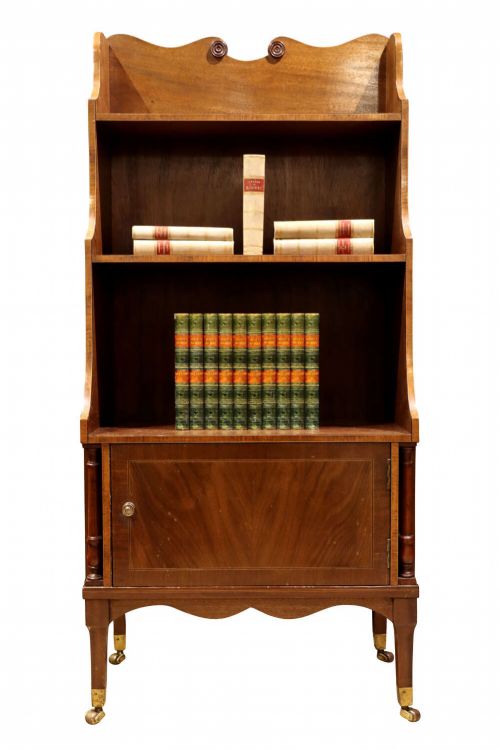
A brass open bookcase is a low or tall shelved unit designed for displaying volumes without glass doors, frequently incorporating brass galleries, castors, or fine stringing. These pieces emerge chiefly from the Regency and Victorian periods, alongside Edwardian and later interpretations.
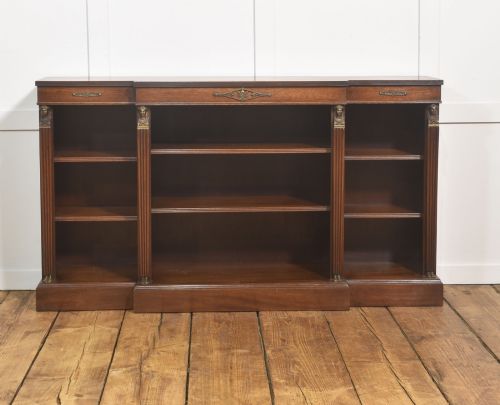
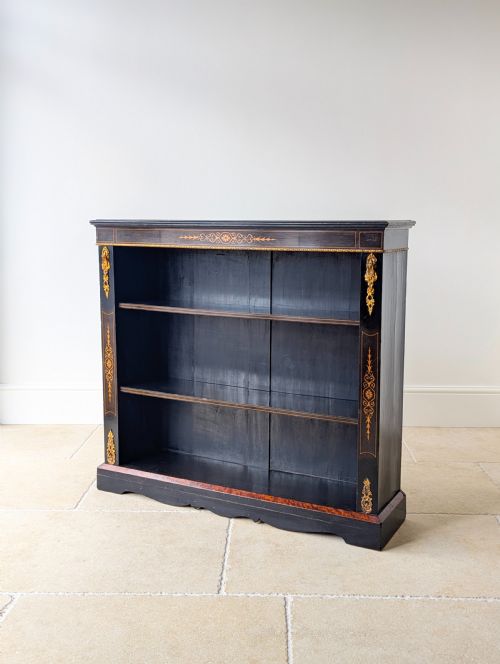
Surviving examples range from formal breakfront library pieces to smaller freestanding units with parcel gilt or ebonised details. They serve effectively in sitting rooms and studies where books require both accessibility and a refined architectural presence.
How they were made
Cabinet makers built these bookcases using dense cabinet timbers like mahogany, rosewood, and walnut, often applying satinwood or boxwood inlay to contrast with the dark grain. French polish provided a durable, high-gloss finish that accentuated the natural figures of the wood.
Metal components were cast, chased, and applied by hand, including perforated brass galleries, decorative mounts, and intricate marquetry inlay. Brass castors allowed heavy timber furniture to move smoothly across carpets without straining the frame joints.
Listings feature 19th Century, Regency, Victorian, Edwardian, and 1920s periods, built from mahogany, rosewood, oak, and ebonised wood.
What varies in quality
Quality rests in the choice of timber and the precision of the brass work, where crisp casting and tight marquetry distinguish standard pieces from exceptional ones. Better examples display carefully selected veneers that wrap evenly around breakfronts and plinths.
The integration of metal mounts and galleries reveals the hand of skilled workshops, ensuring brass elements sit flush with the wood surface rather than appearing crude or poorly fitted. Structural integrity in the shelf supports and uprights determines how well a bookcase holds heavy volumes over decades.
Gillows·Robert Strahan·Collinson & Lock London
The Brass Open Bookcase Glossary
- Brass gallery
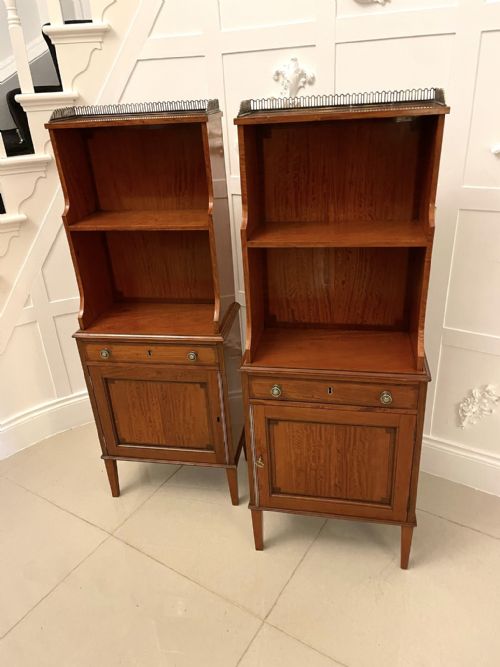
- A low pierced or spindle rail fitted to the top shelf of a bookcase to prevent items from sliding off. These fixtures are frequently cast in brass and add a decorative silhouette.
- Breakfront
- A cabinet form where the central section projects forward from the flanking wings. This architectural arrangement creates depth and shadow on library walls.
- Chiffonier
- A low cabinet with enclosed cupboards below and open shelves above, often equipped with brass inlays and galleries. The form evolved during the Regency period for domestic sitting rooms.
- Waterfall bookcase
- A tiered shelving unit where each successive shelf steps back from the one below it. The style became popular in the nineteenth century using rosewood and mahogany.
- Ormolu
- Cast bronze finished with a high-gilt surface, used for decorative mounts on nineteenth-century furniture. It provides a bright golden contrast against dark timbers.
Brass Open Bookcase: Frequently Asked Questions
What is a brass open bookcase?
A brass open bookcase is a piece of freestanding library furniture featuring exposed shelves and decorative metalwork such as galleries, inlay, or castors. These items combine utility with ornamental detailing suited to principal reception rooms.
Most surviving examples date from the nineteenth century and utilise dark hardwoods like mahogany and rosewood. Their open format makes them practical for daily access to volumes while displaying decorative bindings.
How do I style an open bookcase?
Styling an open bookcase involves balancing vertical rows of books with horizontal stacks and small decorative objects. Leaving some shelf space visible allows the timber grain and brass mounts to catch the light.
Pairing these bookcases with period furniture helps anchor them in a traditional interior, though their clean lines also suit contemporary spaces. Ensure heavy volumes are distributed evenly across the lower shelves to maintain stability.
How do I tell Regency from Victorian bookcases?
Regency bookcases generally display restrained classical proportions, precise brass inlay, and rosewood veneers with clean architectural lines. Ormolu mounts and parcel gilt details frequently reflect French Empire influence during this era.
Victorian pieces tend to be heavier in construction, often incorporating carved details, ceramic mounts, and broader breakfront layouts. Walnut and mahogany became prominent, accompanied by more elaborate marquetry and boxwood stringing.
Were brass galleries original?
Brass galleries on nineteenth-century bookcases were designed to keep books and decorative objects secure on the top surface. They are characteristic of better-quality library furniture from the period.
Evaluating a gallery involves looking at how the spindles or pierced brasswork are seated into the timber top. Original mounts show consistent patination and wear matching the rest of the cabinet.