
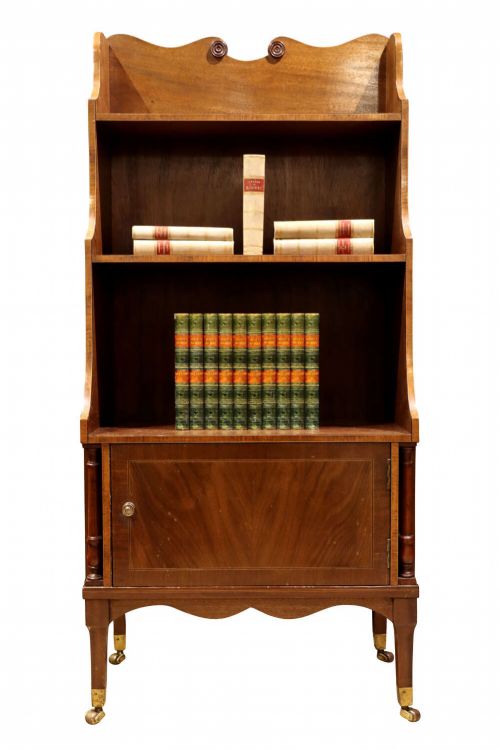


Vintage Brass Bookcase
These vintage brass bookcase pieces combine timber shelving with metal mounts, grilles and castors, offering practical storage and a distinct period aesthetic.
Vintage Brass Bookcase
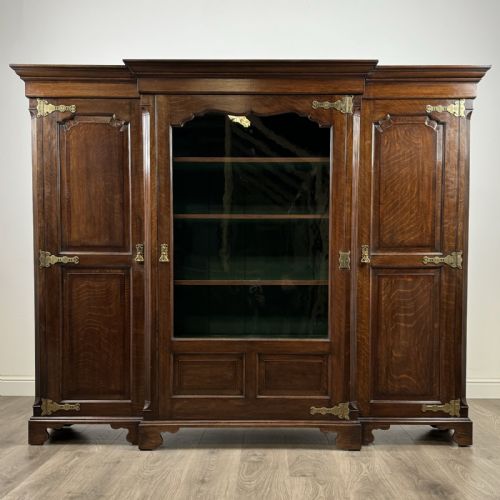
When you search for a vintage brass bookcase, you encounter a mix of open shelving, glazed display cabinets, side cabinets and revolving bookcases. The selection spans the nineteenth century through to the interwar decades, taking in Regency, Victorian, Edwardian and Art Deco designs.
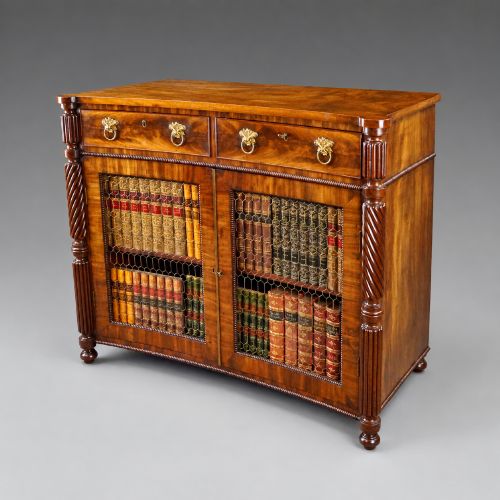
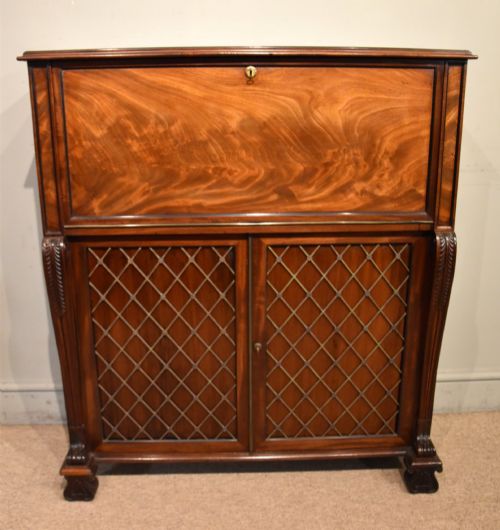
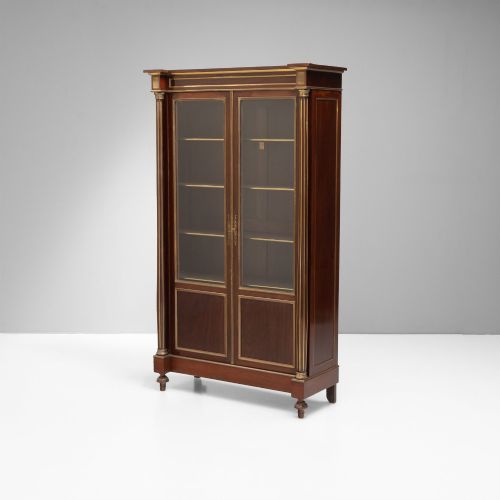
Mahogany, rosewood and walnut form the primary timber bodies for these pieces, accented with brass inlays, grilles, galleries and mounts. Many examples incorporate glass doors or open tiers designed for displaying books and decorative objects rather than purely utilitarian storage.
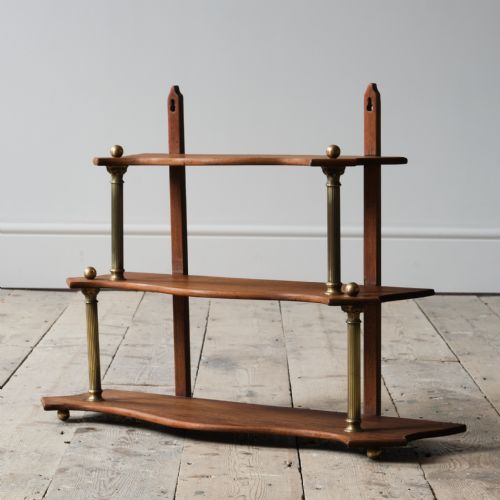
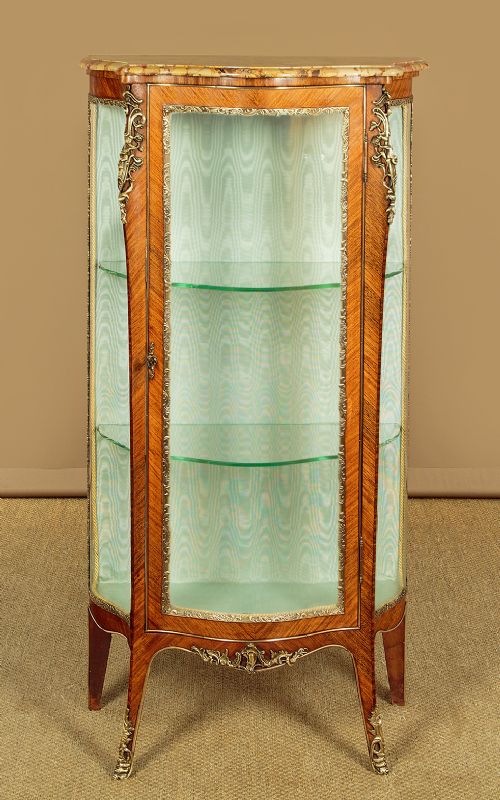
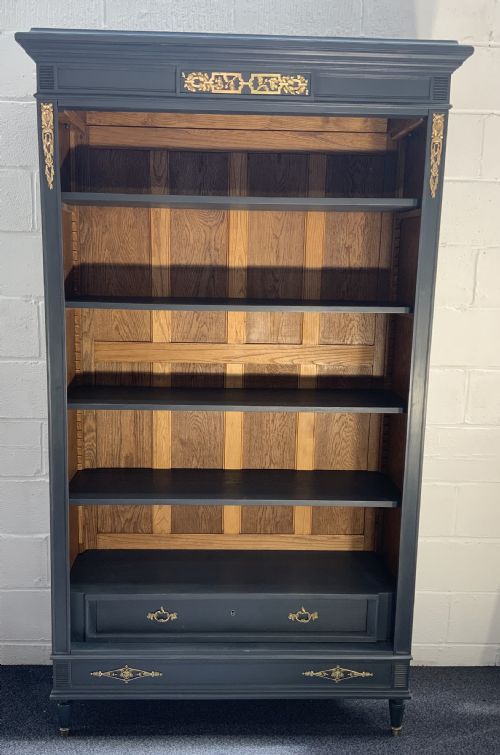
The pieces range from wall-hanging shelves and compact revolving units to breakfront side cabinets and larger vitrines. French influence appears frequently, alongside English cabinet-making traditions from Georgian times onwards.
Materials and construction methods
Cabinet-makers built the carcasses of these pieces from hardwoods such as mahogany, oak, rosewood and walnut, often applying veneers and marquetry inlay. Brass components include castors, gallery rails, escutcheons, inlaid stringing and decorative mounts fixed directly to the timber.
Listings span mahogany, rosewood, oak, walnut and marble, paired with brass mounts across periods from the 18th century to the 1930s.
Distinguishing quality in construction and materials
The grade of timber used for the main structure dictates the foundational quality, with finely figured mahogany, rosewood and walnut marking out superior examples. Heavier, more substantial brass mounts, castors and grilles indicate higher production standards than thin pressed metal alternatives.
Joinery execution separates standard workshop pieces from master cabinet-maker output, visible in the precision of the brass inlay, the fit of the doors, and the smoothness of adjustable shelving mechanisms or revolving actions.
Gillows·Collinson and Lock·Edwards and Roberts·Maison Jansen
The Vintage Brass Bookcase Glossary
- Vitrine
- A glass-fronted cabinet designed for the display of curiosities and fine porcelain. These pieces often feature brass mounts and lining.
- Chiffonier
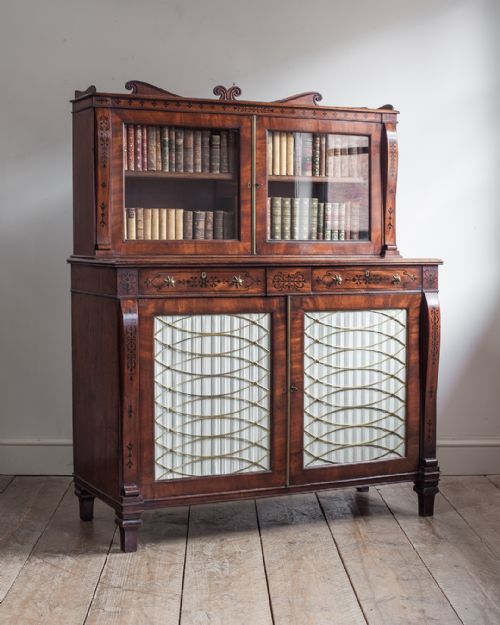
- A low sideboard or cabinet developed in the Regency period, frequently fitted with shelves, doors and brass gallery rails.
- Bakers Rack
- An open metal and timber shelving unit derived from French commercial bakery fixtures, adapted for domestic display use.
- Marquetry
- Decorative veneer work arranged in pictorial or geometric patterns using various woods, sometimes enhanced with metal elements.
- Castor
- A small wheel mounted on a swivel attached to the base of furniture for ease of movement, often rendered in brass.
Vintage Brass Bookcase: Frequently Asked Questions
How do I date a brass mounted bookcase?
Dating relies on combining the timber species, style markers and brass mounting techniques visible on the piece. Regency and Victorian examples show distinct joinery methods and proportioning compared to later Edwardian or 1930s pieces.
Examining the construction of the interior carcase and the type of screws or fixings used for the brass elements provides further chronological context.
Were these cabinets used only for books?
While many house libraries, the glazed vitrines and side cabinets were designed equally for displaying ceramics, silver and decorative objects. Open tiers and revolving models served living rooms and studies for accessible daily reading.
Specialised forms like bakers racks served commercial functions before entering domestic spaces as display shelving.
How should I care for brass and timber?
Keep timber surfaces polished with traditional beeswax and avoid placing pieces in direct sunlight or near heat sources to prevent veneer lifting. Brass mounts benefit from gentle dusting without harsh chemical polishes that can damage the surrounding wood.
Checking and gently tightening the fixings on castors and gallery rails helps maintain structural stability over time.
What is the difference between a chiffonier and a side cabinet?
A chiffonier is a specific nineteenth-century form featuring a low base cabinet topped by a raised shelf tier supported on small pillars. Side cabinets generally offer enclosed storage with doors or drawers without the stepped superstructure.
Both forms frequently incorporate brass galleries, grilles and inlay work.