

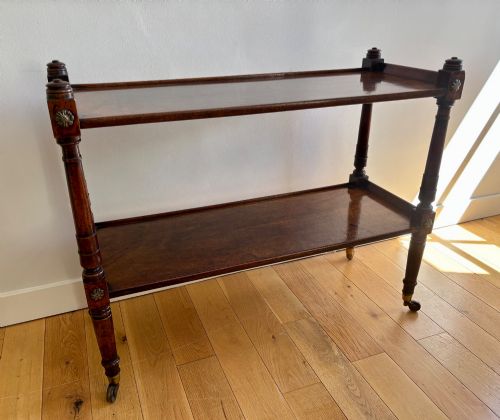


Brass Etagere Unit
A brass etagere unit brings open-tiered shelving into a room, offering display space that dates from the nineteenth and early twentieth centuries.
Brass Etagere Unit
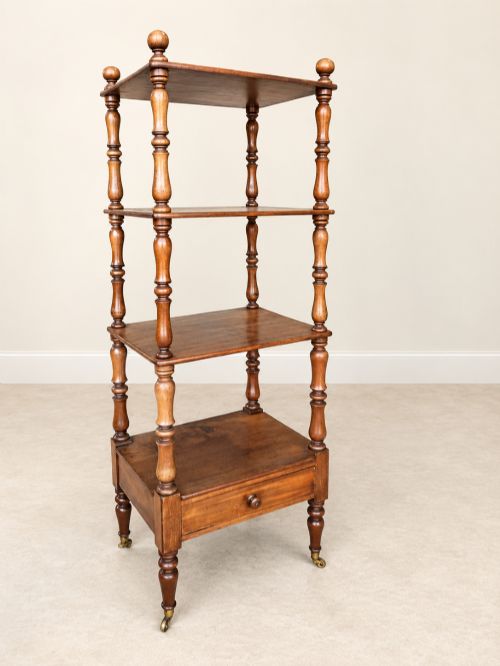
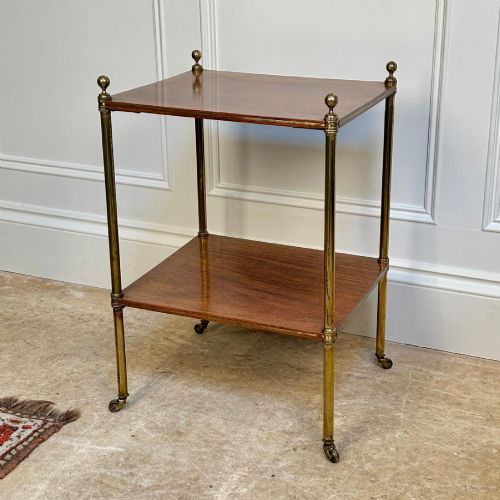
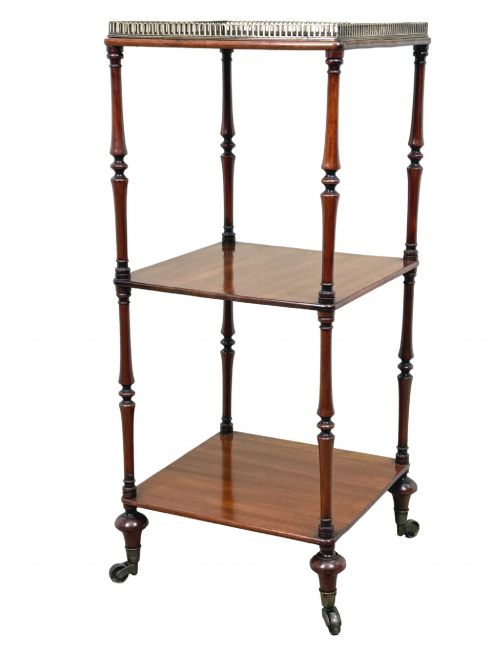
A brass etagere unit is multi-tiered open shelving designed for display, appearing across periods from the early nineteenth century through the 1920s. These pieces function as etageres, whatnots, display stands, and side tables in various settings.
The versions met on this page range from Regency mahogany and rosewood designs to Edwardian and Art Deco pieces incorporating brass, bronze, and glass. Alongside traditional display furniture, related forms such as shop display stands and campaign units appear in the listings.
How they were made
Construction relies on structural timber frames or metal supports, combining brass and bronze frameworks with shelves of mahogany, rosewood, birdseye maple, and glass. Iron and steel also form the armature in industrial pieces such as baker racks.
Surface decoration includes marquetry details on timber tiers and stamped makers' marks on metal racks. Frames use joinery suited to the period, while metal components involve cast and wrought techniques.
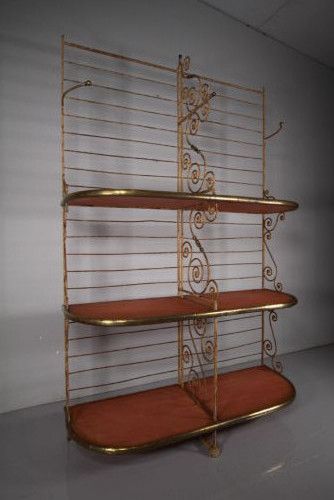
A heavy industrial baker's rack shares space with delicate amboyna and marquetry, proving that even kitchen utility had ambitions for the drawing room.
What varies in quality
Quality shows in the choice of cabinet timbers and the refinement of the metal framework. Pieces utilising solid rosewood, amboyna, or figured mahogany display a higher grade of manufacture than standard utility items.
The sophistication of the tiered structure and the integration of brass mounts distinguish finer examples. The distinction rests on material selection and the balance of the proportions across the open shelves.
The Brass Etagere Unit Glossary
- Étagère
- A piece of furniture consisting of a set of open shelves for displaying small objects or ornaments. It originates from eighteenth-century France.
- Whatnot
- A nineteenth-century open shelving unit with multiple tiers supported by slender pillars, used for books or ornaments. It is functionally similar to the etagere.
- Marquetry
- Decorative veneer work where pieces of wood, metal, or other materials are fitted into a ground to form geometric or pictorial designs. This technique embellishes the surface of select tiers.
- Campaign washstand
- A portable piece of furniture designed for travel, typically featuring folding supports or compact storage. These units adapt to domestic use with added display surfaces.
- Baker rack
- An industrial or commercial storage frame constructed from wrought iron or steel with multiple shelves. Originally used in food preparation, these racks function as display units in domestic interiors.
Brass Etagere Unit: Frequently Asked Questions
What is a brass etagere unit used for?
These pieces serve as open display shelving for books, ceramics, and decorative objects in living spaces. The tiered design allows items to be seen from multiple angles.
They function as standalone display stands, bedside tables, or decorative storage across different rooms.
How do I date a Regency etagere?
Regency pieces typically date from the early nineteenth century and feature timbers such as mahogany or rosewood. The proportions and joinery reflect the neoclassical style of the period.
Matching pairs and specific turning on the supports provide further clues to their age.
What is the difference between an etagere and a whatnot?
The terms are often used interchangeably for multi-tiered open shelving units. Etageres frequently lean towards decorative French or Art Deco styles, while whatnots often describe nineteenth-century English utility shelving.
Both forms prioritize open display over enclosed storage.
Are these units suitable for modern rooms?
The open framework and reflective brass or bronze elements allow these pieces to integrate into contemporary interiors without dominating the floor space. Their slender profiles fit easily into corners or against walls.
They offer practical vertical display without heavy visual bulk.