




Brass Mounted Desk Lamp
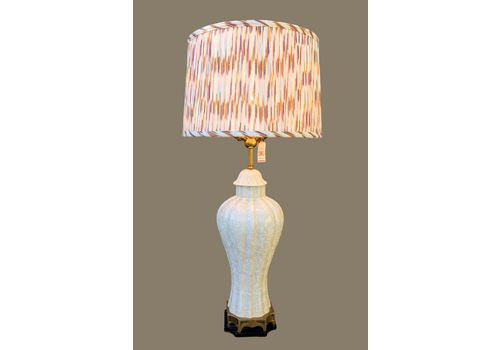
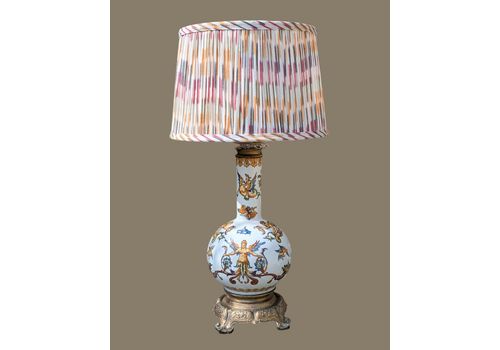
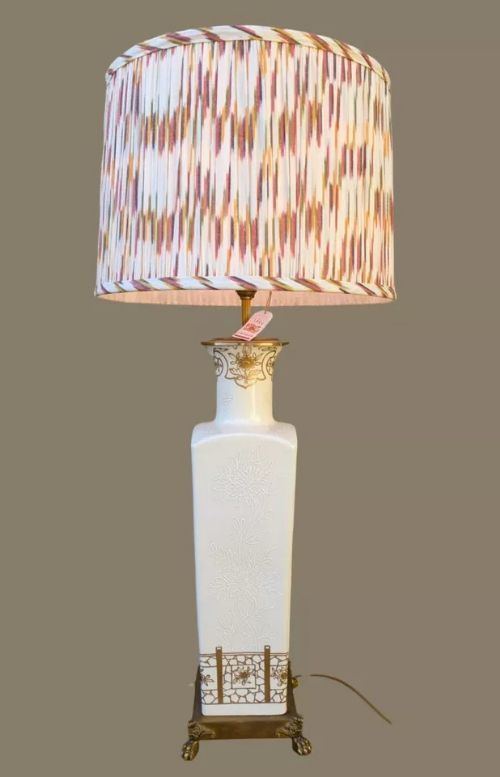
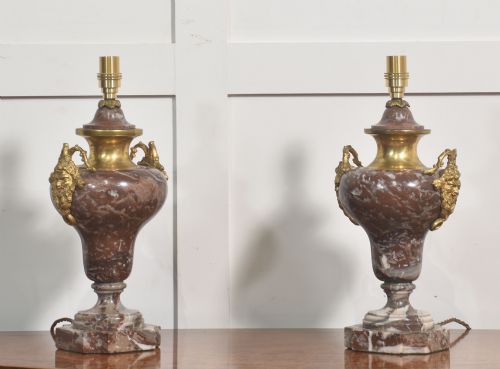
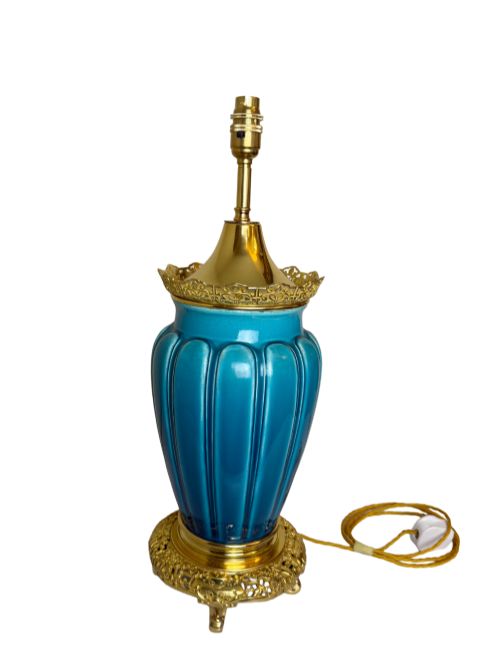
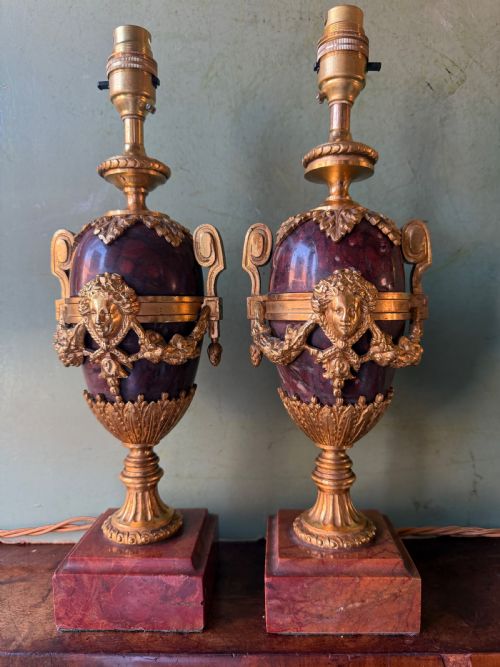
A brass mounted desk lamp brings nineteenth-century illumination to a room, combining heavy metal collars with porcelain, marble and glass bodies.
Brass Mounted Desk Lamp
A brass mounted desk lamp unites functional nineteenth-century lighting with decorative vessels, turning antique vases and urns into practical desk pieces. The form draws heavily on classical architectural elements and Asian export ceramics adapted for European interiors.
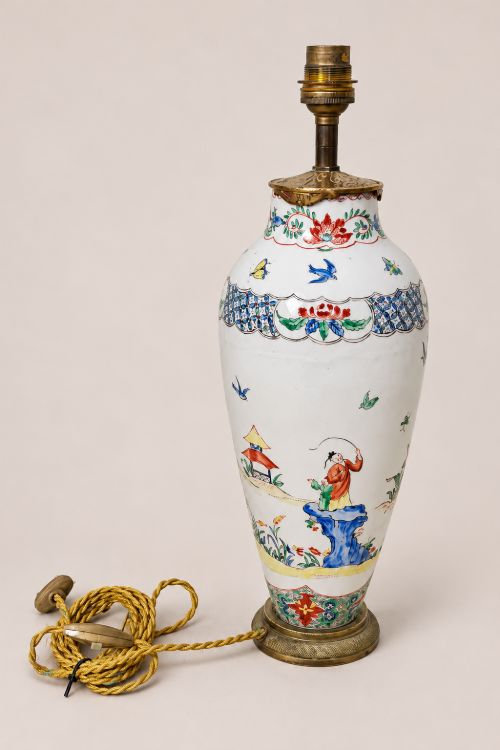
Most examples found here date from the Victorian and Edwardian eras, spanning periods from eighteen-sixty to nineteen-twenty. Makers utilised bodies of French porcelain, Japanese Satsuma, Chinese Famille Verte, and heavy cut lead crystal, anchoring them with cast metal collars.
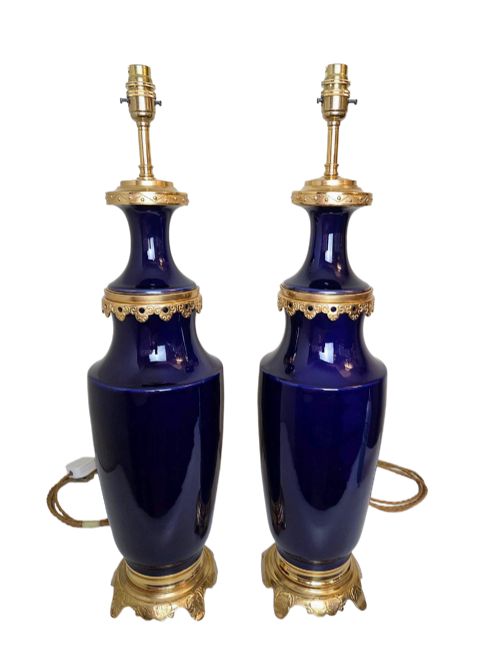
Buyers frequently encounter pairs alongside single table pieces, often retaining fabric shades or designed to accept them. The mounting hardware ranges from simple brass collars to elaborate ormolu mounts styled after eighteenth-century French design.
How they were made
Craftsmen built these lamps by taking existing ceramic vases, marble columns or cut glass vessels and fitting them with cast brass, ormolu or gilt bronze mounts. These metal collars, bases and handles provided structural stability while adding decorative neoclassical or classical detailing to the piece.
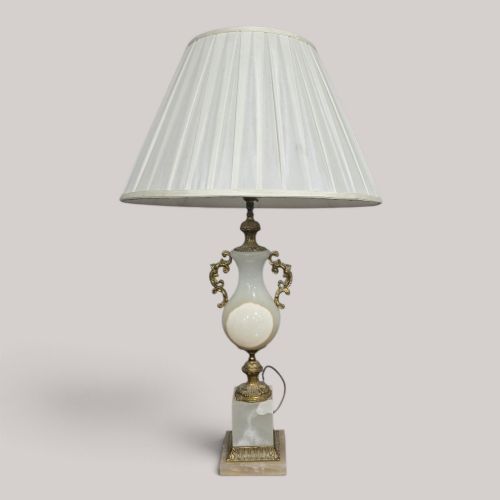
Porcelain bodies from Paris, Sevres, and Chinese kilns were drilled and wired during conversion into lamps, often incorporating brass burners and switches. Stoneware, rouge marble, onyx and lead crystal were turned, carved or cast to form the central columns and reservoirs.
Brass Mounted Desk Lamp Retail Price Guide 2026
Typical asking prices for brass mounted desk lamp among the pieces listed under this phrase on Sellingantiques today, from the lower quarter to the upper quarter. They describe what is for sale here now, not the wider market.
One stubborn German porcelain spitz dog stands guard atop an eighteen-eighty canine lamp base.
What varies in quality
Quality rests in the crispness of the cast brass and ormolu mounts, where finely chased details distinguish superior work from simpler commercial casting. Weight and material density of the central stone, marble or crystal column also signal a higher grade of production.
The harmony between the original ceramic or glass vessel and the added metal mounts determines the success of the piece. Well-balanced proportions and secure mounting without stress to the underlying porcelain separate fine salon pieces from standard utility lighting.
The Brass Mounted Desk Lamp Glossary
- Ormolu
- Gilded bronze used for decorative mounts on furniture and lighting. It requires careful cleaning to preserve the soft gold finish beneath surface grime.
- Famille Verte
- A Chinese porcelain palette dominated by green enamel colours, widely used during the Qing dynasty. Pieces from this tradition often appear converted into nineteenth-century lamps.
- Satsuma
- Japanese earthenware decorated with delicate coloured enamels and gilt highlights. These vessels frequently found new life as lamp bodies in Western homes.
- Corinthian Column
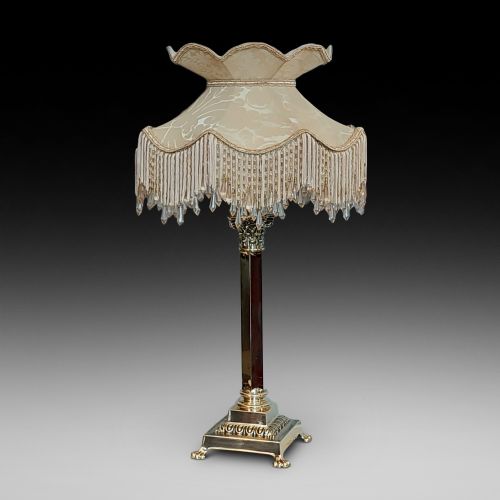
- A classical architectural order featuring ornate acanthus leaves on the capital. Lamp makers adapted this form into stone and metal shafts.
Brass Mounted Desk Lamp: Frequently Asked Questions
Are these lamps wired for modern use?
Many period lamps arrive recently rewired or adapted for standard electrical sockets while retaining their historic components.
Buyers should check individual listings to confirm whether a piece requires professional rewiring for local voltage standards.
How do I identify the period of a lamp?
Dating relies on stylistic clues within the metal mounts, ceramic bodies, and manufacturing techniques used in the construction.
Victorian and Edwardian pieces often combine nineteenth-century export ceramics with neoclassical brass or ormolu hardware.
Can I use standard lampshades with these?
Most antique lamps accept standard shade fittings, though the scale of the base dictates the appropriate shade proportion.
Matching a heavy marble or crystal column requires a balanced fabric shade that complements the height of the metal mountings.
Where were these lamps originally placed?
These pieces served on writing desks, side tables, and salon surfaces where targeted illumination was required.
Their decorative ceramic and marble bodies ensured they functioned as ornamental objects even when unlit.