

Brass Mounted Credenza
A brass mounted credenza brings formal nineteenth century display into a room, pairing rich timber with bright metal mountings.
Brass Mounted Credenza
When you search for a brass mounted credenza, you encounter heavy timber storage furniture designed for formal display and dining rooms. The pieces recorded here span the Victorian, Regency and Napoleon III periods, taking forms such as sideboards, pier cabinets and serpentine credenzas.
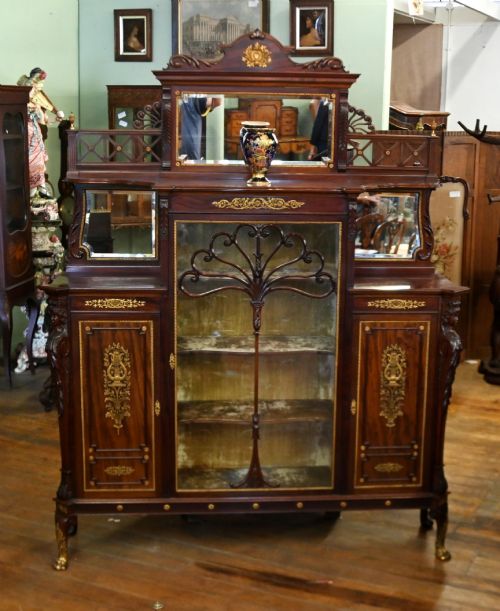
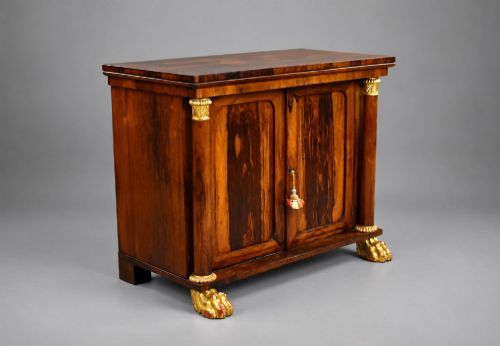
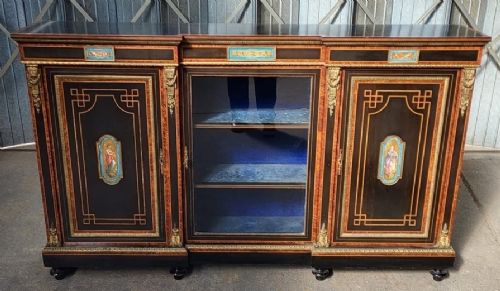
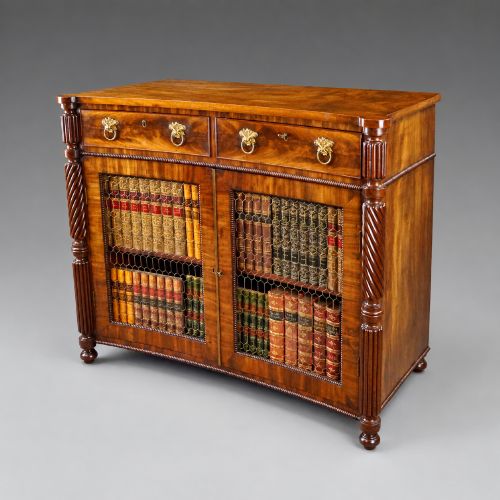
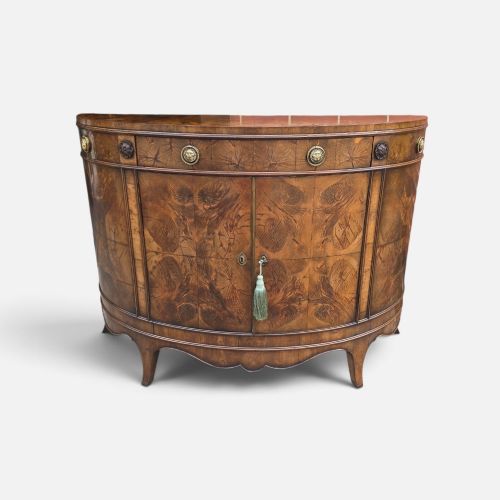
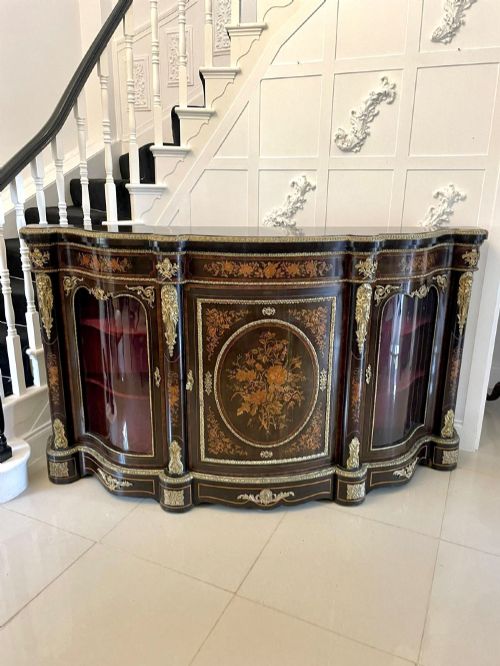
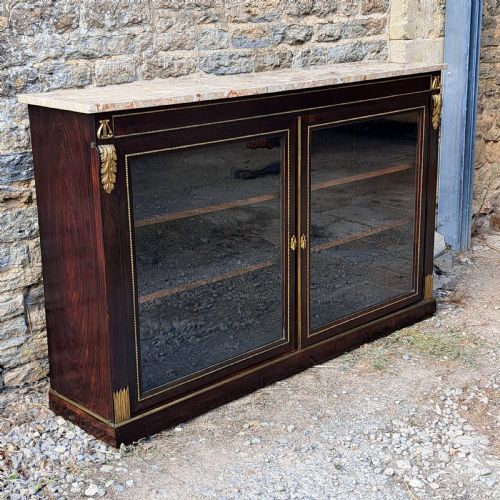
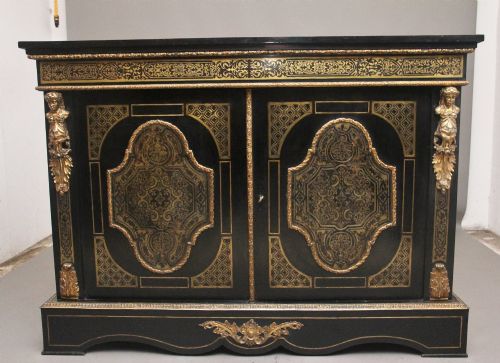
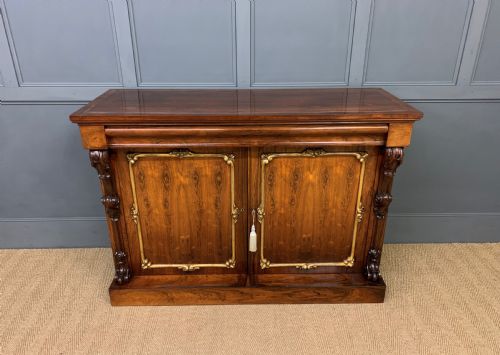
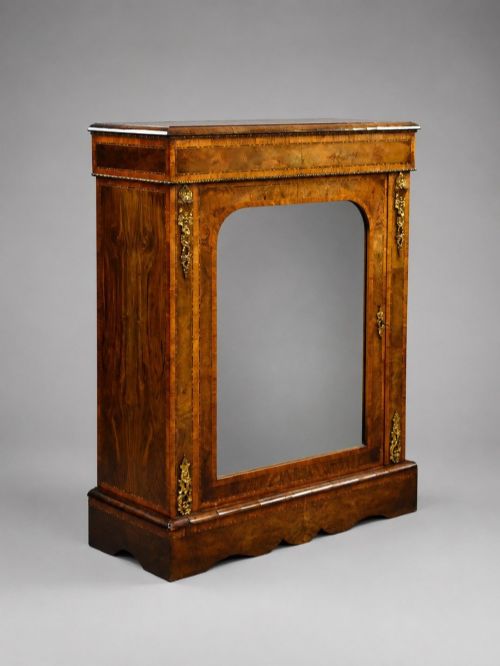
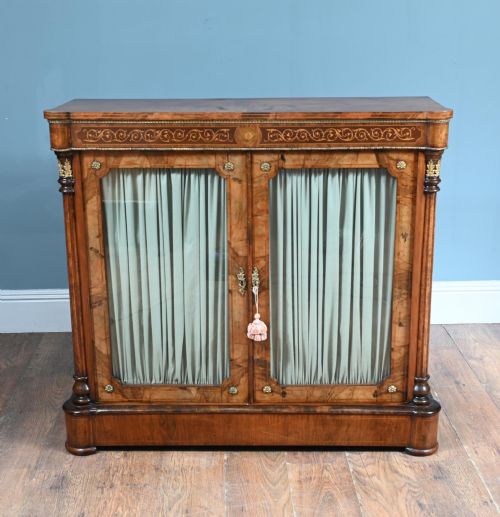
The version you meet most often on this page is a nineteenth century cabinet constructed from rosewood, walnut or ebonised wood, decorated with brass or ormolu mounts and glass panels. These low cabinets often feature shaped fronts and mirrored doors intended to reflect light within a reception room.
Makers and workshops across England and France produced these items using hardwoods enriched with marquetry, boullework and ceramic plaques. The selection ranges from compact pier cabinets to substantial breakfront sideboards bearing intricate metalwork.
How they were made
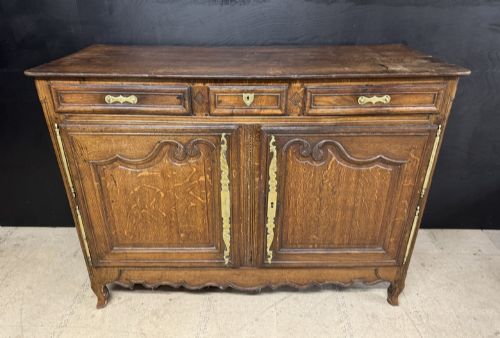
Cabinet makers utilised dense hardwoods including rosewood, walnut, mahogany and oak as the structural foundation for these pieces. Surfaces were frequently ebonised or veneered with exotic timbers, then inlaid with brass, tortoiseshell and floral marquetry.
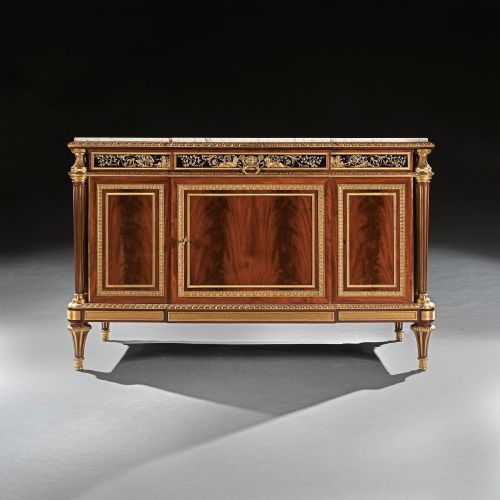
Gilding and cast metal mounts formed a distinct layer of construction, with brass and ormolu applied to corners, borders and door frames. Marble slabs frequently provided durable tops for French sideboards and pier cabinets of the period.
Brass Mounted Credenza Retail Price Guide 2026
Typical asking prices for brass mounted credenza among the pieces listed under this phrase on Sellingantiques today, from the lower quarter to the upper quarter. They describe what is for sale here now, not the wider market.
Listings feature pieces from the Georgian, Regency, Victorian and Edwardian eras, utilising rosewood, walnut, oak, mahogany, glass and marble.
What varies in quality
The standard of a brass mounted credenza rests upon the precision of its marquetry and the crispness of its metal castings. Finer examples display hand-chased ormolu mounts and meticulously fitted brass inlay rather than mass-produced stamped metal.
Timber selection dictates longevity, with highly figured burr walnut, rosewood and amboyna achieving superior depth of grain. The integration of ceramic plaques, glazed doors and original marble tops further separates standard production items from distinguished workshop commissions.
Henry Dasson·Gillows·Liberty And Co·Harrods·Louis Constantin Le Gaigneur
The Brass Mounted Credenza Glossary
- Ormolu
- Gilded bronze used for decorative mounts and feet on nineteenth century furniture. It provides a bright metallic contrast against dark woods.
- Boulle
- An elaborate form of marquetry utilising brass and tortoiseshell inlaid in contrasting patterns. This technique originates from French cabinet making traditions.
- Marquetry
- Decorative patterns formed by fitting together thin slices of wood veneer and other materials onto a carcase. Floral and geometric motifs frequently appear on Victorian cabinets.
- Chiffonier
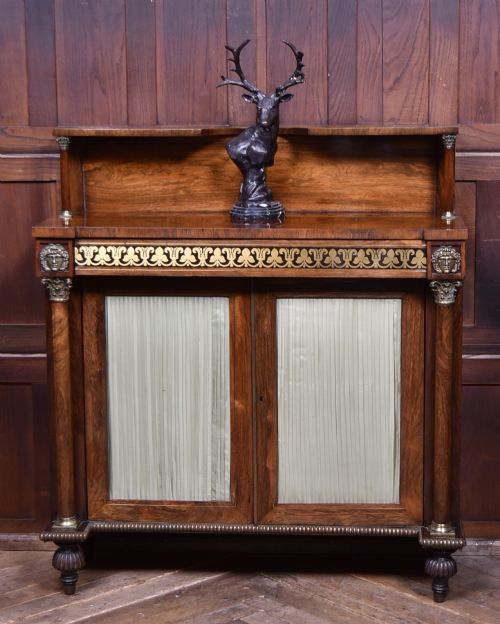
- A low sideboard or cabinet equipped with shelves and enclosed cupboards. Nineteenth century examples often incorporate pleated fabric panels behind glass doors.
- Pier cabinet
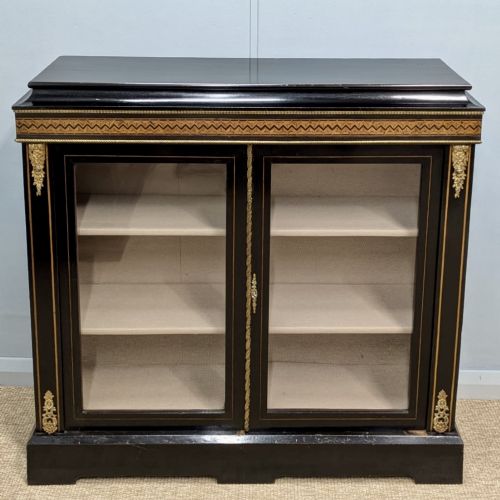
- A narrow display cabinet designed to fit the wall space between windows. These upright cases typically house glass doors for porcelain and books.
Brass Mounted Credenza: Frequently Asked Questions
What rooms suit a brass mounted credenza?
These low cabinets fit naturally into dining rooms and formal reception spaces where surface display and closed storage are both required. Their finished backs and decorative sides allow them to sit flush against prominent walls.
Because many examples incorporate glass doors and mirrored interiors, they serve well for displaying ceramics, glassware and collections without overwhelming the floor plan.
How do I identify a French credenza from an English one?
French pieces from the Napoleon III and nineteenth century periods frequently utilise ebonised finishes combined with elaborate boullework and heavy ormolu mounts. Marble tops are also characteristic of continental sideboards.
English equivalents from the Victorian and Regency eras lean towards figured rosewood and mahogany veneers, often featuring inlaid brass lines rather than cast bronze ornaments.
How were these cabinets originally used?
Dining rooms used these large pieces of furniture to serve food, store silver and display fine porcelain. The enclosed cupboards held linens and glassware.
Smaller pier cabinets and chiffoniers functioned primarily as decorative furniture in drawing rooms, providing a surface for lamps and ornaments while keeping books and papers out of sight.