


Brass Mesh Fireguard
A brass mesh fireguard protects rooms from errant sparks while bringing period metalwork and folding panels to the hearth.
Brass Mesh Fireguard
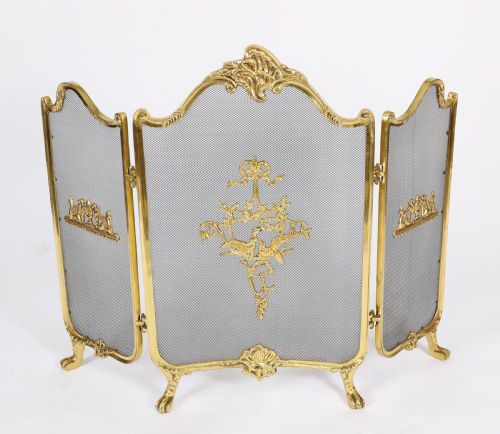
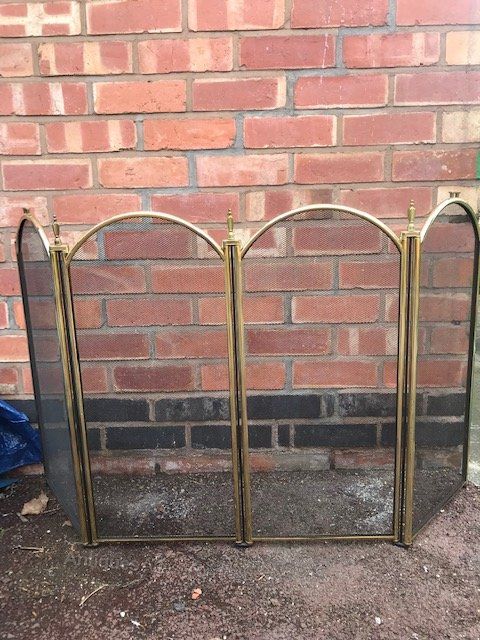
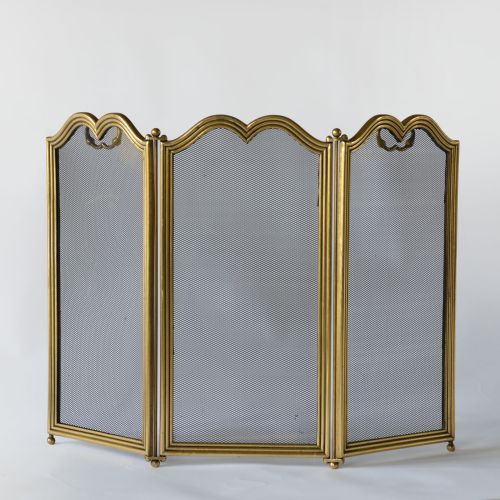
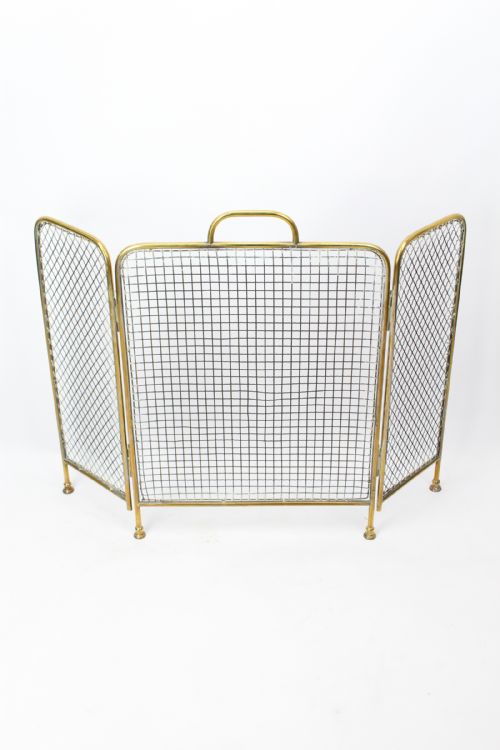
A brass mesh fireguard serves as a protective barrier before an open hearth, stopping sparks while allowing warmth into the room. When you search for a brass mesh fireguard, you encounter various configurations including tripartite folding screens, spark guards, and nursery fenders.
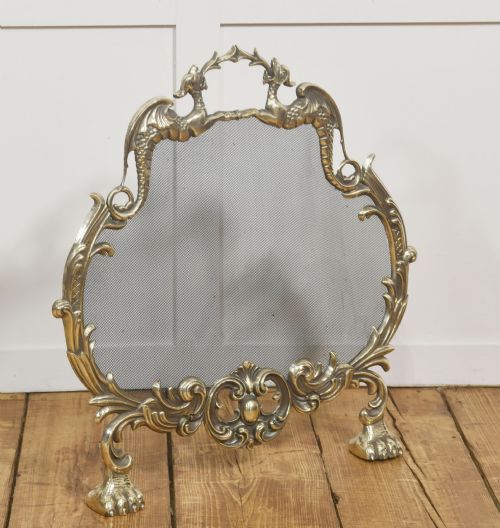
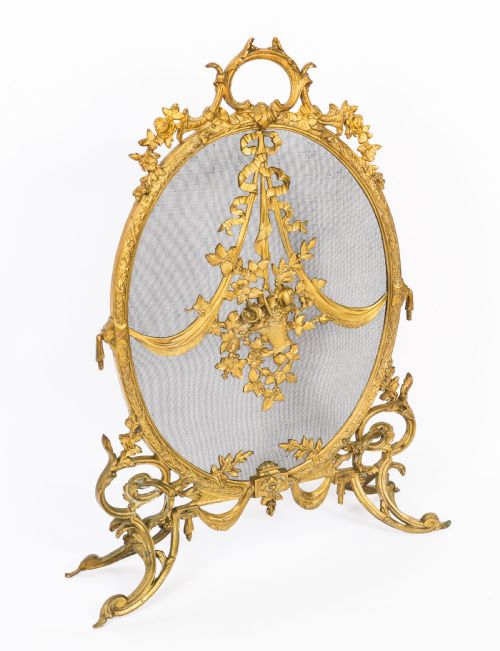
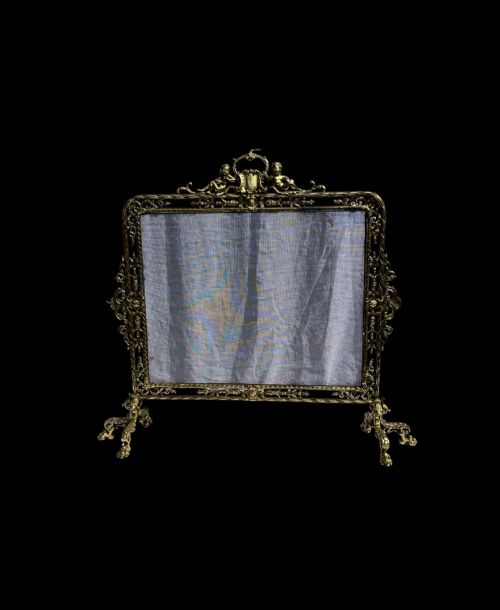
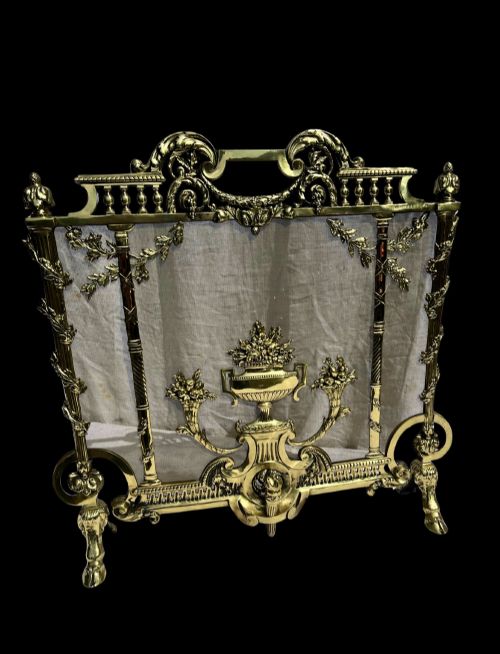
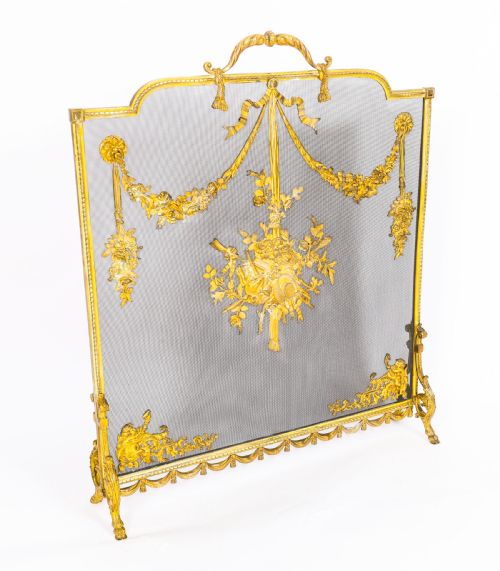
The pieces on this page span the nineteenth century, the Victorian era, the Edwardian period, and the early twentieth century. Styles range from plain wire mesh guards to ornate French Rococo and Louis XV revival designs executed in brass, gilt bronze, and steel mesh.
How they were made
Frames are constructed from solid brass, iron, or gilt bronze, shaped into rigid borders, serpentine curves, or folding sections. Fine wire mesh is then secured within the metal framework to catch embers without blocking the view of the fire.
Many examples incorporate decorative cast elements such as floral motifs, musical trophies, dolphins, or flaming torches. Finishes vary from polished brass to black-finished metal and gilded surfaces.
What varies in quality
Quality rests in the weight of the metal frame and the tightness of the wire mesh weave. Heavier gauge brass and securely riveted folding hinges indicate superior construction.
Artistry in the cast brass or gilt bronze ornaments separates standard utilitarian screens from finely detailed revival pieces. Crisp relief work on rococo scrolls and well-balanced frames denote higher workshop standards.
The Brass Mesh Fireguard Glossary
- Fire screen
- A movable barrier placed in front of a fireplace to block radiant heat when the fire is low. These often feature decorative glass, fabric, or metal panels.
- Nursery fender
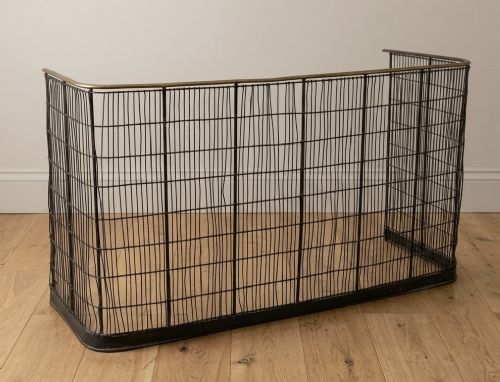
- An enclosed barrier designed to keep children and pets at a safe distance from the hearth. They frequently include a brass top rail or integrated clothes rail.
- Spark guard
- A fine mesh screen specifically engineered to contain popping embers and sparks. They are typically made with folding sections for adjustable placement.
- Gilt bronze
- Copper alloy treated with a gold or mercuric gilt finish, commonly found on French revival frames. It provides a rich, decorative surface that resists tarnish.
- Tripartite
- A design comprising three distinct folding panels hinged together. This allows the screen to stand independently in a bowed or angled configuration.
Brass Mesh Fireguard: Frequently Asked Questions
How do I choose the right size fire guard?
Measure the width and height of your fireplace opening to ensure the guard covers the hearth entirely. Folding panels allow you to adjust the footprint to fit your space.
Consider whether you need a flat screen, a bowed guard, or an enclosed nursery fender depending on the projection of your hearth.
Were these guards used in nurseries?
Taller nursery fenders with enclosed tops and robust wire mesh were specifically placed in children's rooms to prevent accidental burns. They provided a secure perimeter around active coal or wood fires.
Many period examples retain sturdy frames and top rails designed to withstand daily domestic use.
What is the difference between a screen and a fender?
Fire screens generally stand upright on feet to block heat and sparks directly in front of the opening. Fenders often sit low around the hearth perimeter, sometimes incorporating mesh guards or seating.
Some nineteenth-century designs combine both forms into a single nursery fender unit.
How do I clean antique brass mesh?
Dust the wire mesh gently with a soft brush to remove soot and debris. Avoid harsh chemical dips that strip patination from older brass.
Preserve the aged surface by applying a gentle wax or proprietary metal cleaner suitable for vintage brass and bronze.