




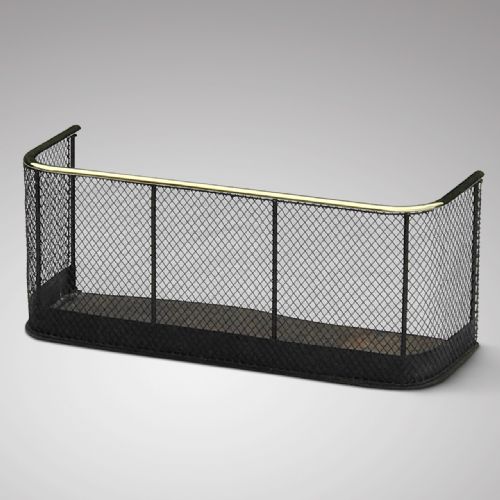
Black Wire Fireguard
A black wire fireguard protects the room from stray sparks while keeping an open hearth safely enclosed.
Black Wire Fireguard
A black wire fireguard forms a protective barrier around an open fireplace to contain embers and sparks. These pieces appear across several periods, including Regency, Victorian, Edwardian, and the 1920s.
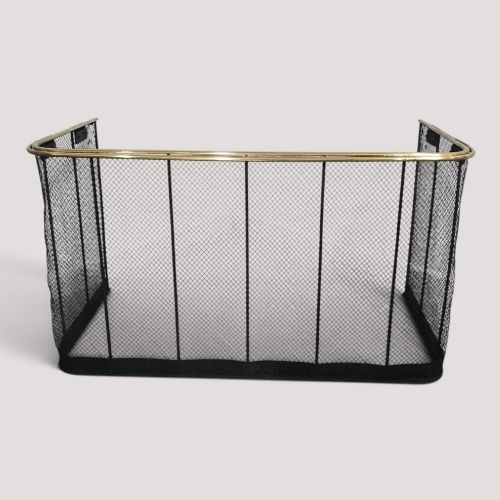
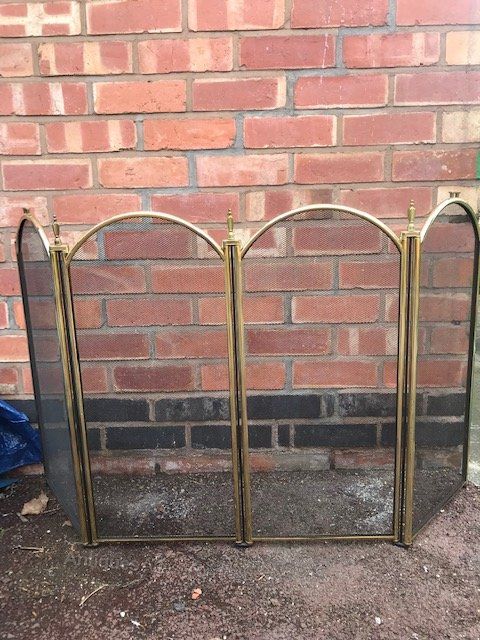
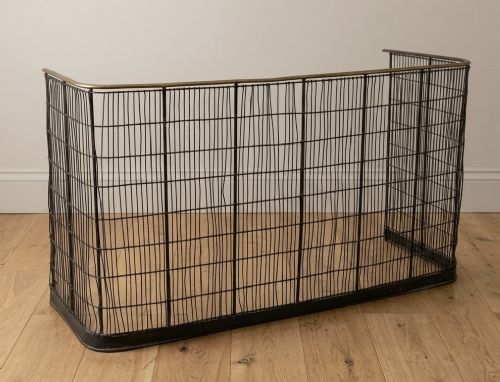
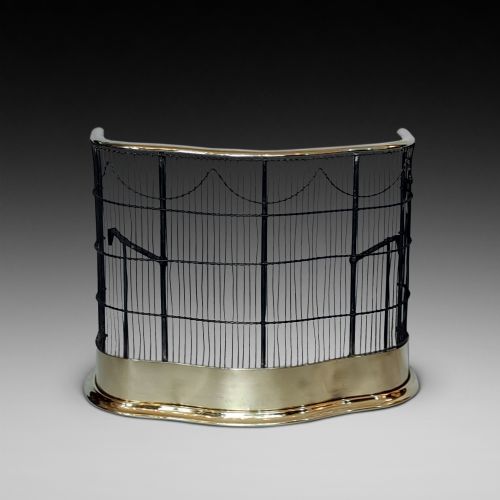
The most common formats on this page include nursery fenders with brass top rails, folding fire screens, and serpentine wire mesh guards. Many examples incorporate a brass rim or top rail alongside the dark wire mesh structure.
The English Country House style also emerges among these fireplace accessories, alongside simpler forms designed purely for practical hearth safety. Buyers encounter both low nursery fenders and taller folding screens among the listed fireplace accessories.
Construction and materials
Makers constructed these fireguards using iron wire, steel wire, and wrought iron mesh combined with solid brass framing. The wire mesh is typically secured within a rigid metal frame to withstand daily hearth use.
Many nineteenth-century and Edwardian examples feature a polished brass top rail or rim that contrasts with the dark iron or steel wire body. Certain nursery fenders also include integrated clothes rails or multiple folding sections.
Some historic nursery fenders feature an integrated clothes rail, proving that the hearth double-tasked as the original Victorian laundry dryer.
Assessing quality
Quality in a black wire fireguard lies in the rigidity of the wire mesh and the weight of the supporting frame. Heavier gauge wire and well-joined brass rims indicate superior construction.
Fine examples display careful hand-forming in the wire mesh and secure riveting where the brass top rail meets the iron body. Lesser pieces show simpler, lighter wirework with less robust framing.
The Black Wire Fireguard Glossary
- Nursery fender
- A low protective enclosure placed around a fireplace to keep children and pets away from open flames. These pieces often incorporate a sturdy brass top rail.
- Wire mesh
- A grid of woven or welded metal wire used to catch sparks while maintaining visibility of the fire. It forms the primary barrier on these guards.
- Serpentine
- A gentle undulating curved shape often seen along the front edge of fire guards and fenders. This contour softens the linear geometry of the hearth.
- Fire screen
- A movable barrier placed in front of a fireplace to block radiant heat when the fire dies down. Some versions feature folding sections for adjustable coverage.
Black Wire Fireguard: Frequently Asked Questions
What is a black wire fireguard used for?
A black wire fireguard acts as a protective barrier in front of an open hearth. It prevents hot embers and sparks from reaching the room while allowing heat to circulate.
These pieces also served historically in nurseries to keep young children at a safe distance from the flames.
How do I date an antique fireguard?
Dating depends on observing the materials, construction methods, and stylistic details present in the frame. Regency and early nineteenth-century examples often feature distinct brass framing, whereas Edwardian and 1920s pieces show different wire gauges and assembly techniques.
Comparing the specific brass top rails and mesh styles helps place the piece within its historical period.
Are these fireguards suitable for modern open fires?
Many antique wire mesh guards provide functional spark protection for active hearths. Buyers should verify the stability and dimensions of the frame to ensure it fits the fireplace opening securely.
The sturdy iron and steel wire construction of Victorian and Edwardian examples remains practical for everyday domestic use.
What is the difference between a fender and a screen?
A fender typically sits low around the hearth perimeter, sometimes incorporating a seat or a rail for drying items. A fire screen stands upright to block radiant heat or contain sparks across the fireplace opening.
Some nursery designs combine elements of both by offering low enclosed wire fencing with a top rail.