



Brass Marquetry Sideboard
A brass marquetry sideboard brings together rich timber and bright metal inlay to anchor a formal dining room or drawing room.
Brass Marquetry Sideboard
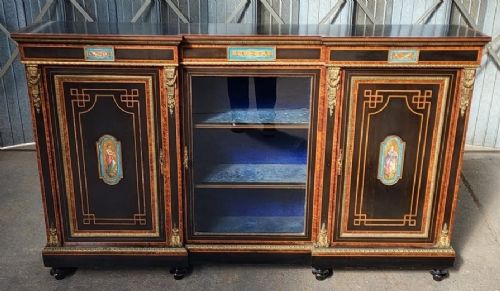
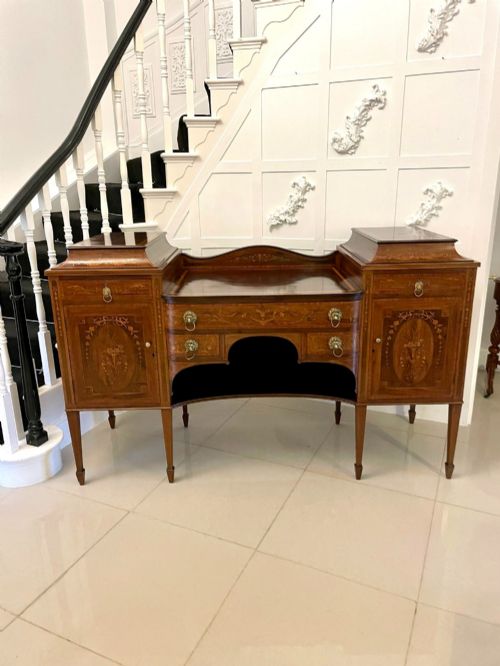
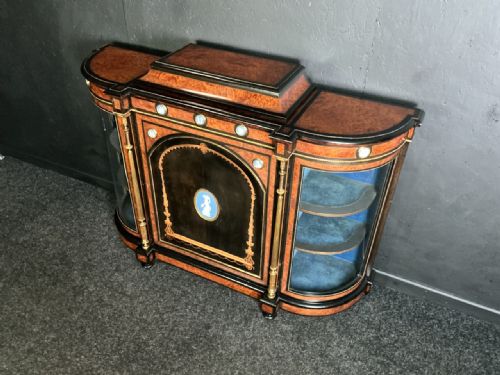
When you search for a brass marquetry sideboard, you encounter large storage furniture designed for formal reception rooms, incorporating sideboards, credenzas, and side cabinets. The examples seen here span multiple decades and stylistic revivals, with Victorian and French nineteenth-century pieces appearing most frequently alongside Edwardian and Georgian interpretations.
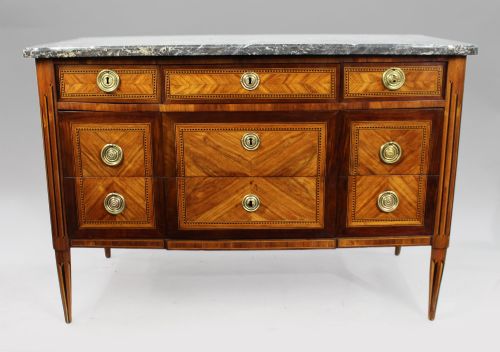
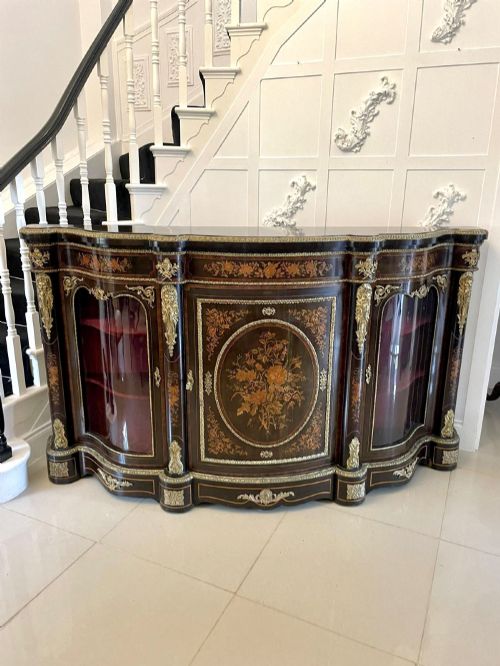
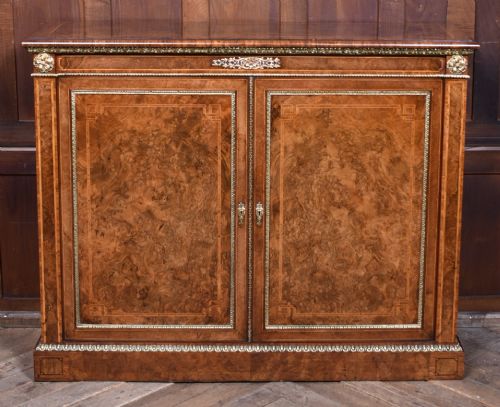
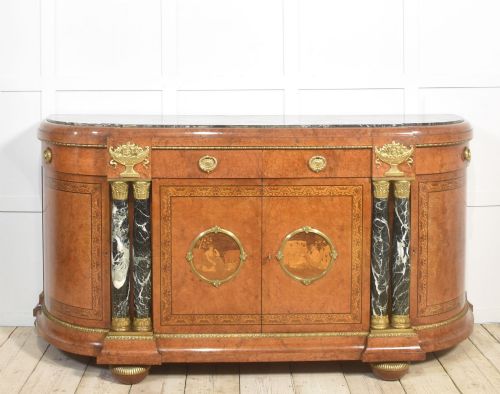
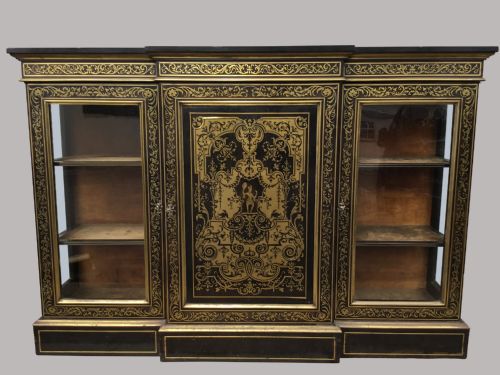
The primary forms take shape as serpentine credenzas, breakfront cabinets, and commodes fitted with shelving or drawer space. Makers employed contrasting timbers like walnut, mahogany, and ebonised wood to build these carcasses, decorating the surfaces with detailed floral or geometric brass patterns.
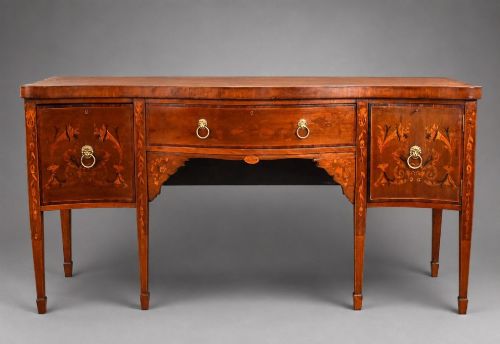
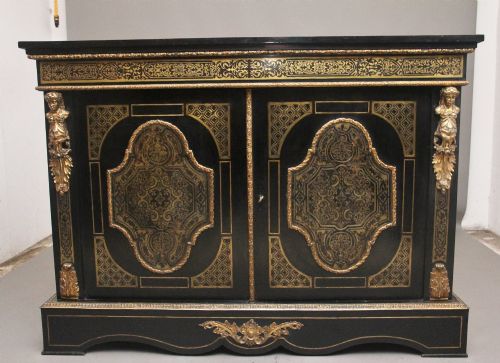
Origin points range across English cabinet workshops and French ateliers, producing pieces influenced by Louis XVI, Sheraton, and Boulle traditions. These heavy display units served to exhibit prized porcelain and silverware while concealing household linen or dining accessories.
Materials and construction
Cabinet makers constructed solid wood and veneered carcasses using walnut, mahogany, palisander, and ebonised wood, often shaping the fronts into serpentine or breakfront curves. They applied thin sheets of brass and tortoiseshell into intricate floral and scroll marquetry patterns across the doors and top surfaces.
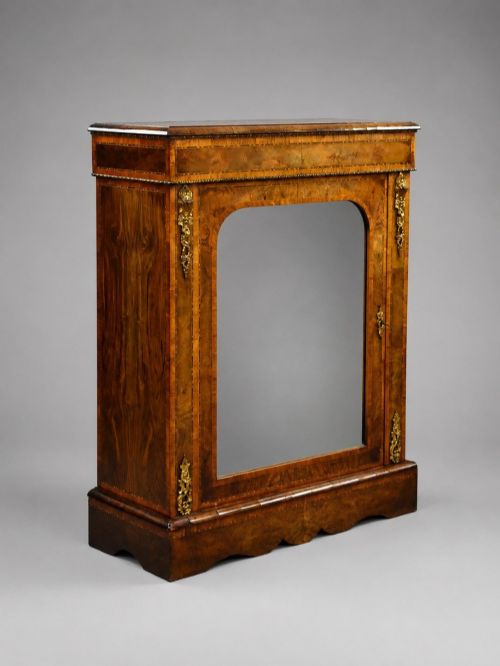
Ormolu mounts cast in bronze and finished with gilding frame the corners, feet, and key escutcheons to accentuate the architectural lines. Heavy marble slabs in white or grey tones top many of the French commodes and credenzas, providing a durable and cool working surface.
The furniture styles span Georgian, Regency, Victorian, and Edwardian periods, including French Louis-style revivals.
Distinguishing quality
The highest tier of furniture shows absolute precision in the metal inlay, where the brass sits flush with the surrounding timber and tortoiseshell without visible gaps or excessive adhesive filler. Workshops that engaged master carvers and gilders achieved sharper cast definition in the ormolu mounts and crisper chisel work on the floral marquetry.
Timber selection dictates the visual depth of the piece, with dense burr walnut veneers and figured mahogany holding richer natural grain patterns than plain secondary woods. Well-engineered carcase joinery prevents the warping of large doors and maintains the alignment of serpentine fronts over generations of use.
Hewetsons London·Edwards and Roberts·Howard And Sons
The Brass Marquetry Sideboard Glossary
- Marquetry
- Decorative veneer applied to a furniture structure in patterns and pictures. Craftsmen cut thin pieces of wood, metal, or shell together to fit exact geometric or floral designs.
- Boulle
- A form of marquetry developed by André-Charles Boulle, utilising precise brass and tortoiseshell inlays. This technique creates a contrasting metallic and dark tortoiseshell surface pattern.
- Ormolu
- Gilded bronze mounts applied to furniture for decoration and edge protection. Makers cast and chased these metal elements to add ornamental relief to cabinet corners and legs.
- Serpentine
- A furniture front curved in a wave shape, convex in the centre and concave at the sides. This contour requires skilled carpentry to shape both the timber carcase and the matching drawers.
- Breakfront
- A large cabinet front where the central section projects forward from the flanking wings. This architectural arrangement breaks the flat plane of long sideboards and bookcases.
Brass Marquetry Sideboard: Frequently Asked Questions
What is a brass marquetry sideboard?
A brass marquetry sideboard is a large storage cabinet decorated with intricate metal and wood inlay across the doors and panels. These pieces combine practical shelving with decorative display surfaces for formal rooms.
They emerged from nineteenth-century workshops inspired by earlier French and English revival styles. The combination of polished timber and reflective brass creates a striking focal point in an interior.
How do I date these cabinets?
Dating relies on examining the secondary timbers, the style of the brass inlay, and the construction methods used inside the drawers and carcase. Nineteenth-century pieces often feature ebonised finishes and revival motifs drawn from Louis XIV or Sheraton designs.
Cabinet hardware, such as locks and hinges, also provides clues to the manufacturing decade. Comparing the primary wood selection to documented workshop tendencies helps narrow the production period.
How were these sideboards used?
These cabinets served primarily in dining rooms and parlours for storing fine tableware, linen, and glassware. The flat top surfaces provided space to serve food or display decorative porcelain and ornaments.
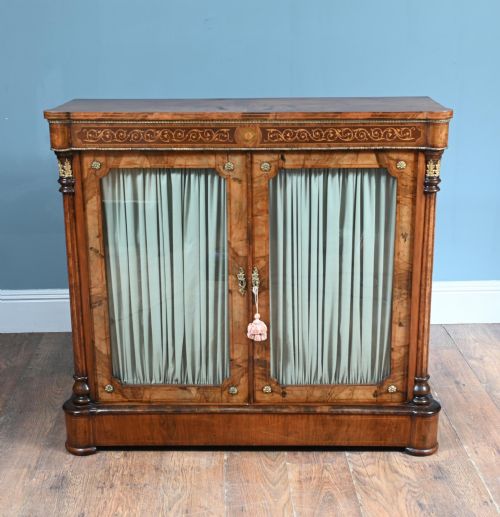
Glass-fronted display variants allowed owners to exhibit valuable collections while protecting them from dust. Credenzas and sideboards acted as both functional storage and markers of domestic status.
Where should I place one?
Position these substantial cabinets against a sturdy wall in a dining room, hallway, or spacious drawing room where they can command the space. Ensure the room has stable humidity and temperature to protect the delicate wood veneers and tortoiseshell.
Keep them away from direct sunlight to prevent the timber finishes and brass work from fading over time. Allow enough clearance around the doors so they can open fully without obstruction.