



Brass Marble Table Lamps
Brass marble table lamps combine weighty stone and polished metal to anchor a room with classical dignity.
Brass Marble Table Lamps
When you search for brass marble table lamps, you find lighting fixtures that combine metal mounts with solid stone bases, spanning the Victorian, Edwardian, and Art Deco periods.
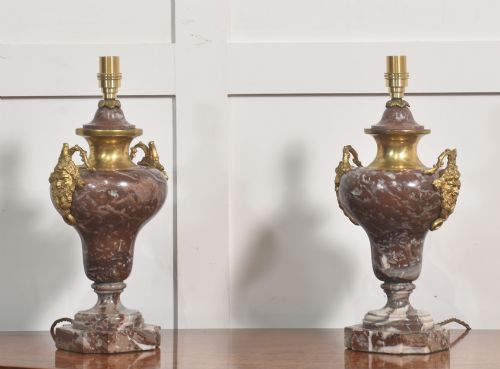
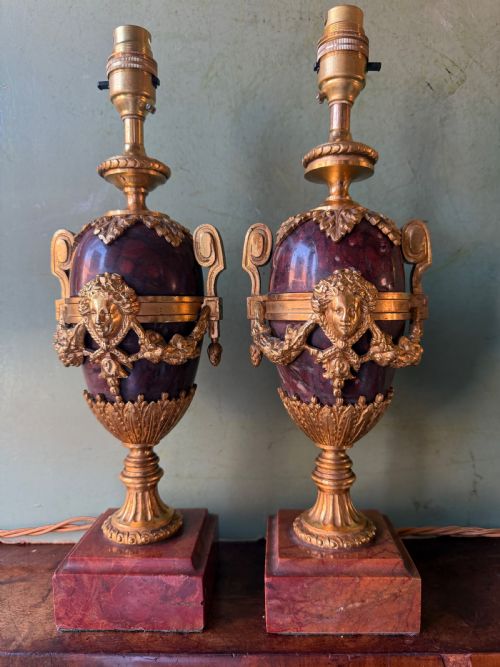
The selections here frequently show French and English influence, taking the form of classical columns, figural mounts, or urn-shaped bodies raised on heavy plinths.
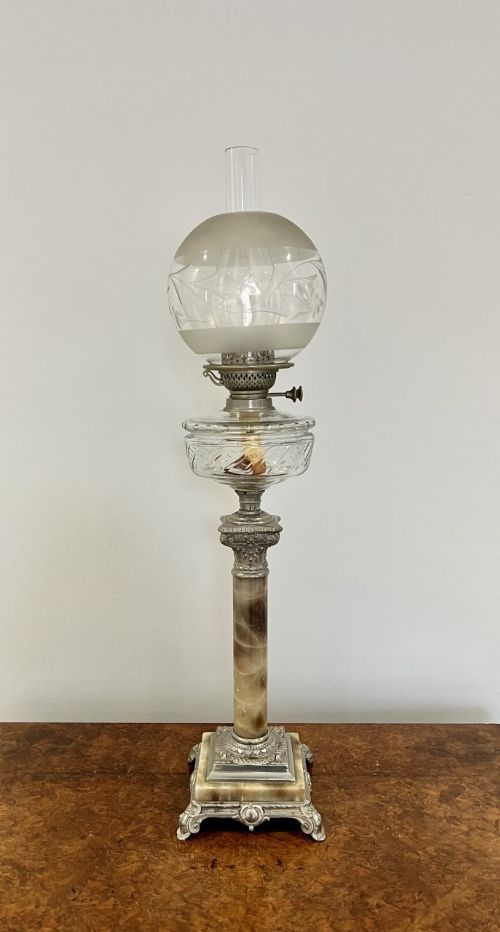
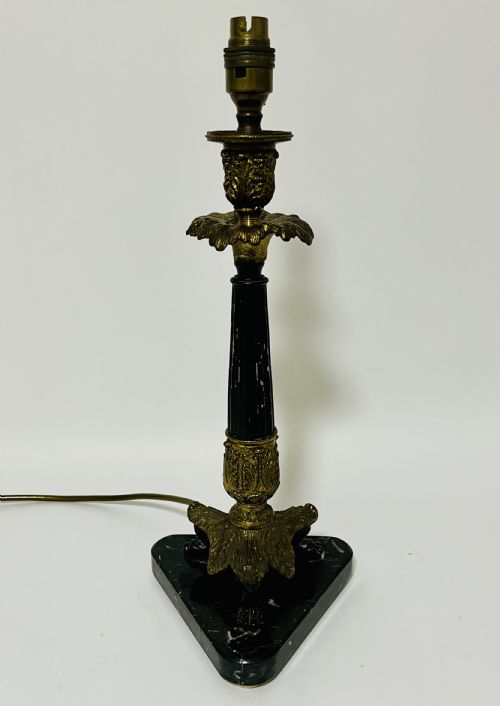
Alongside dedicated table lamps, the selection includes converted oil lamps and candle holders adapted for electrical wiring during the twentieth century.
How they were made
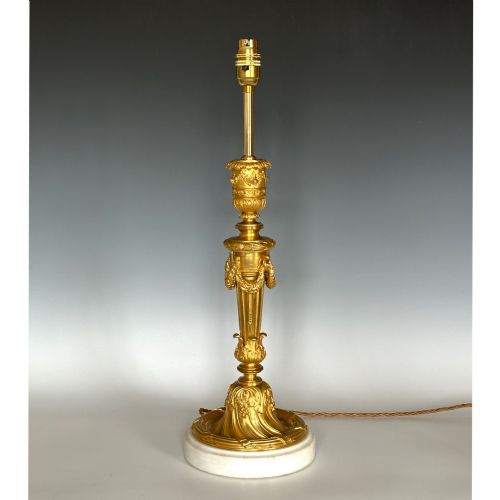
Maker workshops utilised turned and polished marble, sometimes specified as rouge, green, or white varieties, to provide a heavy, stable foundation for the fixture.
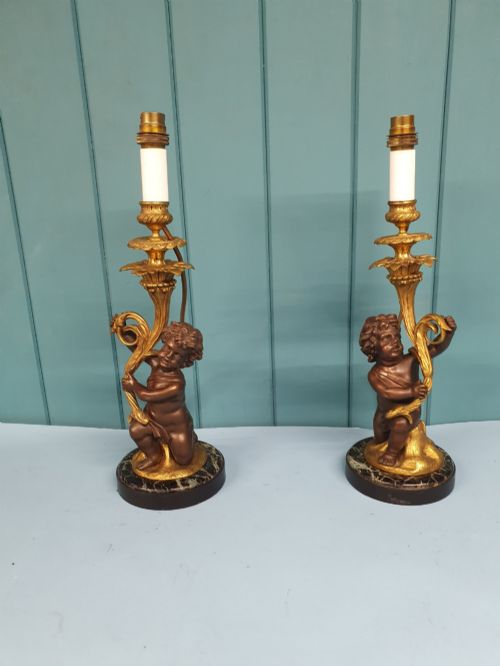
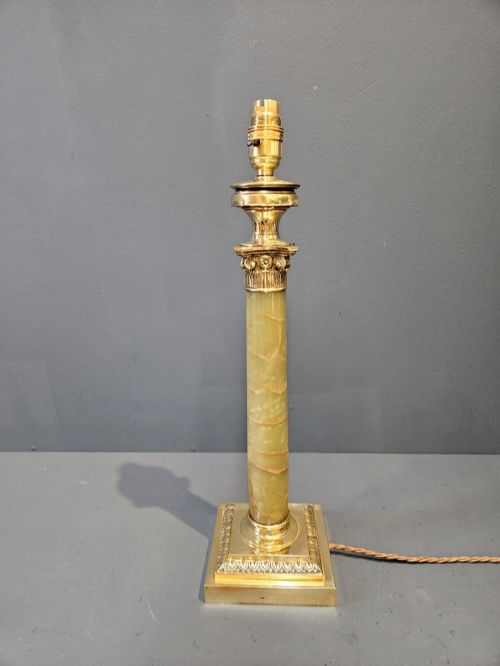
Metal components including cast brass, ormolu, and gilt bronze were shaped with decorative collars, Corinthian capitals, and detailed figural motifs.
Assembly relied on central threaded rods or internal iron bolts running through the stone and metal sections to secure the vertical body.
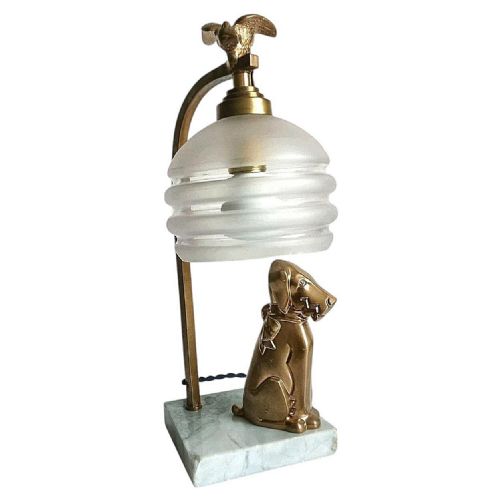
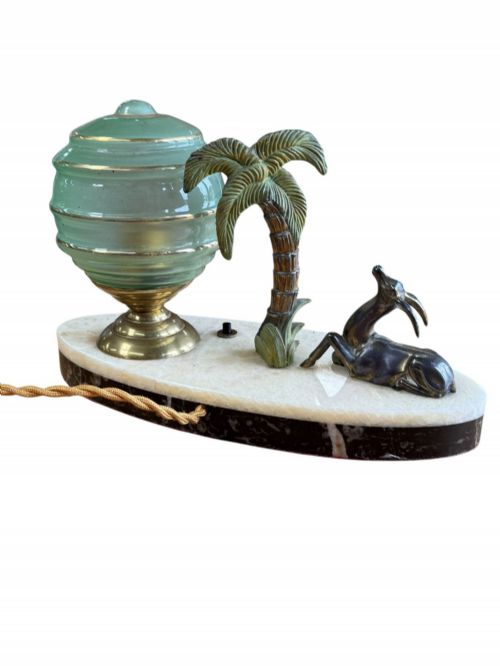
Several French lamps double as miniature menageries, featuring cast bronze dogs, parrots, eagles, and cherubs keeping watch over the marble.
What varies in quality
The refinement of the cast metal elements separates standard production pieces from finer examples, with hand-chased ormolu displaying sharper relief than plain cast brass.
The selection and turning of the marble itself dictates visual weight, where uniform veining and dense polish show superior material selection compared to clouded stone.
James Shoolbred
The Brass Marble Table Lamps Glossary
- Ormolu
- Gilded bronze used extensively in French decorative arts. It provides a warm, gold-coloured finish to metal mounts on lamp bases.
- Guéridon
- A small circular table often featuring a marble top and brass gallery. These pieces frequently share stylistic traits with contemporary lamp standards.
- Neoclassical
- A revival style drawing on classical Greek and Roman forms. It accounts for the column shapes and crisp geometric mounts seen on many bases.
- Bouillotte
- A traditional French lamp design featuring a central shaft rising from a column, originally adapted from card-table lighting.
Brass Marble Table Lamps: Frequently Asked Questions
How do I date a brass marble table lamp?
Dating relies on examining the casting techniques of the metal components and the turning style of the marble base. Victorian examples often show heavier brass work, while Art Deco pieces incorporate geometric lines.
Wiring methods and interior hardware also offer clues, though many older fixtures have been rewired for modern use.
Were these originally made as electric lamps?
Many older pieces began life as oil lamps, candlesticks, or decorative urns before conversion to electricity. This adaptation frequently occurred during the early twentieth century.
Makers utilised the existing hollow centres of columns and vases to run electrical cords safely through the stone and metal structure.
How do I clean marble and brass bases?
Marble requires gentle cleaning with a damp cloth and neutral soap, avoiding acidic solutions that etch the polished surface. Brass components benefit from dry dusting or specialised metal cleaners applied carefully to avoid the stone.
Maintaining these materials preserves the original contrast between the polished metal and the veined stone.
What styles are common in these lamps?
French and English aesthetic traditions dominate, with Louis XV, Louis XVI, and Empire styles appearing frequently. These designs feature scrolling foliage, urns, and classical columns.
Later pieces from the twentieth century lean towards cleaner Art Deco silhouettes or simplified classical forms.