





Brass Mounted Marble Lamp
A brass mounted marble lamp brings weight and classical proportion into a room, combining cool stone with warm metal mountings.
Brass Mounted Marble Lamp
A brass mounted marble lamp combines carved stone bodies with metal collars, bases, or handles. The form appears across the nineteenth century and into the early decades of the twentieth century, drawing on French Neoclassical, Louis XV, Louis XVI, and Empire styles.
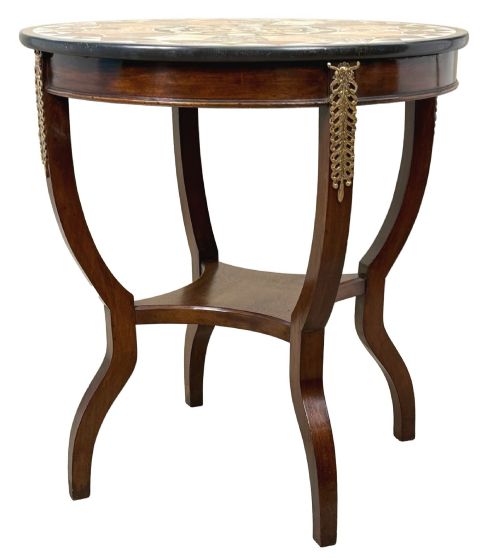
Most examples found here originate from French workshops or the Victorian period. Alongside dedicated table lamps, the selection includes occasional, side, and bedside tables adapted to hold lighting or integrated with lamp fittings.
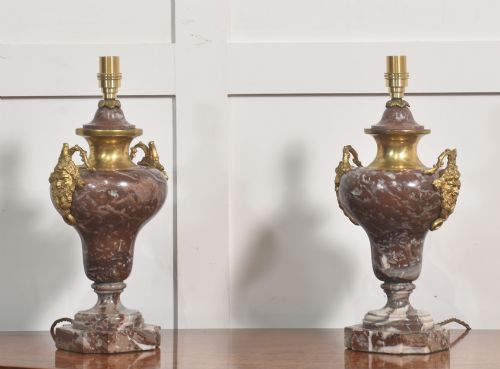
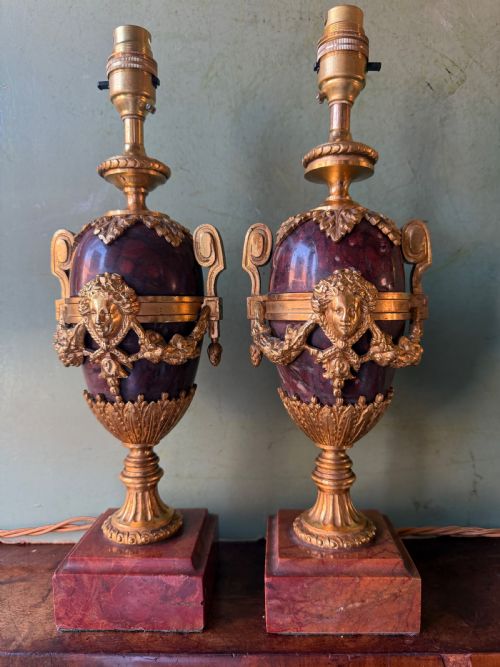
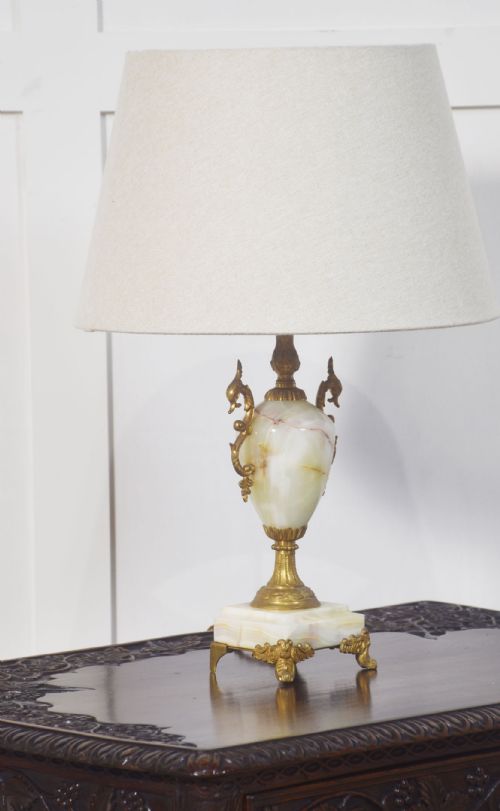
Makers utilised various stones, pairing white, rouge, Siena, or onyx marble with cast brass, ormolu, and gilt bronze mounts. These pieces range from simple columnar shafts to elaborately cast pairs featuring cherubs or classical foliate decoration.
How they were made
Craftsmen turned and polished the marble columns and urns on lathes, while bases and capitals were shaped through sand casting in brass, bronze, or ormolu. Metal mounts were pinned, screwed, or keyed directly into the stone.
Gilt bronze and ormolu elements received a fine mercury or electroplated finish to achieve a rich lustre. Stone tops and bodies frequently incorporated mahogany, walnut, or kingwood secondary structures in combined table and lamp forms.
The inventory records pieces spanning the Victorian era through the 1930s, constructed from mahogany, walnut, onyx, and various marbles.
What varies in quality
Quality rests upon the crispness of the metal chasing and the depth of the marble selection. Finer pieces display sharply cast ormolu mounts with hand-finished details, whereas simpler production relies on smoother, unchased brass fittings.
The choice of stone heavily influences the character of the object, with dense, highly figured rouge or Siena marbles commanding greater presence than plain varieties. Heavier gauge metalwork and substantial stone sections indicate sturdier construction and higher workshop ambition.
James Shoolbred·Linke
The Brass Mounted Marble Lamp Glossary
- Ormolu
- Gilded bronze produced through an application of gold amalgam or modern electroplating onto a bronze base. This technique creates a durable golden surface frequently seen on French mounts.
- Gueridon
- A small French occasional table, often round and supported by a central column or tripod base. Many survive adapted for use as lamp stands.
- Siena marble
- A yellow-hued Italian marble featuring deep grey and purple veining. It was highly favoured for decorative objects and grand architectural details.
- Rouge marble
- A striking red decorative limestone with white or dark calcite veins. It provides a dramatic contrast to bright brass and gilt bronze mounts.
- Corinthian column
- A classical architectural order featuring an ornate capital decorated with acanthus leaves. Lamps utilising this form draw directly on ancient Greek and Roman stone architecture.
Brass Mounted Marble Lamp: Frequently Asked Questions
How do I identify a period lamp?
Study the weight of the metal components and the character of the stone turning, which reveal nineteenth-century or early twentieth-century manufacturing methods.
French pieces often display distinct neoclassical or Louis XVI stylistic motifs in their cast ormolu mounts.
Were these originally made as lamps?
Many examples began life as oil lamps or converted occasional tables before receiving twentieth-century electrical wiring.
Some surviving items combine small tables with integrated lamp stands designed for sitting beside a chair or bed.
How do I clean the marble and brass?
Dust the marble gently with a soft cloth and avoid abrasive household cleaners that can etch the polished stone surface.
Clean brass and ormolu sparingly with a dry cloth to preserve the patination accumulated over the decades.
Are pairs common in these lamps?
Matched pairs appear frequently among nineteenth-century French imports, having originally flanked a mantelpiece or sideboard.
Single lamps also occur, often surviving from larger sets or separate occasional tables adapted for lighting.