

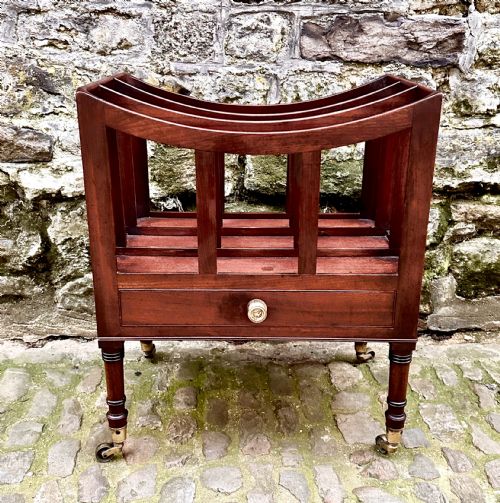


Brass Magazine Holder
A brass magazine holder brings polished metal warmth and orderly charm to a room, keeping your periodicals tidy with genuine period character.
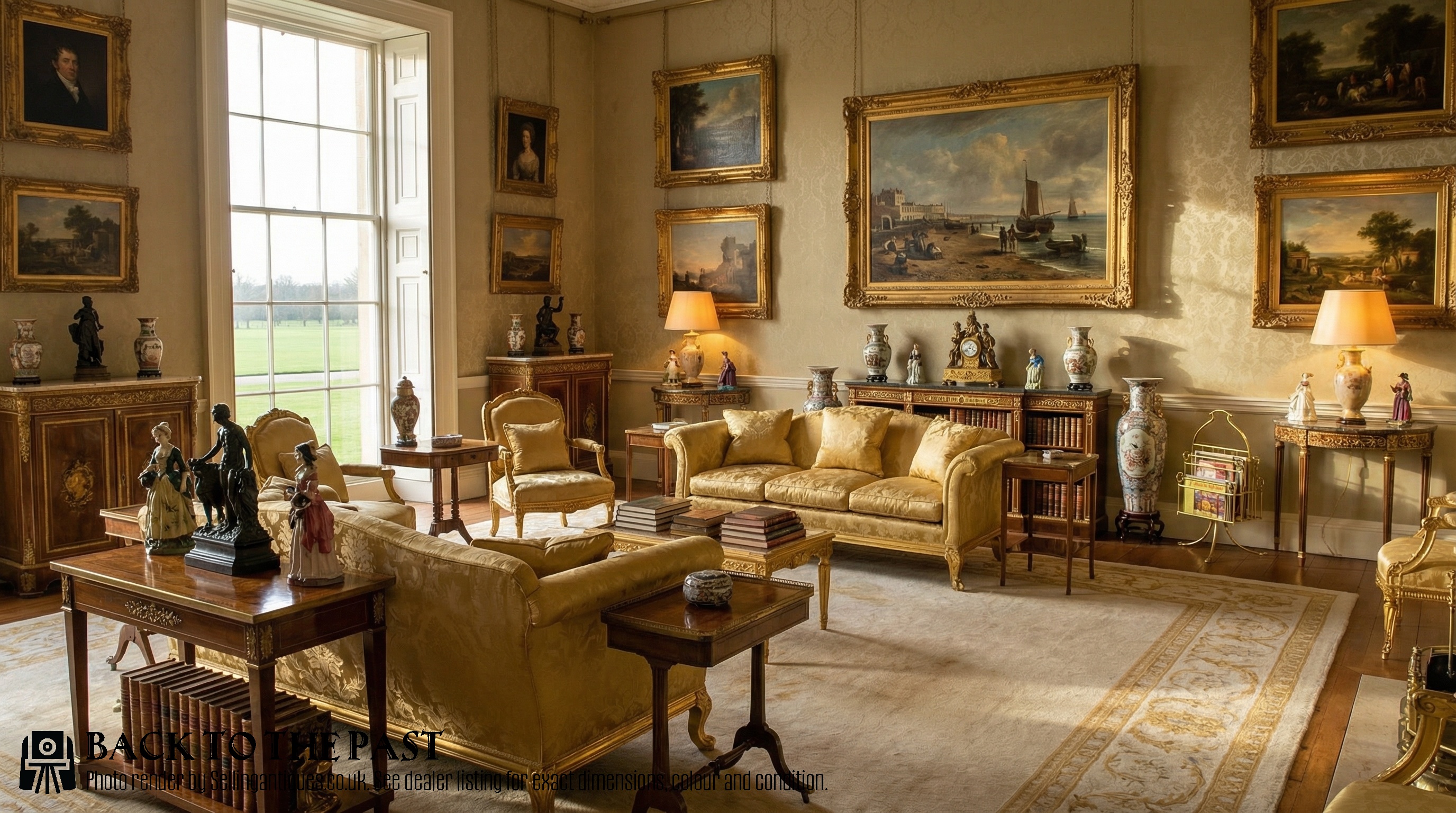
Brass Magazine Holder
When you search for a brass magazine holder, you encounter a varied selection of functional storage pieces spanning the Regency, Victorian, and Edwardian periods. These objects bridge the gap between practical containment and decorative display, evolving from earlier canterburys and music stands into dedicated newspaper and periodical racks.
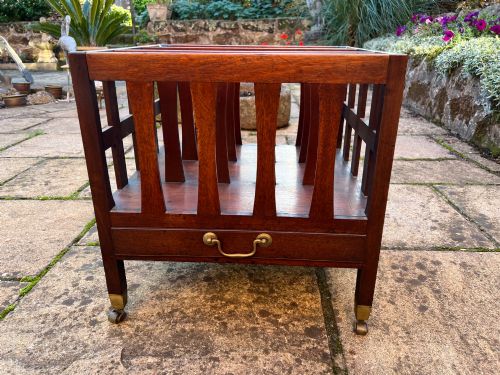
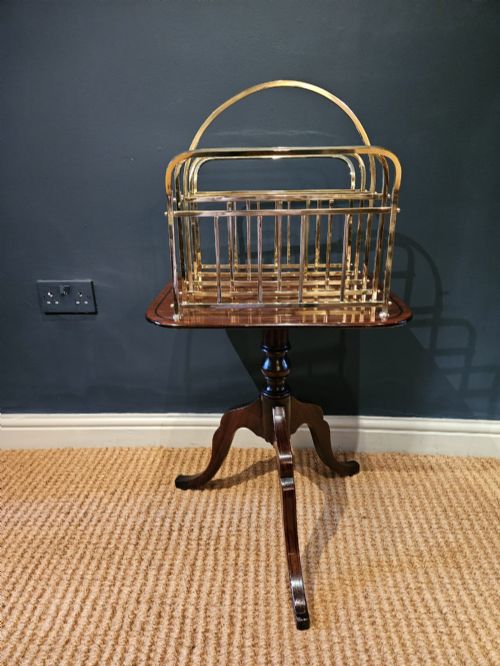
You are most likely to meet pieces that combine gleaming metal frameworks with rich timbers such as mahogany, oak, and rosewood. The selection ranges from rotating tabletop stands to expansive floor-standing units with multiple divisions.
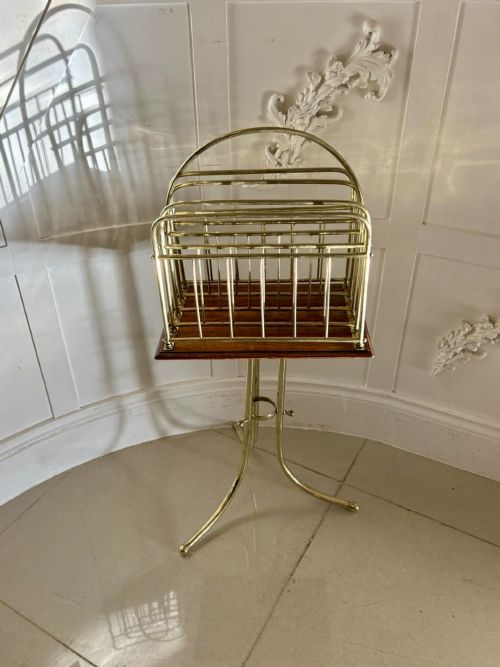
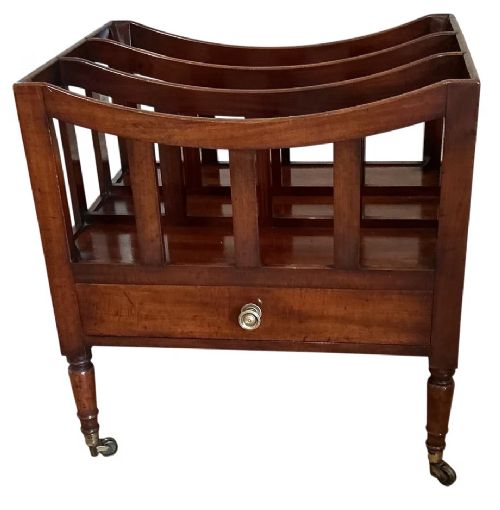
Many items date from the nineteenth century, reflecting a period when domestic organisation became an art form. Forms vary from boat-shaped canterburys to tubular brass structures and bamboo-style frames.
Materials and construction
Craftsmen built these pieces using a combination of durable metals and dense hardwoods. Brass provides the bright structural framework, handles, and decorative accents, often paired with mahogany, oak, walnut, or rosewood.
Joinery techniques ranged from traditional cabinetmaking for the wooden divisions to specialised metalbending for the tubular stands and wirework racks. Copper elements occasionally appear alongside brass to introduce tonal contrast within the Arts and Crafts pieces.
Brass Magazine Holder Retail Price Guide 2026
Typical asking prices for brass magazine holder among the pieces listed under this phrase on Sellingantiques today, from the lower quarter to the upper quarter. They describe what is for sale here now, not the wider market.
Listings feature pieces spanning the Regency, Victorian, and Edwardian eras, constructed from brass, copper, mahogany, oak, and rosewood.
Judging the range
Quality reveals itself in the weight of the metal and the selection of the timber. Superior pieces display substantial brass castings, well-turned columns, and finely figured mahogany or rosewood rather than thin plating and plain secondary woods.
The sophistication of the mechanism on revolving stands distinguishes standard production from high-end workshop output. Rigidity in the frame and thoughtful division design separate ordinary utility items from superior examples.
Gillows of Lancaster·Maison Jansen·J.C.Loudon
The Brass Magazine Holder Glossary
- Folio stand
- An adjustable or fixed upright rack designed to hold large volumes, prints, or unbound sheets. These pieces often exhibit grander proportions suitable for country house libraries.
- Tubular brass
- Hollow metal tubing used to create lightweight yet rigid structural frames during the Victorian and Edwardian eras. This technique allowed for complex curves without excessive weight.
- Revolving stand
- A rotating tier construction allowing easy access to publications from a seated position. These stands sit upon weighted bases for stability during rotation.
- What-not
- A multi-shelved open cabinet used for displaying small items or holding books and papers. Examples occasionally incorporate magazine storage elements within their lower tiers.
Brass Magazine Holder: Frequently Asked Questions
What is a brass magazine holder?
A brass magazine holder is a functional furnishing designed to store periodicals, newspapers, or sheet music while adding metallic warmth to a room. These pieces range from open wirework racks to multi-tiered wooden stands accented with brass handles and frames.
They evolved from nineteenth-century canterburys and music stands, adapting over time to suit changing domestic habits. Today, they serve both to organise reading material and to display period craftsmanship.
How do I date a magazine stand?
Dating relies on observing the combination of materials, construction methods, and stylistic cues present in the piece. Regency and George III examples favour fine mahogany with formal divisions, whereas Victorian items often introduce tubular brass and ebonised details.
Edwardian pieces frequently combine oak with simpler brass fittings, while later twentieth-century items embrace specific revival styles or modernist influences. Examining the fixings and timber grain provides further confirmation of the period.
Where should I place it?
These holders sit comfortably beside armchairs, sofas, or within studies and libraries where reading material accumulates. Revolving stands work well next to seating groups because they grant access from multiple angles.
Floor-standing racks with handles can move easily around a room as needed. Their mix of metal and wood allows them to integrate into both traditional and contemporary interiors.
How do I care for brass and wood?
Maintenance involves dusting the wooden surfaces regularly with a soft cloth to preserve the finish of timbers like mahogany, oak, and rosewood. Avoid placing the piece in direct sunlight to protect the polish.
Brass elements can be cleaned gently with a dry or very lightly damp cloth to remove surface dust. Aggressive polishes should be avoided to retain the natural aged patina that develops over decades.