
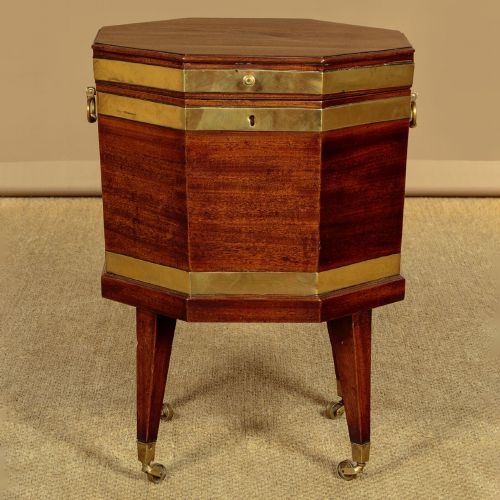


Brass Lined Wine Cooler
A brass lined wine cooler sits ready to chill bottles or hold plants, bringing rich timber and metalwork into a room.
Brass Lined Wine Cooler
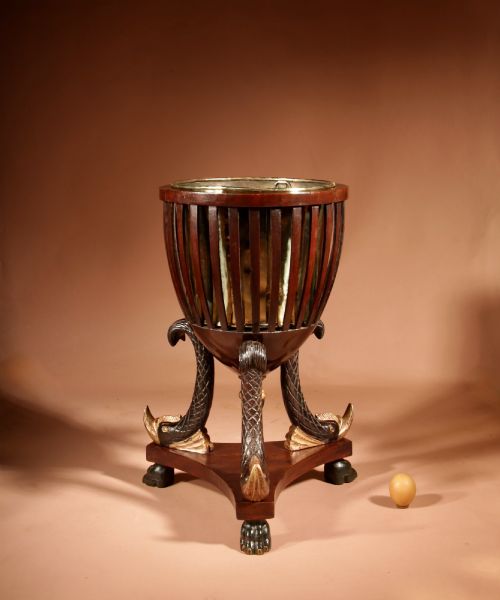
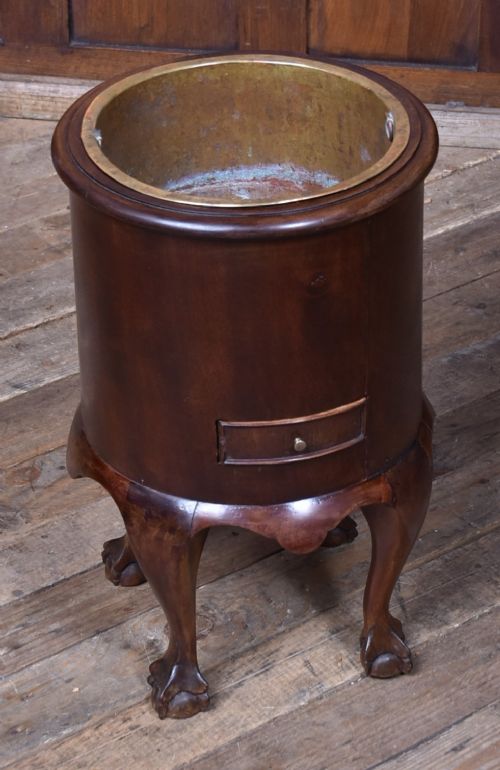
A brass lined wine cooler is a timber vessel constructed to hold ice and bottles, or alternatively to serve as a planter or jardiniere. The form spans Georgian, Regency, and Victorian periods, taking shapes from octagonal cellarettes to elliptical buckets.
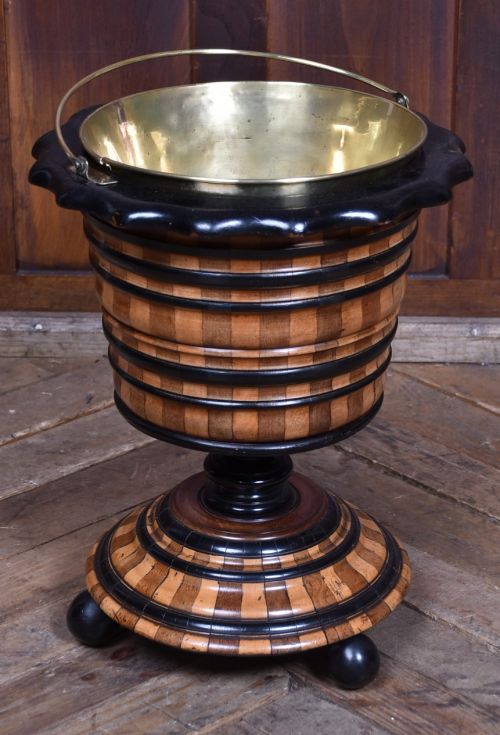
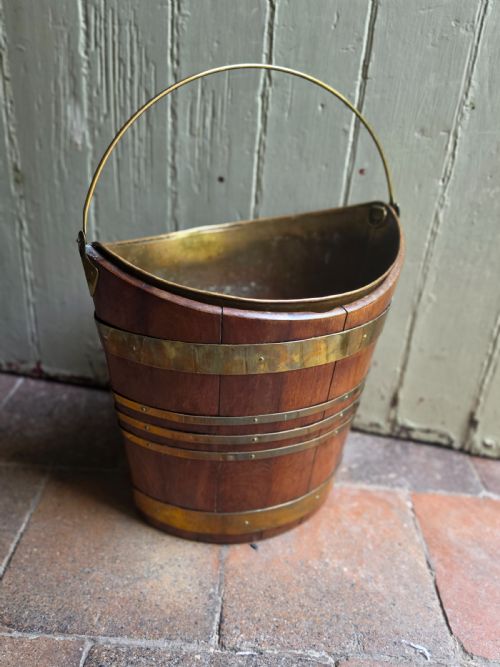
Mahogany forms the primary timber for these pieces, often brass bound with staves and hoops. Walnut, satinwood, rosewood, and ebonised wood also appear in Dutch colonial and English iterations, alongside box tree and mixed hardwoods.
The version most commonly met on this page is the 19th-century mahogany bucket or cellarette, frequently featuring coopered construction and interior metal linings in zinc or brass.
What varies in quality
The standard of timber selection and the precision of the cooperage define the upper tier of these vessels. Finely figured mahogany grain and tight, well-fitted brass staves indicate superior craftsmanship compared to simpler utility items.
The integrity of the interior brass or zinc lining and the subtlety of decorative marquetry or brass mountings distinguish exceptional pieces. Original mounts and uncompromised timber structures elevate the work.
Some miniature mahogany jardinieres were built small enough to sit on a table, holding tiny plants instead of wine.
The Brass Lined Wine Cooler Glossary
- Cellarette
- A lockable container used for storing wine bottles near the dining table. They frequently feature internal divisions and brass banding.
- Coopering
- The method of joining curved wooden staves together with metal hoops to form a watertight vessel. This technique creates the characteristic profile of wine buckets and peat bins.
- Jardiniere
- An ornamental pot or stand designed to hold plants or flowers. These share forms with wine coolers and tea stoves in the evidence.
- Teestoof
- A Dutch warming stove or container used to hold peat or hot embers for tea equipment. They often share materials and construction with miniature planters.
- Marquetry
- Decorative patterns formed by inserting pieces of contrasting wood veneer into a timber surface. Satinwood and rosewood frequently supply the colour variation.
Brass Lined Wine Cooler: Frequently Asked Questions
What is the difference between a cellarette and a wine cooler?
Cellarettes generally refer to enclosed cabinet forms or fitted boxes designed to hold bottles securely, sometimes with locks. Wine coolers take open bucket or tub forms intended for holding ice around bottles.
Both serve the dining room context, though buckets rely on interior metal linings to manage melting ice while wooden cellarettes often use internal framing.
Were these always used for wine?
Many vessels served multiple domestic duties over their lifespan, shifting between wine cooling, plant display, and fuel storage. Dutch teestoofs and peat buckets shared identical coopered construction methods with bottle carriers.
Makers built these sturdy wooden containers to handle damp contents, making them equally suited as indoor planters or decorative jardiniere stands.
How do I date a mahogany wine bucket?
Dating relies on timber choice, construction details, and stylistic markers such as brass banding profiles and foot forms. Georgian and Regency pieces favour solid mahogany with hand-beaten brass hoops and dovetail joinery.
Later Victorian and Edwardian examples introduce machine-rolled metal bands and varied veneers like satinwood or ebonised wood, reflecting the shift in interior tastes.
Can I use an antique wine cooler for plants?
These vessels were frequently constructed with metal liners precisely to handle moisture, whether from melting ice or damp soil. Many surviving pieces function effectively as indoor planters or jardiniere stands today.
Checking the condition of the internal brass or zinc lining helps determine whether a protective insert is needed to preserve the historic timber.