



Mahogany Champagne Cooler
These mahogany champagne cooler pieces are traditional serving vessels built to chill wine in style.
Mahogany Champagne Cooler
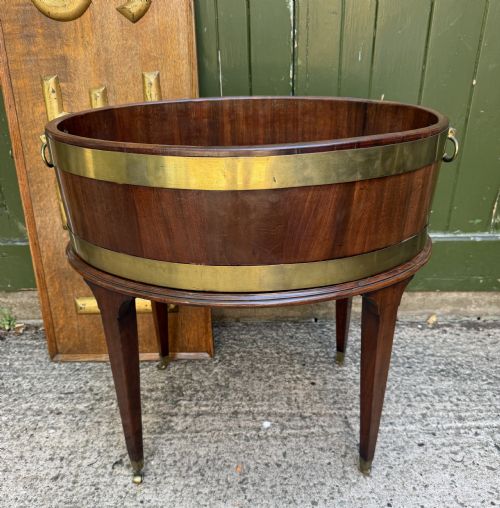
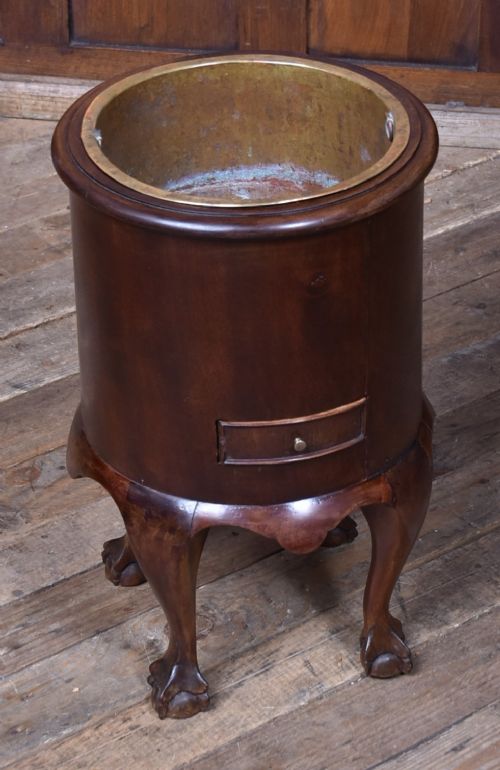
A mahogany champagne cooler takes the form of a sturdy vessel designed to hold ice and bottles for dining and entertaining. Buyers seeking a mahogany champagne cooler encounter pieces spanning the Georgian, Victorian, and Edwardian eras, with George III examples appearing frequently.
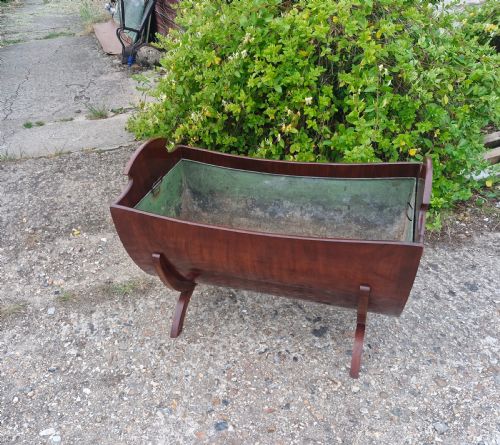
The inventory includes oval and circular designs, often fitted with stands, alongside log baskets and jardinières that share the same form. These vessels originate primarily from British workshops, reflecting formal dining traditions of the eighteenth and nineteenth centuries.
How they were made
Cabinetmakers constructed these coolers using solid mahogany and sometimes incorporated satinwood inlay for decorative contrast. Stave construction mirrors cooperage techniques used for barrels, ensuring the vessels could hold ice and liquid safely.
Metal components play a crucial role in the construction, featuring brass bands for structural reinforcement and interior metal or zinc linings to contain melting ice. Stands and mounts complete the assembly, combining woodwork with functional hardware.
Listings feature mahogany paired with brass, zinc, and satinwood across eighteenth and nineteenth-century periods.
What varies in quality
Quality rests upon the selection of timber and the precision of the cooperage or cabinet work. Superior examples display carefully figured mahogany grains and tight, well-fitted brass banding that integrates seamlessly with the wood.
Proportion and decorative detail distinguish finer pieces, such as those featuring delicate satinwood inlay or well-carved stands. The integrity of the original interior lining and the crispness of the joinery further separate standard production from exceptional work.
The Mahogany Champagne Cooler Glossary
- Mahogany
- A durable tropical hardwood prized for its rich reddish-brown colour and stable grain. Cabinetmakers utilised it extensively for high-end dining furniture throughout the eighteenth and nineteenth centuries.
- Brass band
- A metal strip fastened around the exterior of wooden buckets and coolers to hold the staves tightly together. It provides both structural strength and a decorative contrast against the dark timber.
- Jardinière
- An ornamental pot or stand designed to hold plants and flowers. Many wine coolers share this exact form and serve dual purposes in modern interiors.
- Stave
- One of the narrow vertical strips of wood fitted together to form the sides of a circular or oval vessel. Coopers shaped these pieces precisely to ensure watertight construction.
- Rafraichissoir
- A specialised French dining table featuring built-in metal liners for chilling wine glasses or bottles during a meal. This form appears alongside traditional British bucket designs.
Mahogany Champagne Cooler: Frequently Asked Questions
What is a mahogany champagne cooler used for?
These vessels originally held ice and water to chill wine and champagne during formal meals in grand houses. Today, they function as decorative containers for houseplants, logs, or bottles.
Their robust construction and classic proportions make them striking accent pieces in living rooms or dining spaces.
How do I tell a Georgian cooler from a Victorian one?
Georgian pieces, particularly those from the George III period, often feature understated elegance with precise brass banding and fine mahogany grain. Victorian examples can display heavier proportions and more elaborate decorative carving.
Examining the construction methods and secondary timbers inside the piece helps confirm the period of manufacture.
Are these coolers waterproof?
Many historical coolers feature metal or zinc liners intended to hold ice and melting water without damaging the outer wood. However, older linings may develop leaks over long periods of use.
It is advisable to check the interior condition and use a protective tray if placing fresh plants or melting ice inside.
Can I use an antique cooler as a plant pot?
These pieces frequently double as jardinières for large houseplants or floral displays. Their deep proportions accommodate potted plants effectively.
Using a waterproof inner container protects the antique wood and interior metal lining from moisture damage.